Support me on Patreon for early access previews, rewards and giveaways!
Contact Me
Or use the contact form below.
Support me on Patreon for early access previews, rewards and giveaways!
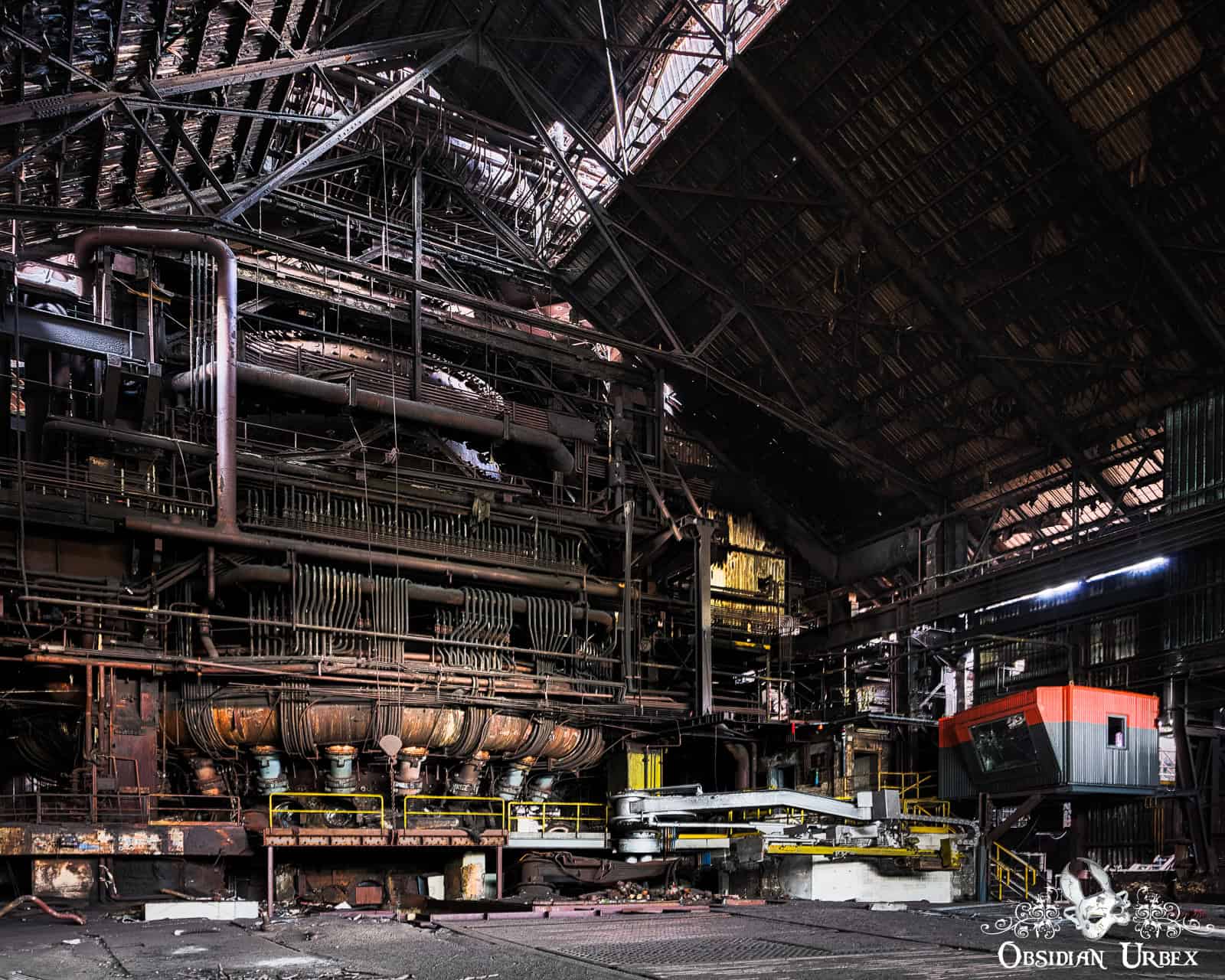
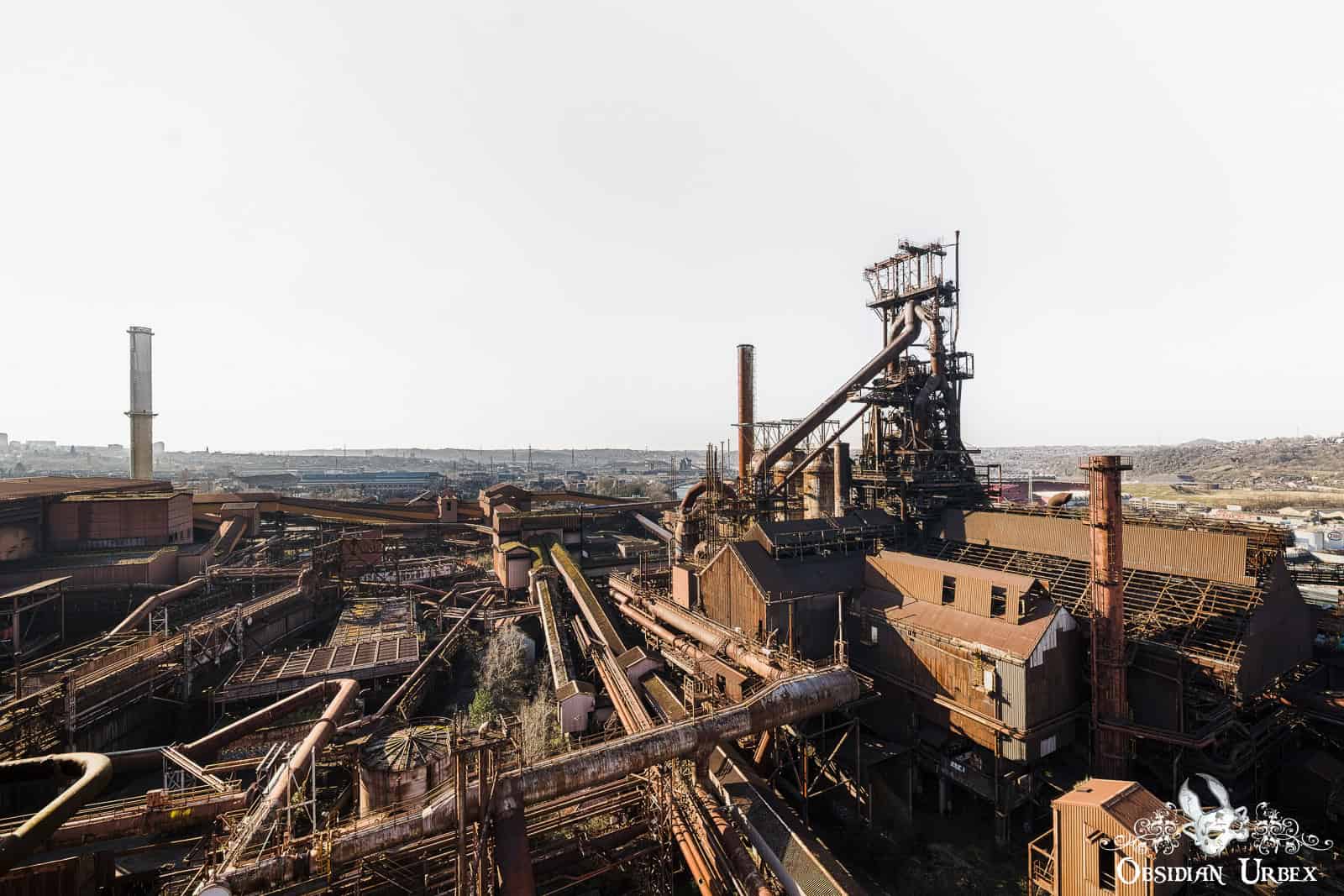
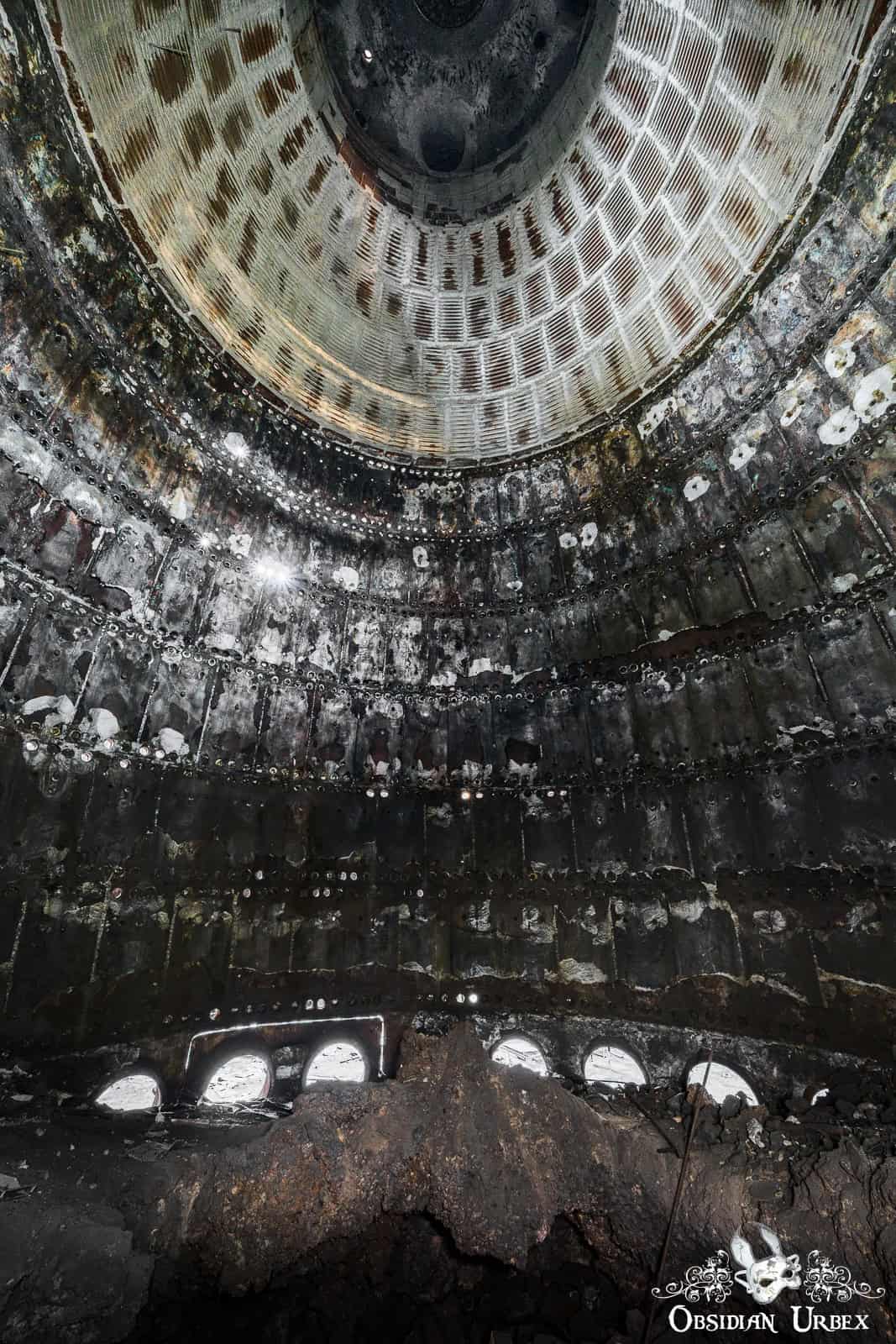
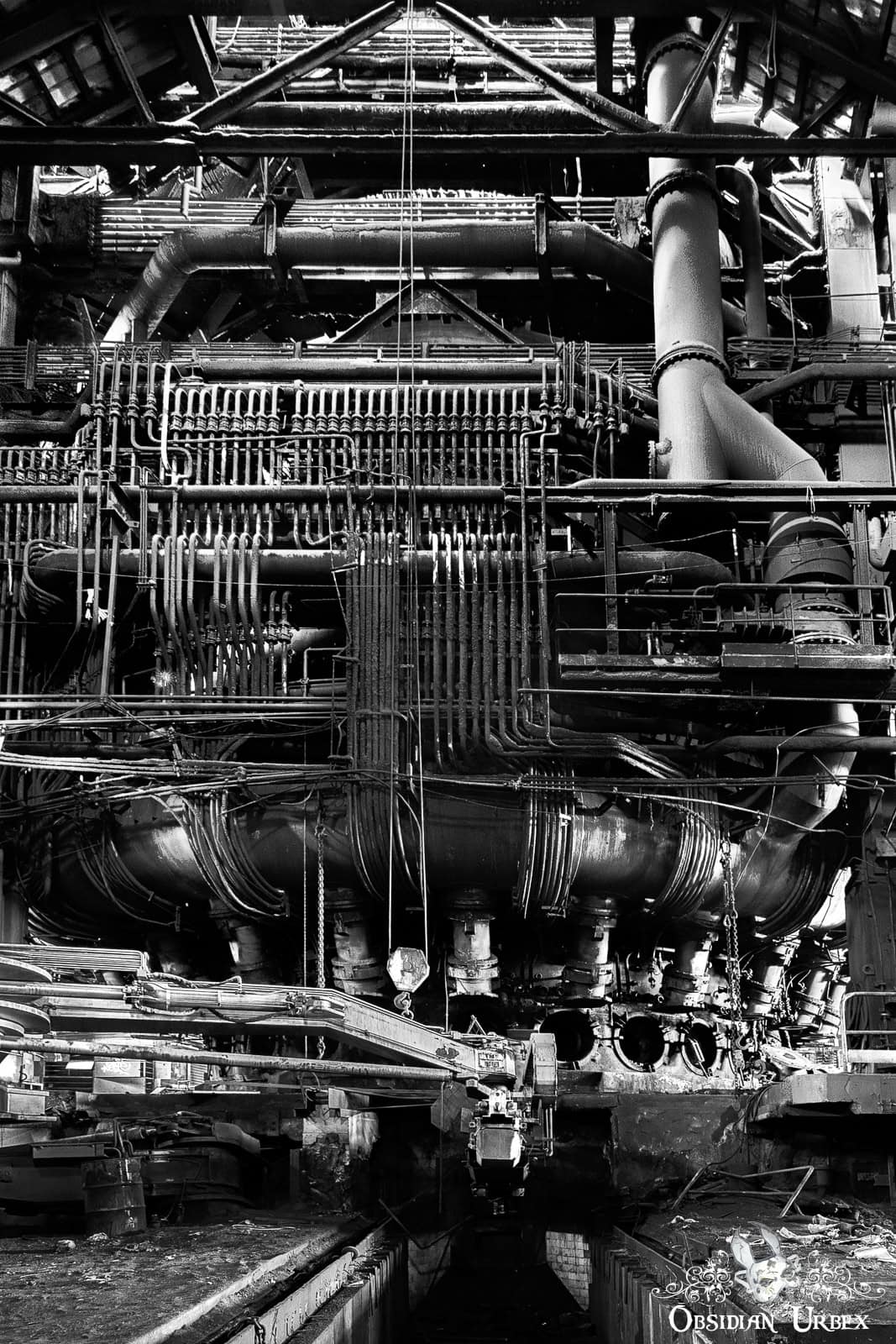
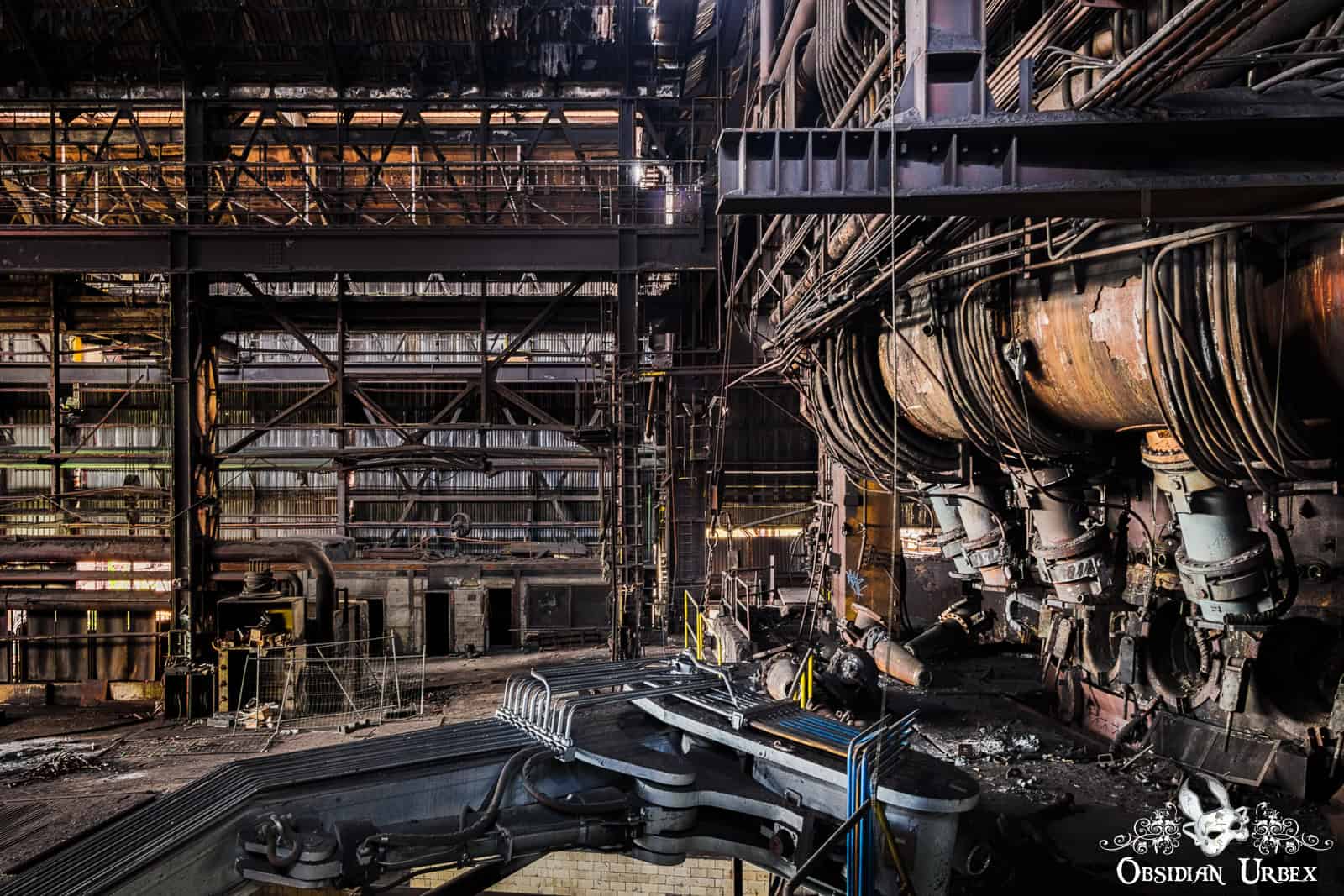
The Hauts-Fourneaux B (HFB Blast Furnace) is located at the Cockerill-Sambre Ougrée Ironworks site in Liege, Belgium. The 60m-tall furnace was once the heart of one of the largest factories in the Liège steelmaking region. While much of the rest of the site has now been demolished, the HFB Blast Furnace will be preserved as a piece of industrial heritage.
I explored this location in 2017 as part of the memorable Kolossal Tour.
The first iron factory on this site dates back to 1809; after nearly a century of expansion, it grew into one of the main metal producers in Belgium. When the First World War broke in 1914, there were eight blast furnaces on site. The site suffered substantial damage during the German occupation; only two salvageable blast furnaces returned to service.
In 1962, a single, more modern blast furnace replaced the two remaining blast furnaces. The ironworks closed in 2011, and the site has remained abandoned since then. In 2011, the ironworks closed, leaving the site abandoned for over a decade. Demolition of the surrounding ironworks took place between 2022 and 2026. Now only a few structures remain: the blast furnace and chimney, along with the Cowper stoves and cast house.
Liquid iron production requires three things: raw iron ore, limestone (flux) and coke.
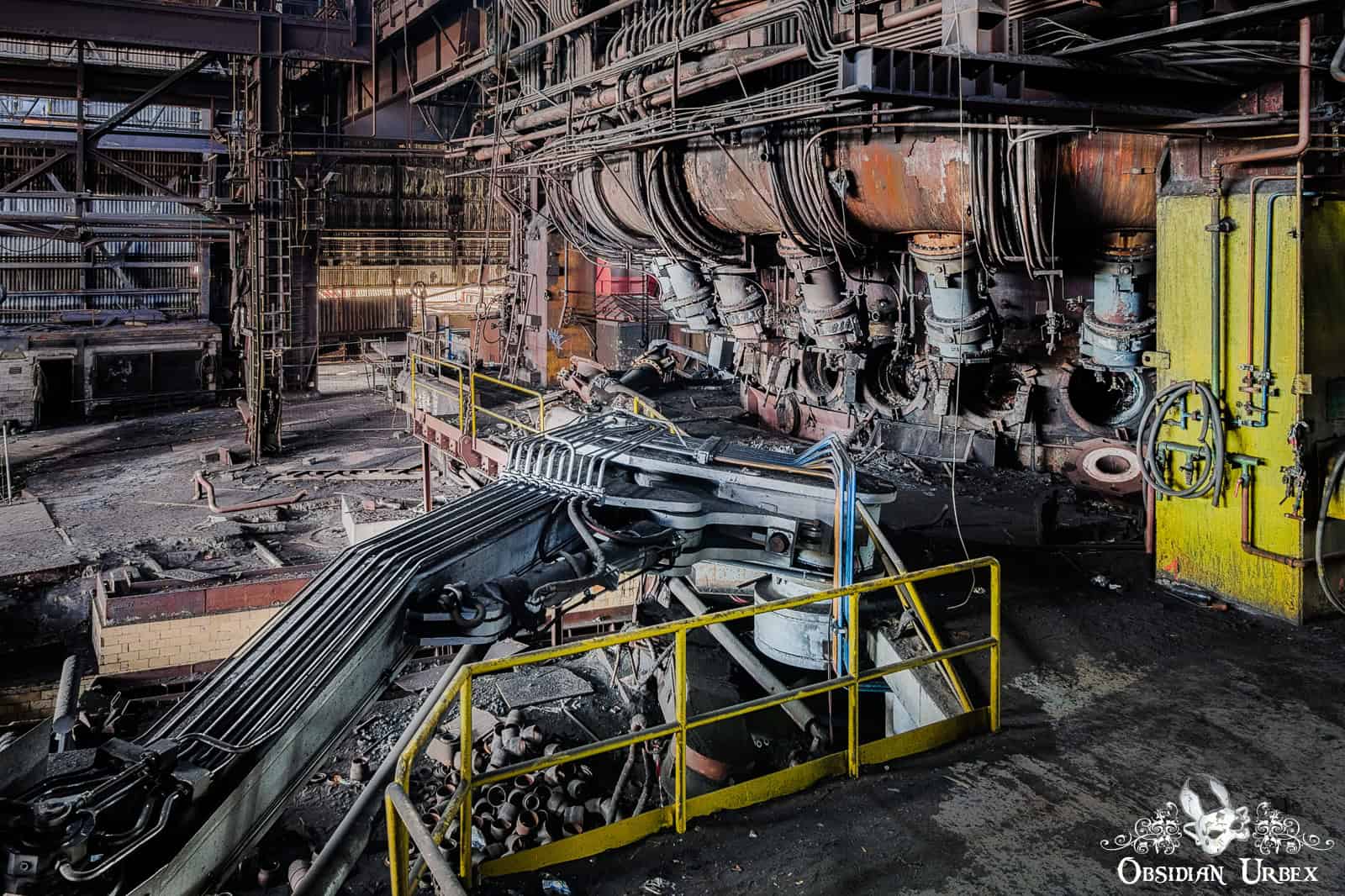
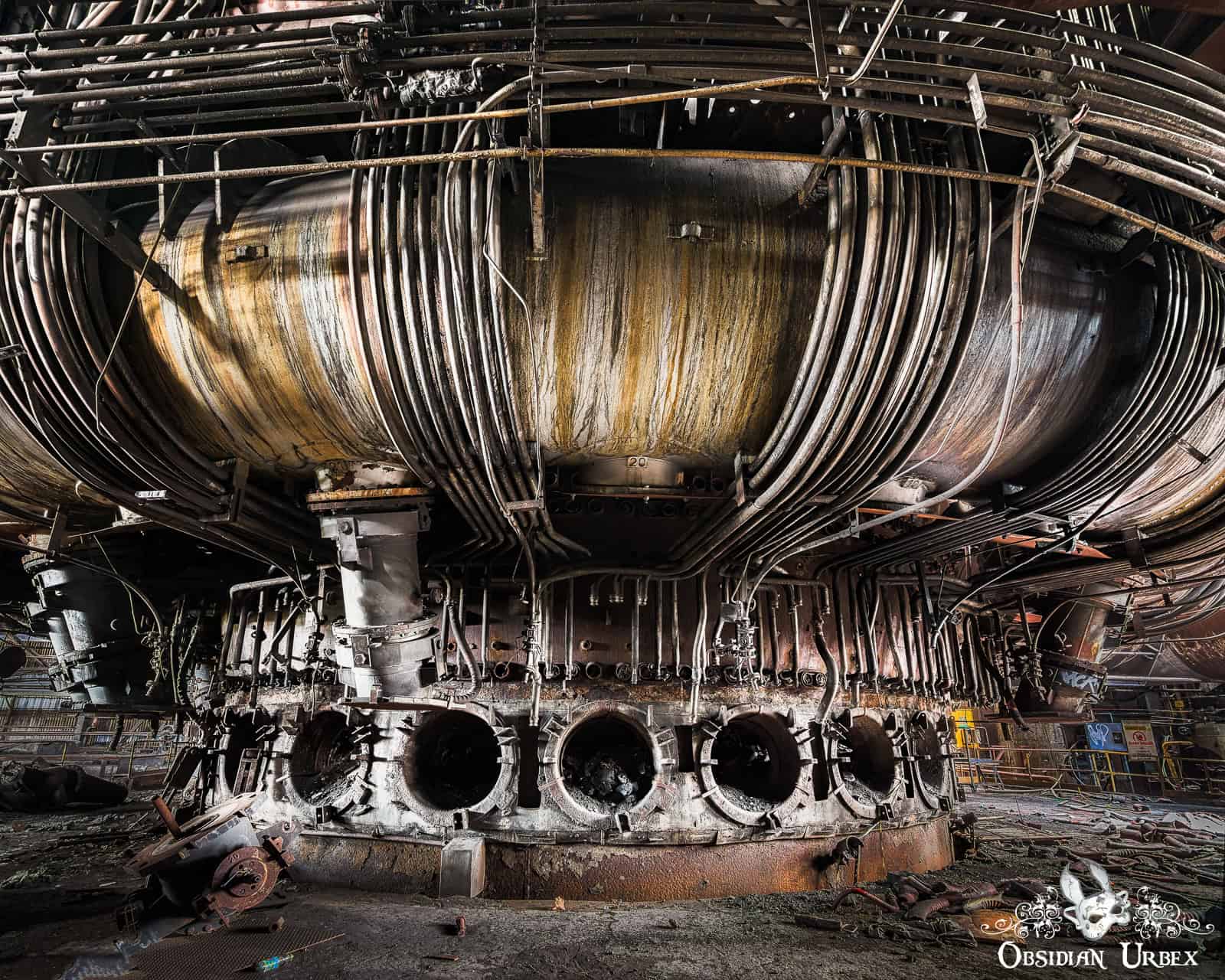
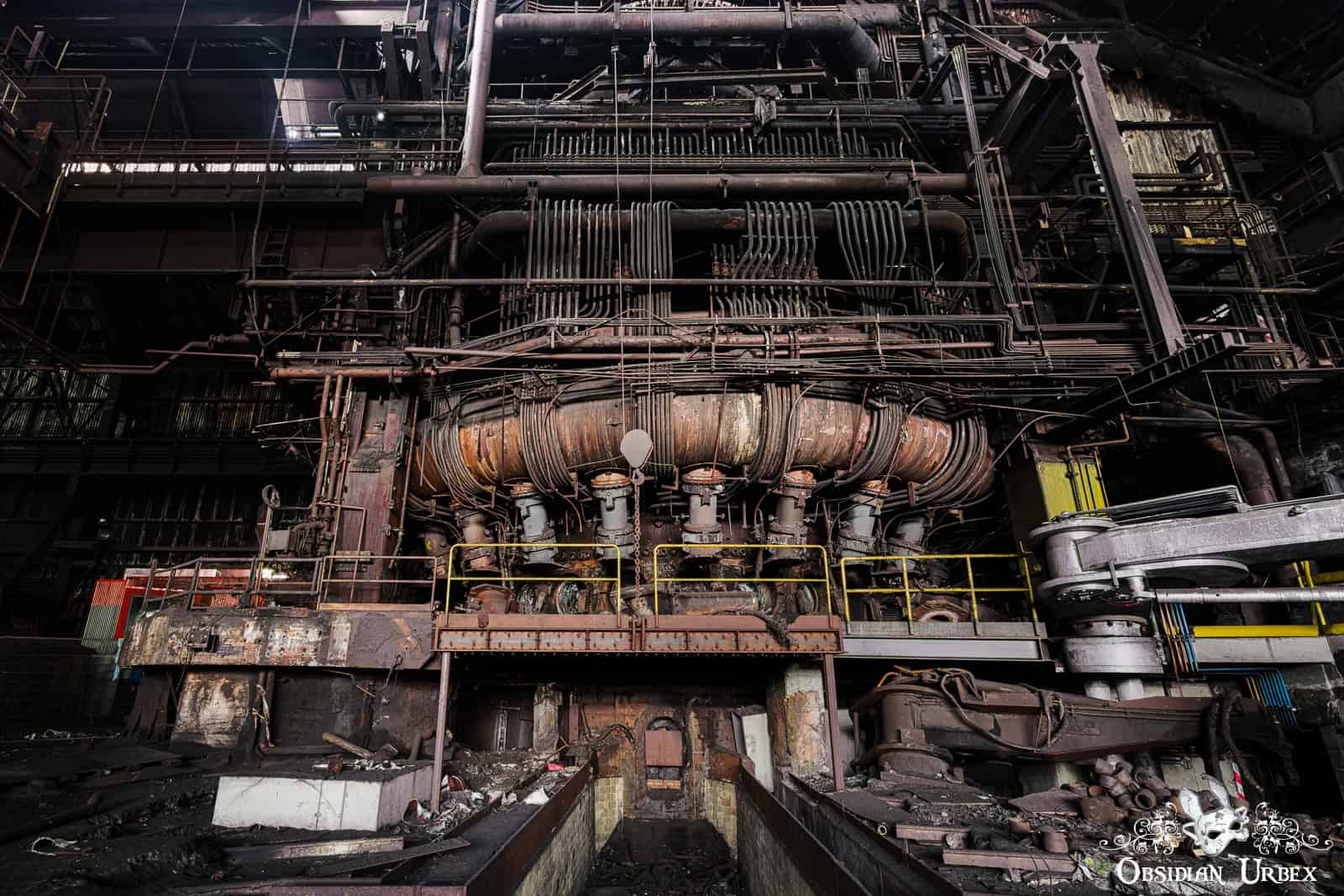
A coking plant across the road supplied coke to the blast furnace. The on-site HFB sinter plant mixed iron ore and flux into self-fluxing sinter chunks. Conveyor belts are continuously loaded into the top of the blast furnace. These can operate 24 hours a day, without stopping. High-pressure blowers injected pre-heated air, at around 1200 degrees, into the system. A ring pipe that encircles the furnace, called a Bustle Pipe, delivered the hot blast. Below this are circular inspection hatches, called tuyère sight glasses or peep sights. Multi-layers of borosilicate and cobalt glass resisted the extreme temperature while filtering the blinding light, to enable operators to monitor the reactions within the furnace.
The hot blast reacted with the coke, raising the temperature to over 2,000 degrees while releasing carbon monoxide. The rising gas strips oxygen and creates a reducing environment inside the furnace. The reduced ore then becomes liquid metallic iron. The released impurities bind with the limestone flux, producing slag that floats on top of the liquid iron.
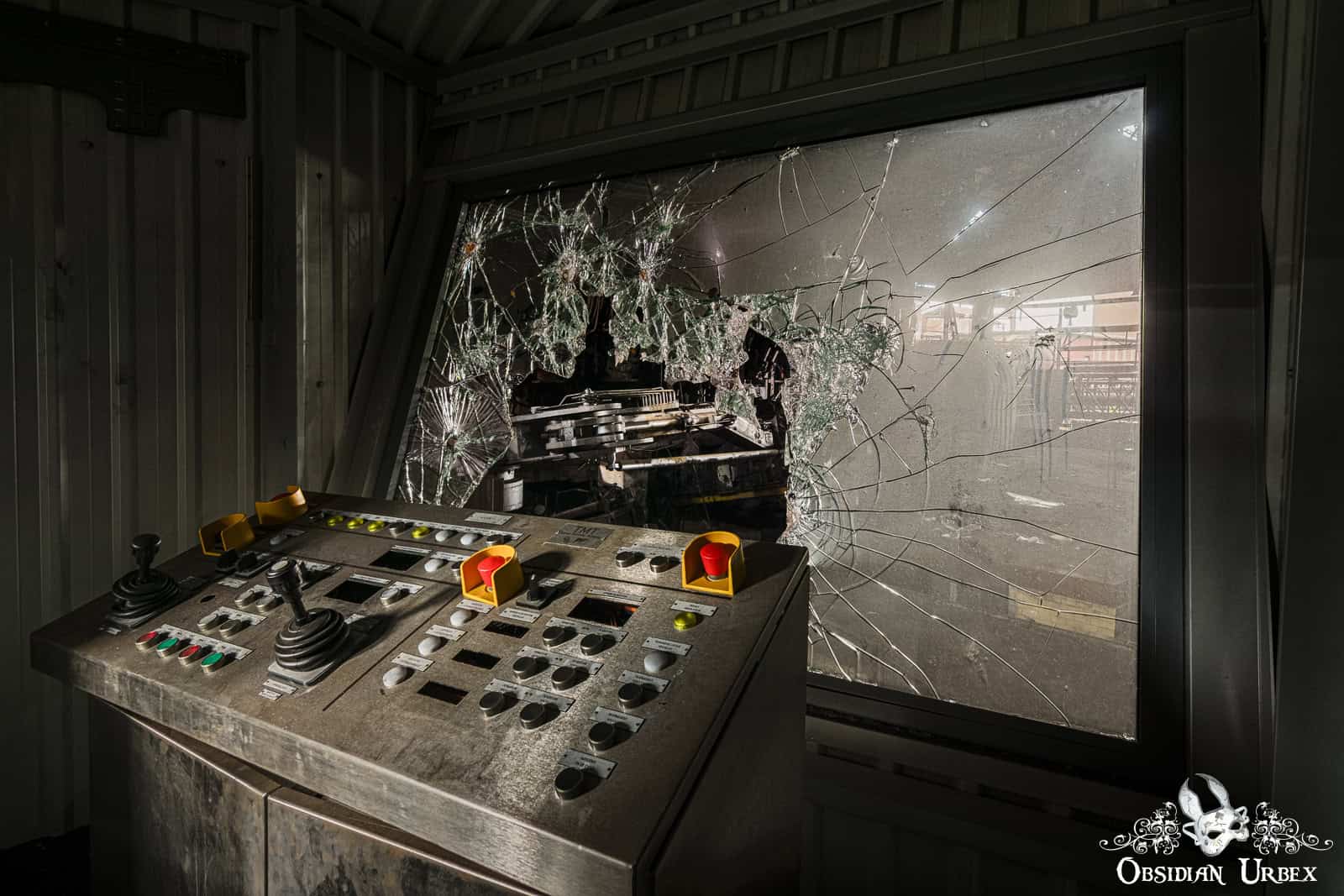
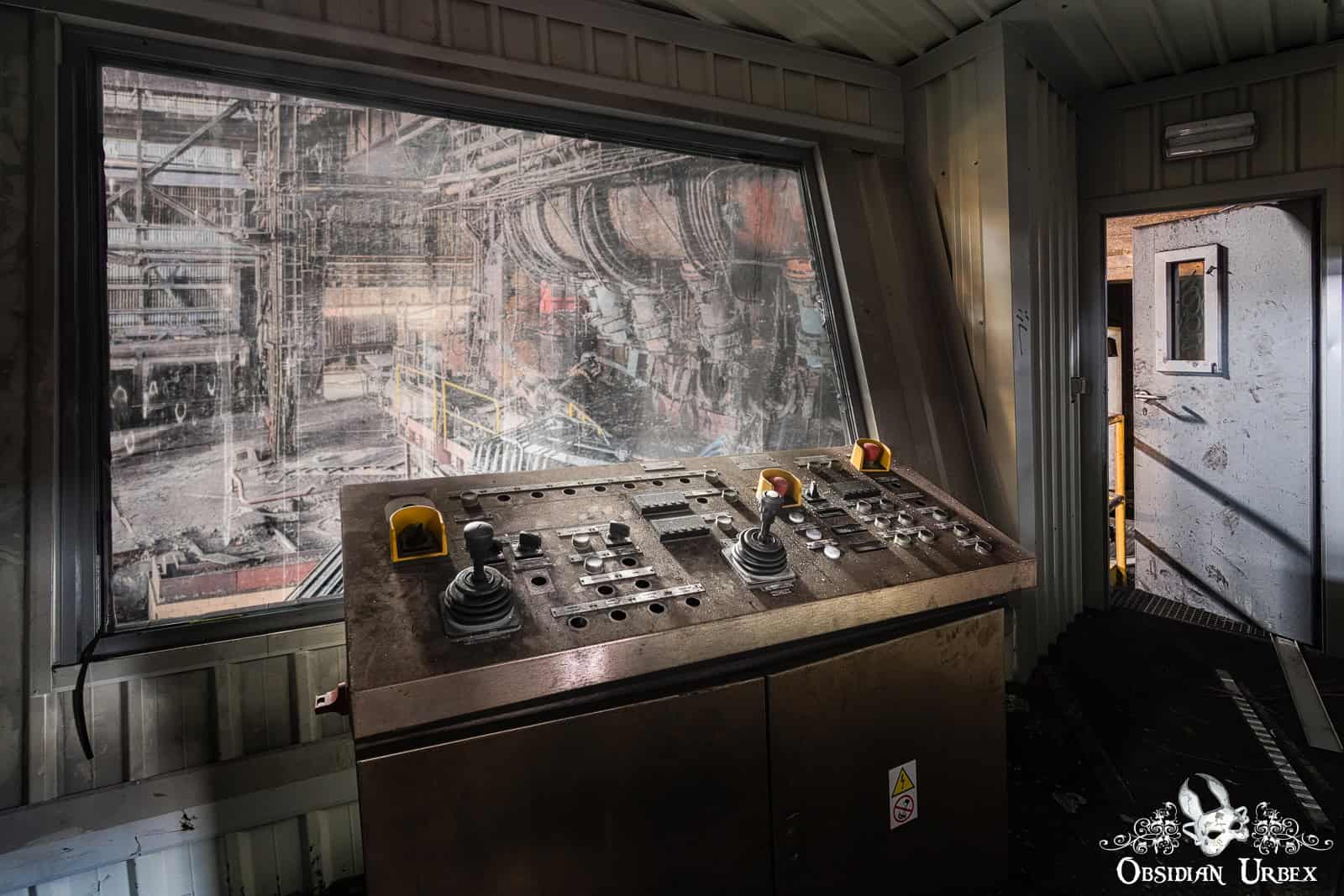
Every few hours, the liquid iron is “tapped” from the furnace hearth. There are two robotic arms, each with its own operator cabin. The first robotic arm drills into the clay plug at the base of the furnace, releasing a torrent of liquid iron into the floor runners. These funnelled the iron ore down into the waiting torpedo-shaped containers for transport via rail. When the molten iron has been tapped, the second robotic arm presses against the hearth and injects industrial clay into the hole. Once sealed shut, the furnace can refill again over the following hours.
Seen a photo you love? All my images are available as prints, please do Contact Me and let me create your perfect bespoke artwork.
Which photograph caught your eye the most? How did this location make you feel? Do you have a question? Let me know by leaving a comment!


Join My Adventures!
I add new content every week, ranging from exciting new locations to blog articles about my road trips. My beautiful newsletter will bring my photographic adventures direct to your inbox!
Your email address will not be shared, or publically displayed. I will only use your data to send you the newsletter, as outlined in the Privacy Policy. You can unsubscribe at any time, via the opt-out link included in every email.