Support me on Patreon for early access previews, rewards and giveaways!
Contact Me
Or use the contact form below.
Support me on Patreon for early access previews, rewards and giveaways!
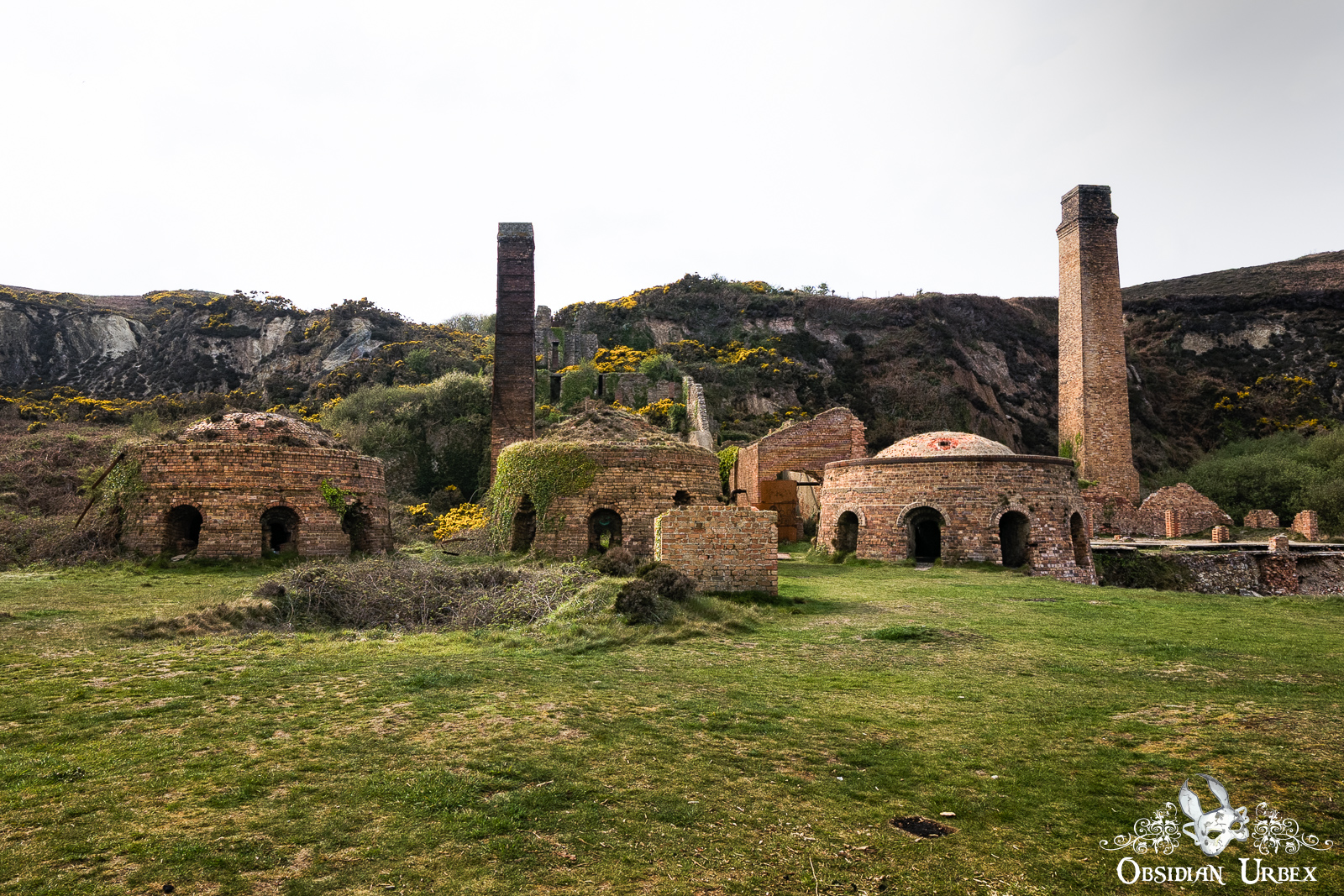
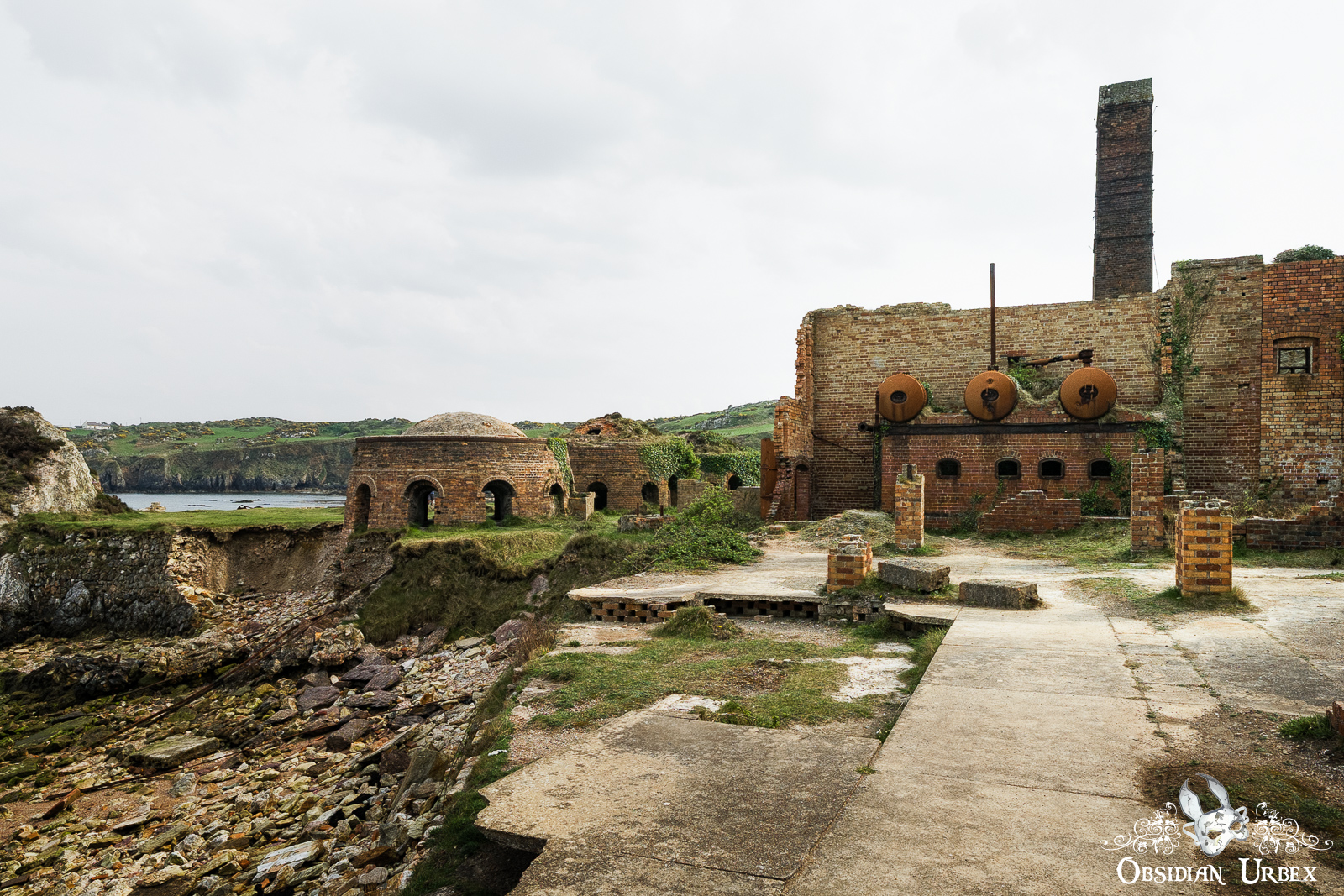
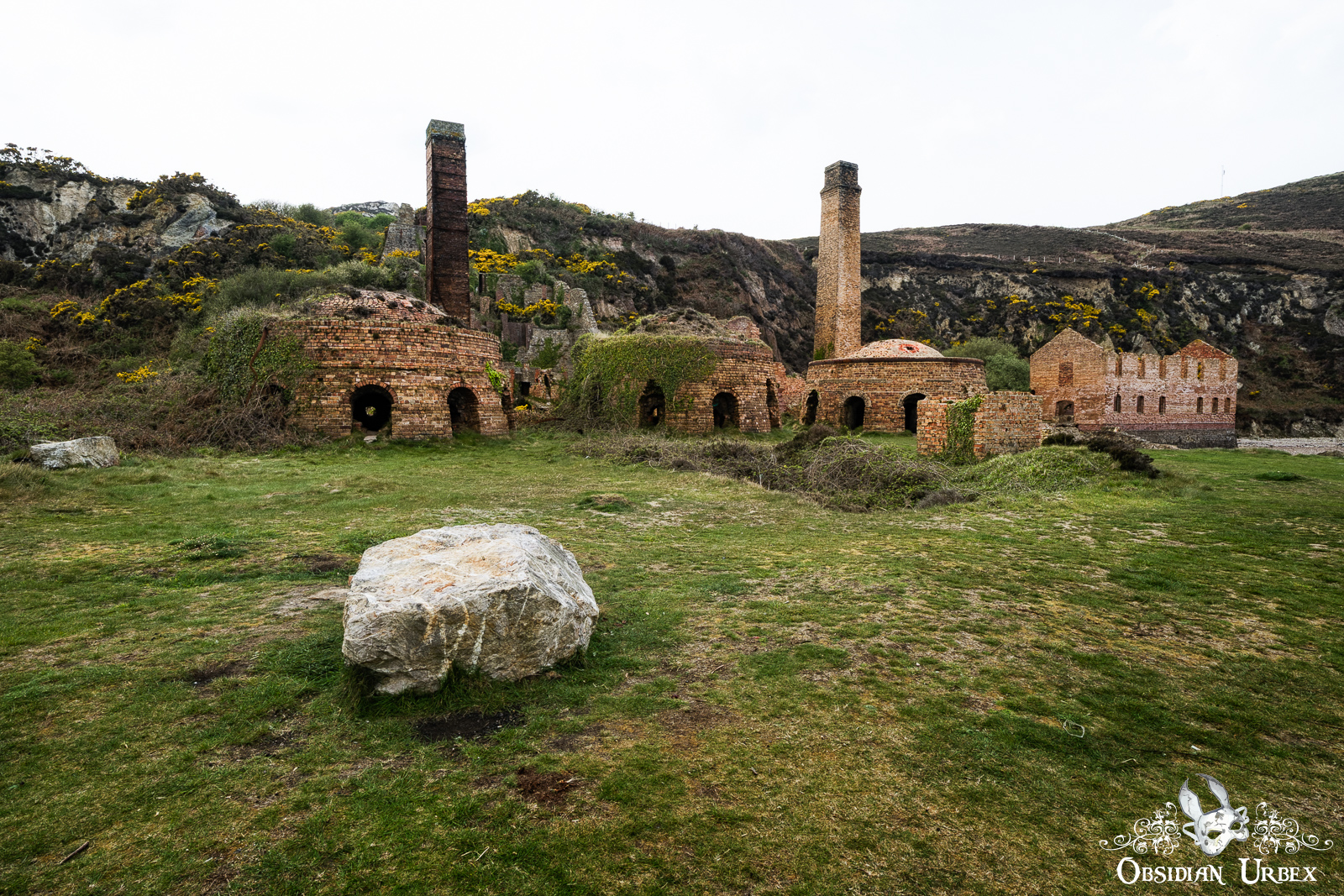
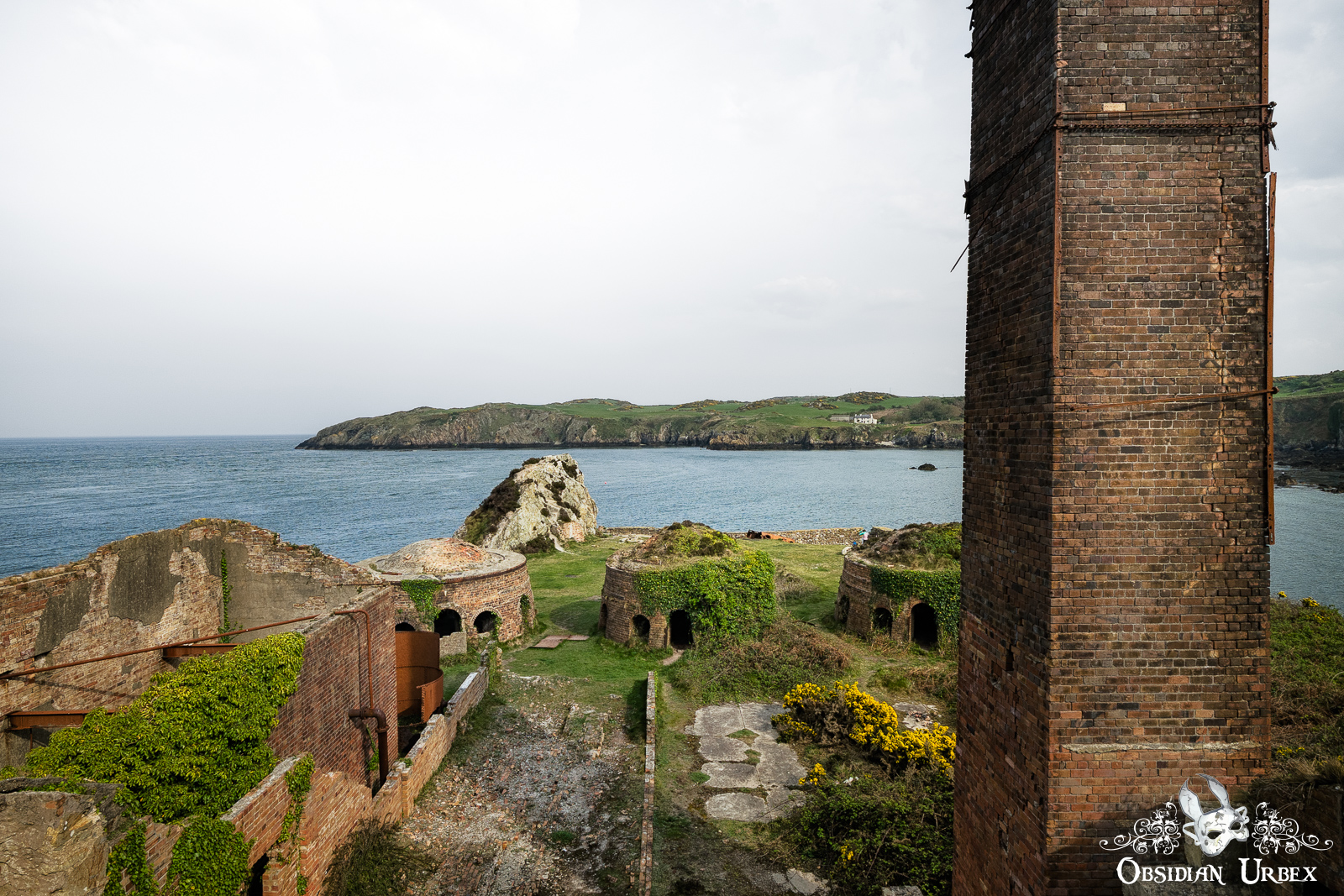
Porth Wen Brickworks is an abandoned Victorian firebrick factory overlooking the picturesque jagged coastline of Anglesey, Wales. These industrial ruins have stood at the edge of this secluded cove for decades, their brick and stone structures and stone slowly falling into the Irish Sea. The three circular beehive kilns sit at the base of steep cliffs, their red surfaces standing in contrast with the grey rock. Vegetation is starting to reclaim the site, and the wooden elements have long since rotted away.
Charles Torkington established Porth Wen Brickworks in approximately 1850. He started the operation to produce firebricks from local quartzite, which is found in the cliffs nearby. Quartzite is a hard metamorphic rock with high silica content. The main use of firebricks was industrial. They were used to line steel-making furnaces, as they could withstand temperatures exceeding 1,500 degrees Celsius without melting.
The operation expanded in 1906 when the site was sold to a new company. This group, the Porth Wen Brickworks Company, invested in larger machinery and improved the processing buildings. The site provided employment for men from the nearby villages of Cemaes and Bull Bay. Records indicate the quartzite was quarried from the cliffs above and moved down to the works using a gravity incline.
During the peak of production in the early 20th century, the site was a vital part of the local economy. Bricks were loaded onto steamships at the quay and sent to industrial cities like Liverpool and Glasgow. Still, the remote location made transport difficult and expensive. Logistics was a constant struggle for the owners, but for decades the site operated more or less profitably.
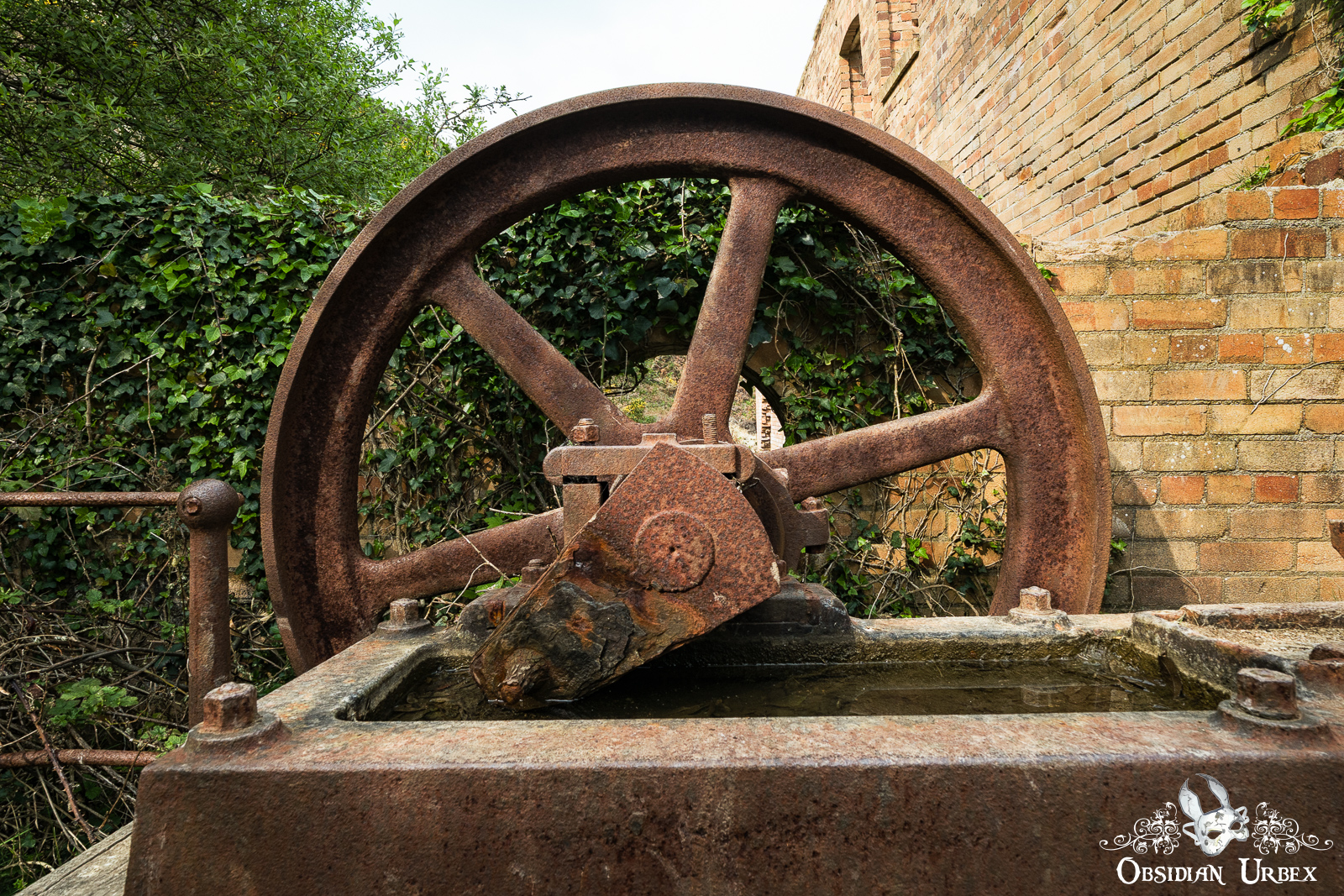
Then came World War One, causing a temporary closure of the works in 1914. Operations resumed after the war in 1924, but the business was struggling, unable to reach its former levels of output. The works finally closed in 1949. Most of the movable machinery was taken away shortly after closure, and the site was abandoned to the elements.
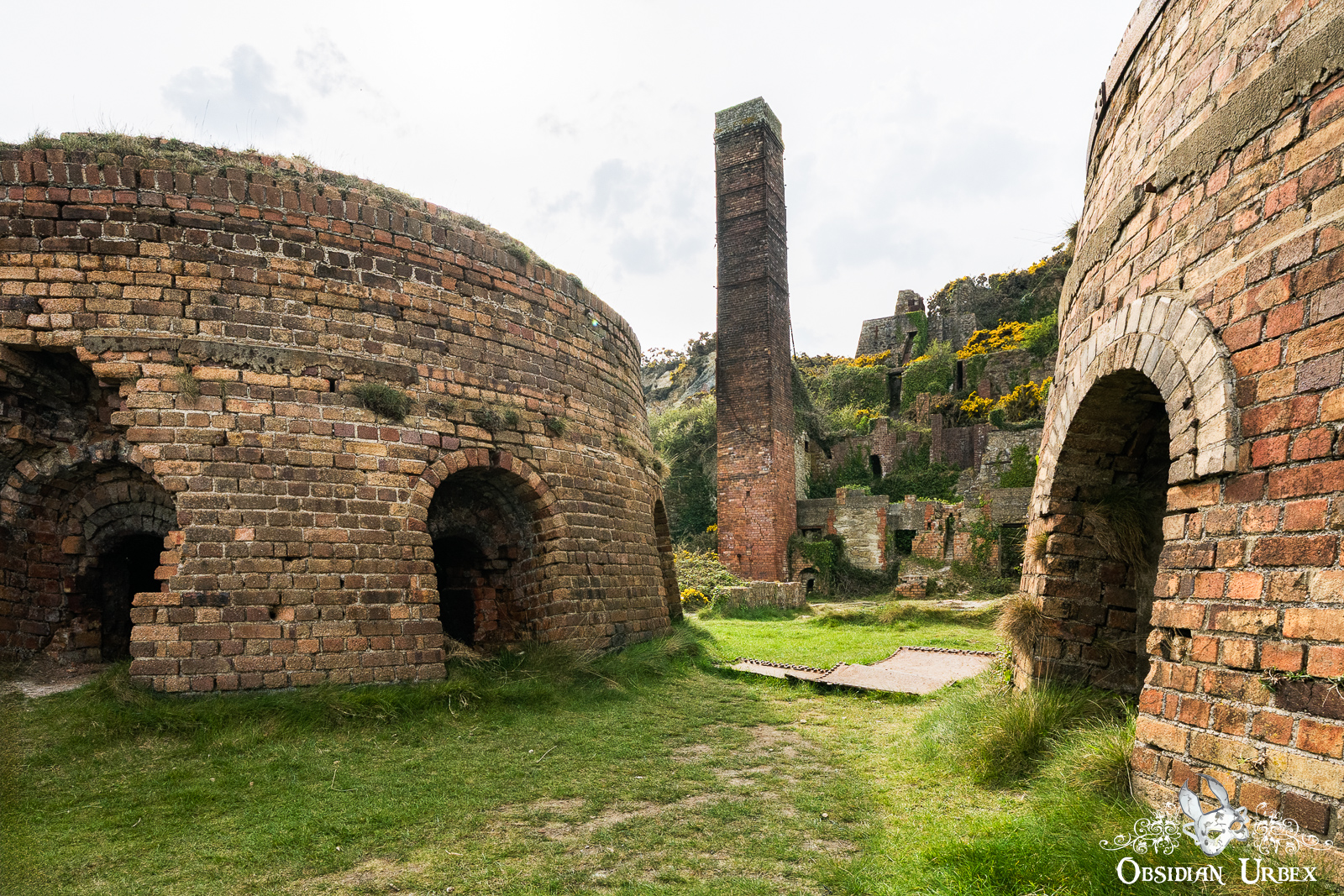
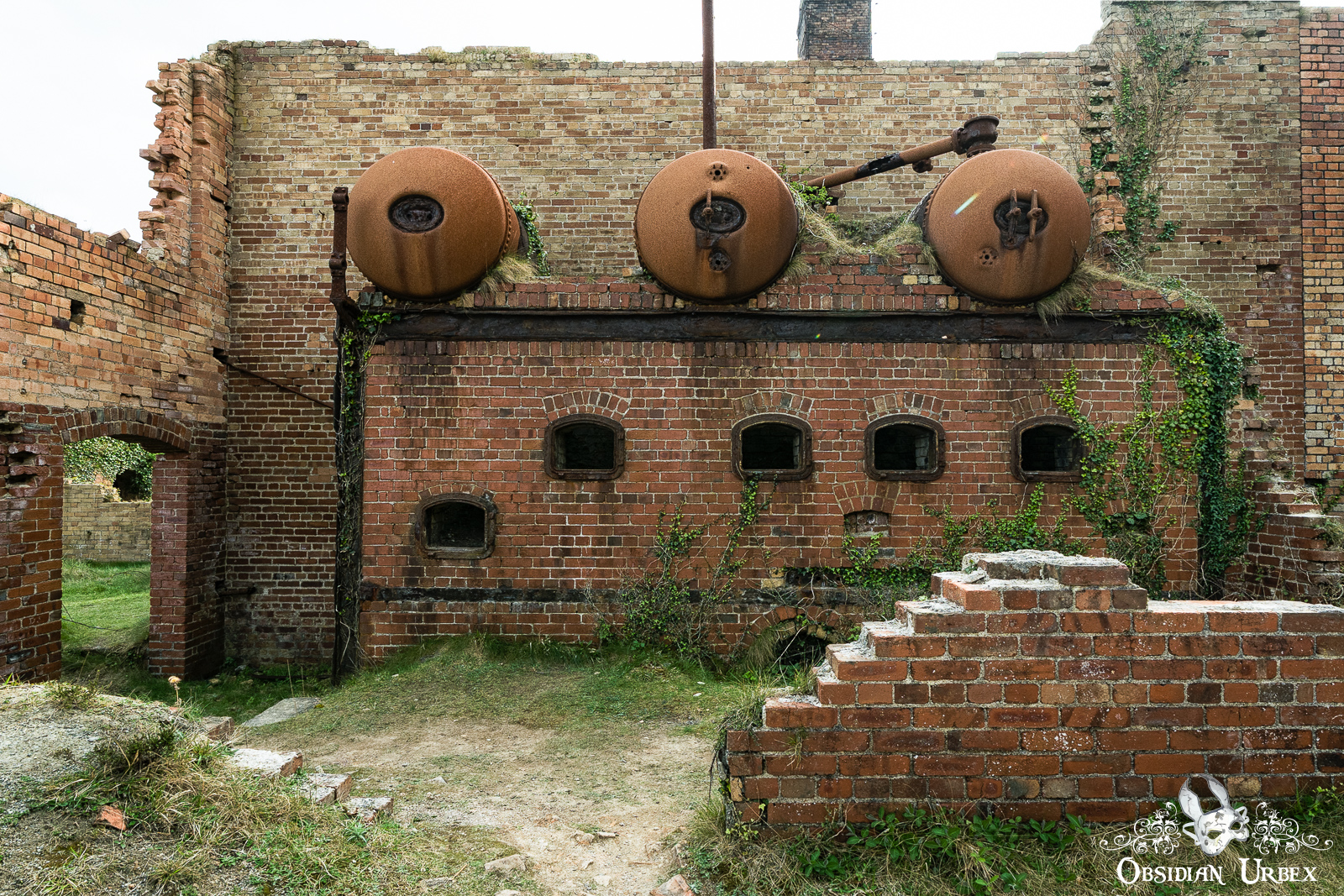
The site is a functional industrial complex, with simple buildings built from stone and brick. The most prominent features are three beehive kilns. These circular structures have domed roofs and were used for firing the bricks. This firing took several days at a time. A tall square chimney stands near the ruins of the boiler house.
The upper level contains a crushing mill where the quartzite was processed into powder. A stone tramway once connected the quarry area to the mill. The harbour area includes a small pier and quay where ships can dock directly at the site. The buildings were constructed directly into the cliffside to use the natural slope for moving materials.
The brickwork is eroding due to sea spray and the weather. Large sections of the pier have collapsed into the sea. Most of the buildings have lost their roofs, reduced to little more than shells of stone. The beehive kilns remain in fair condition but show signs of cracks that signal structural failures.
Seen a photo you love? All my images are available as prints, please do Contact Me and let me create your perfect bespoke artwork.
Which photograph caught your eye the most? How did this location make you feel? Do you have a question? Let me know by leaving a comment!


Join My Adventures!
I add new content every week, ranging from exciting new locations to blog articles about my road trips. My beautiful newsletter will bring my photographic adventures direct to your inbox!
Your email address will not be shared, or publically displayed. I will only use your data to send you the newsletter, as outlined in the Privacy Policy. You can unsubscribe at any time, via the opt-out link included in every email.