Support me on Patreon for early access previews, rewards and giveaways!
Contact Me
Or use the contact form below.
Support me on Patreon for early access previews, rewards and giveaways!
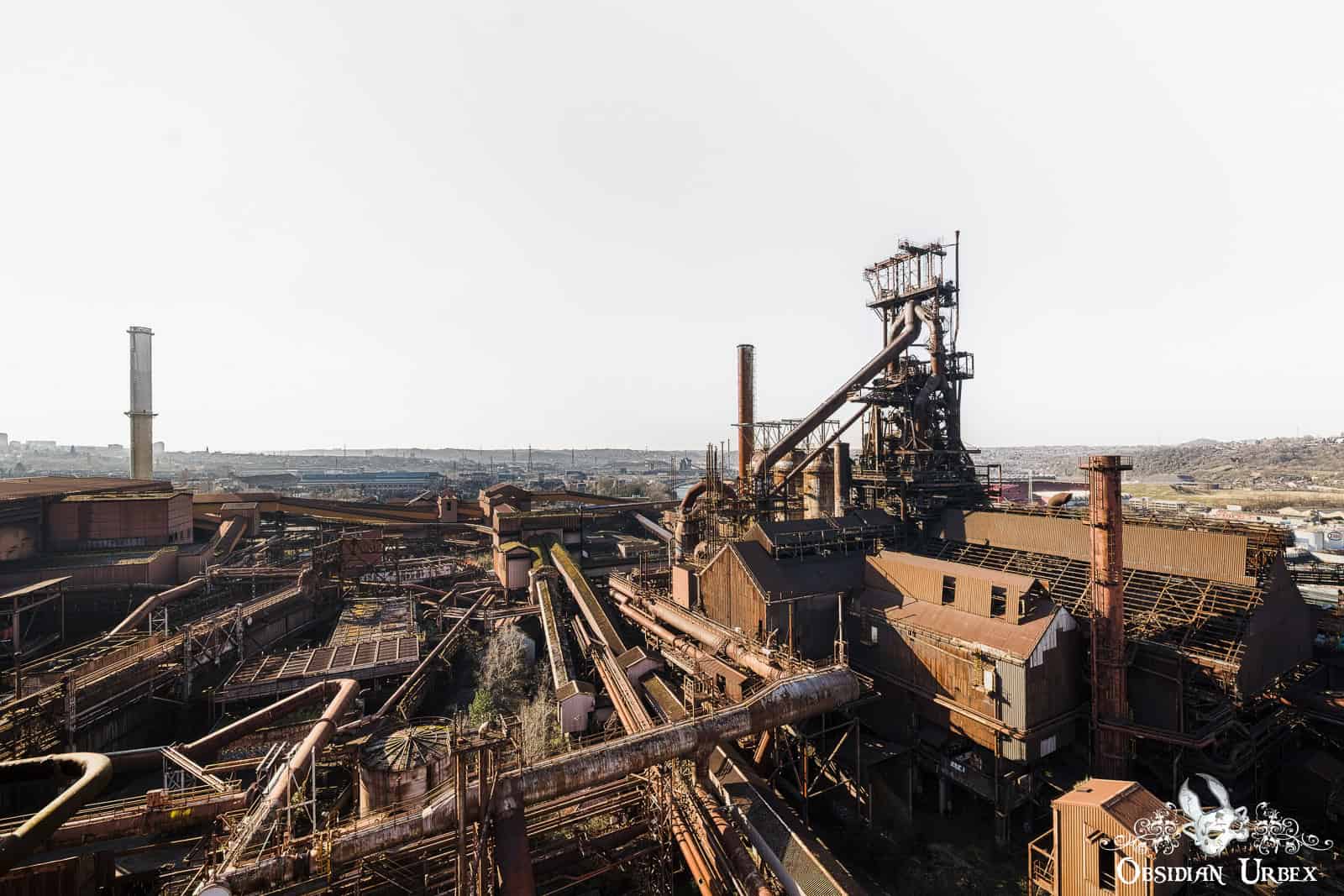
Cockerill-Sambre Ougrée Ironworks is an abandoned ironworks located in Liège, Belgium. The global financial downturn of 2007 to 2010 temporarily halted production at blast furnace B from spring 2009 to April 2010. Once a major part of the Liège steelmaking region, the Ougrée site has industrial roots that date back to 1809. It operated as a primary production hub for liquid pig iron until its closure in 2011.
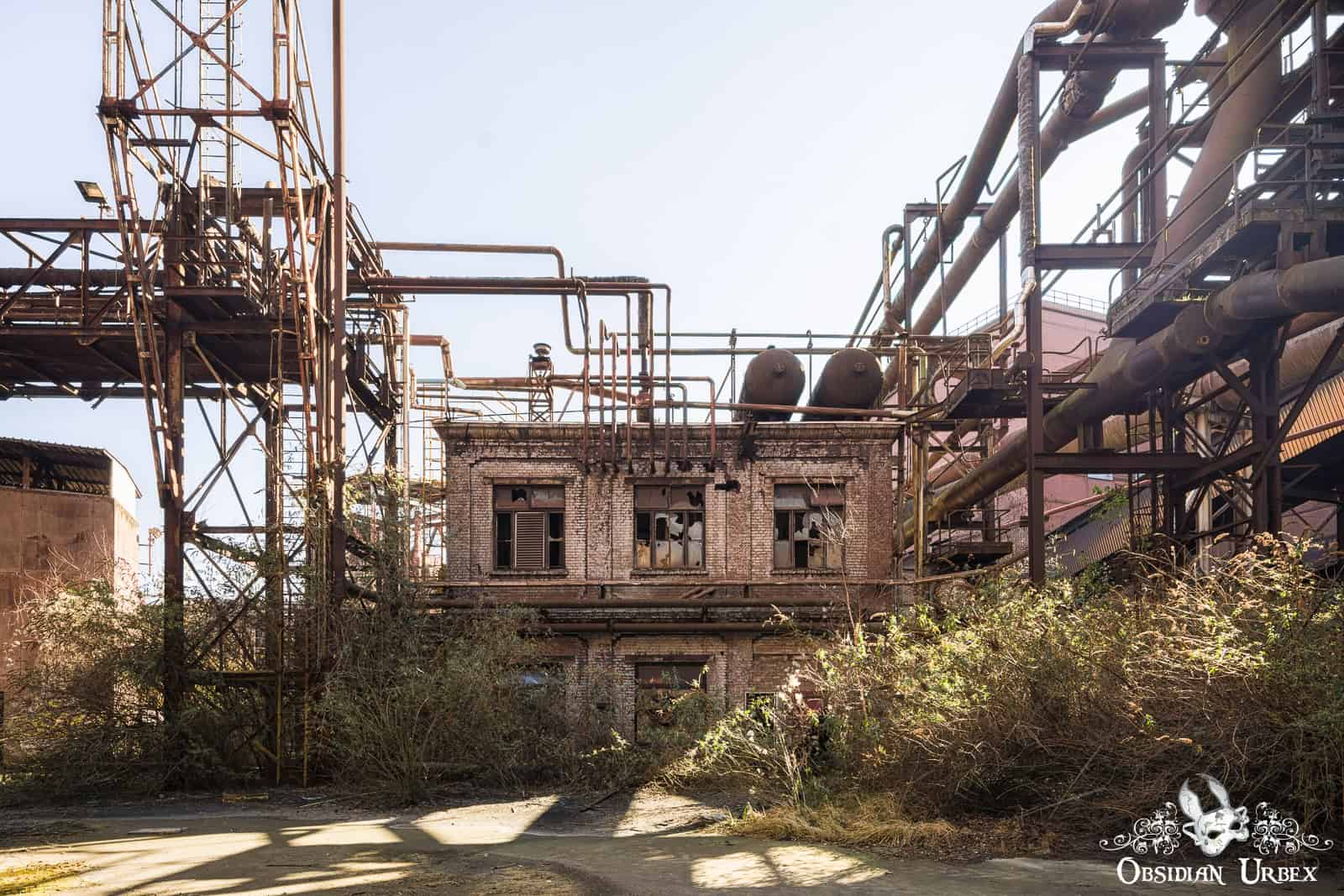
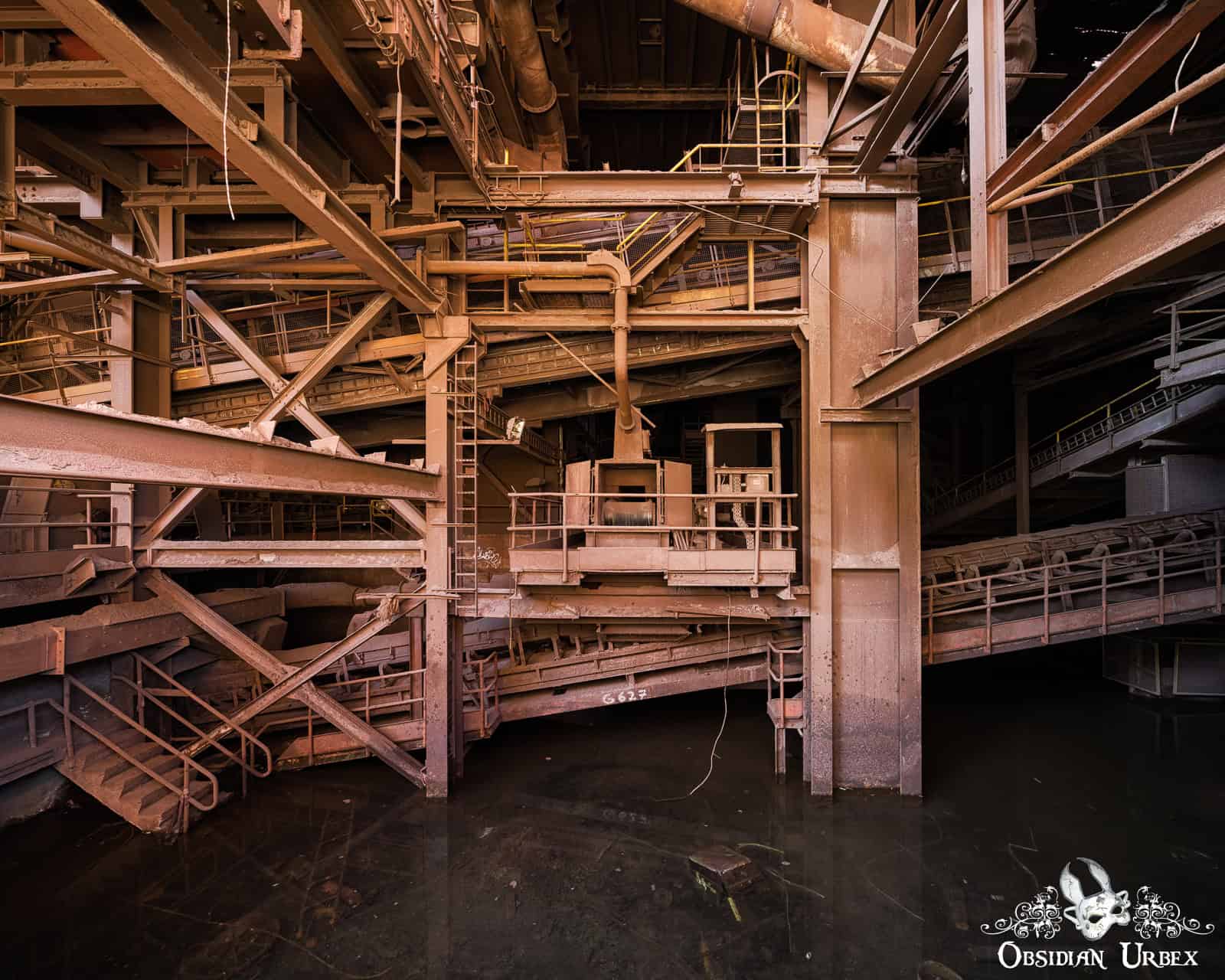
For over half a century the rusting behemoth, a 35-hectare site, dominated the city skyline. A maze of enormous steel frames, pipe networks, and industrial conveyors runs along the south bank of the Meuse River. At its heart is the distinctive 60m-tall blast furnace, which once spewed smoke and glowed at night as excess gases were burnt.
I explored this site in 2017 and 2022.
The Lamarche family, lead by industrialist Gilles-Antoine Lamarche, founded the Fabrique de Fer d’Ougrée (Ougrée Iron Factory) here in 1809. The company expanded through regional mergers and takeovers over the following century. By 1914, the firm operated as one of the main metal producers in Belgium.
In 1955, the works merged with neighbouring facilities in Seraing to form SA Cockerill-Ougrée. The huge blast furnace was added in 1962. Subsequently, the sprawling sinter plant was added in 1979. In 1981 a crisis in European steel necessitated a merger with the Hainaut-Sambre Group from Charleroi, creating the Cockerill-Sambre Group.
The Ougrée Ironworks later became a primary hot production facility for the multinational ArcelorMittal, working alongside plants in Seraing and Chertal. During peak operations, the blast furnace produced 5,000 tonnes of pig iron per day.
Following the global financial downturn from 2007 to 2010, the Belgian steel industry began to decline. First, there were temporary shutdowns of blast furnace “B” from spring 2009 until April 2010. In 2011, ArcelorMittal permanently halted all liquid steel production across the Liège division. The company stated that overcapacity and uncompetitiveness caused the shutdown of the Ougrée Site.
The decision triggered strikes, public protests, and the temporary abduction of several corporate executives. Trade unions commissioned an independent report that contested the company claims, alleging that ArcelorMittal used biased accounting methods. Union representatives called for public ownership of the Liège steel assets, though no transfer occurred.
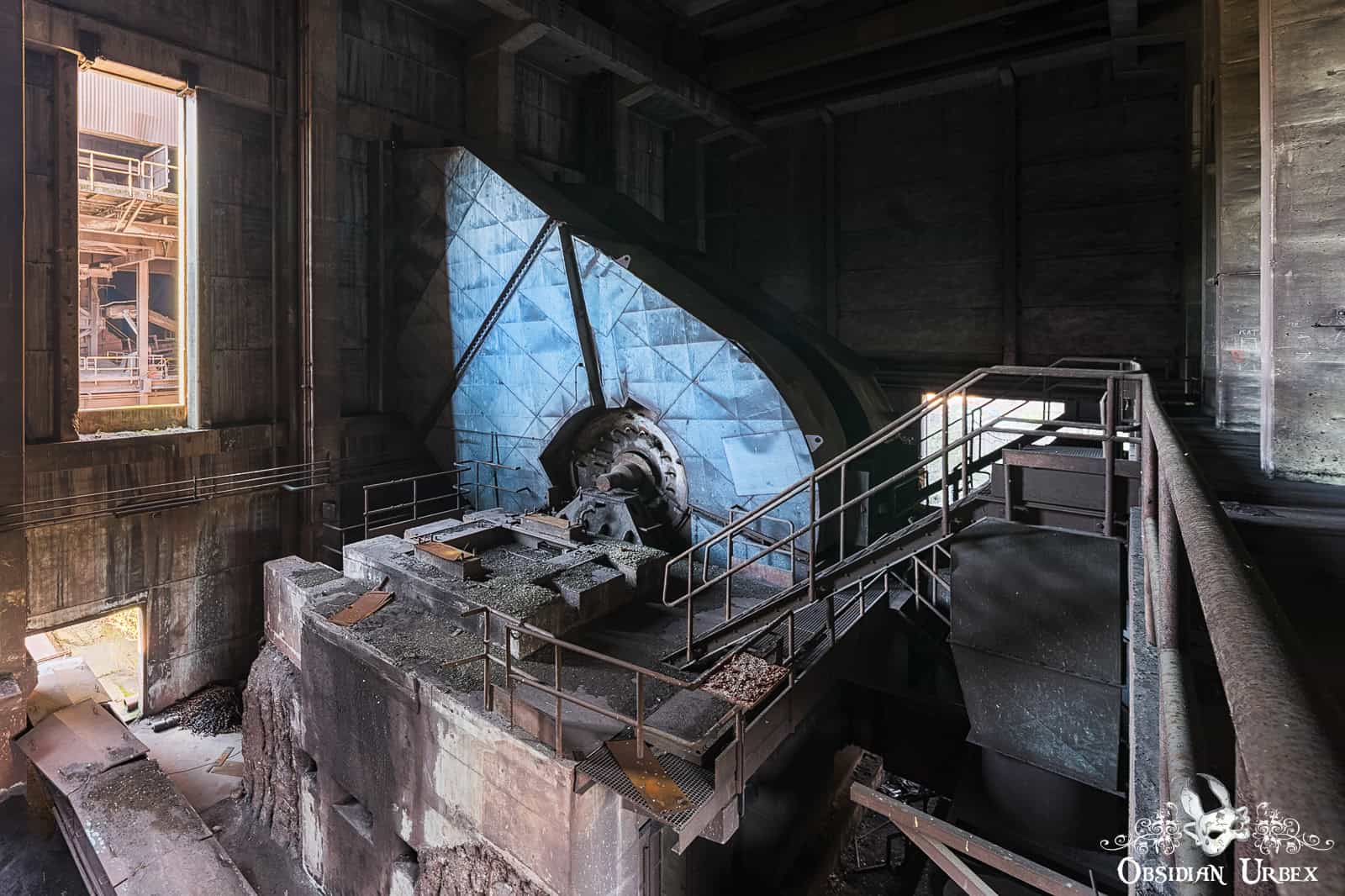
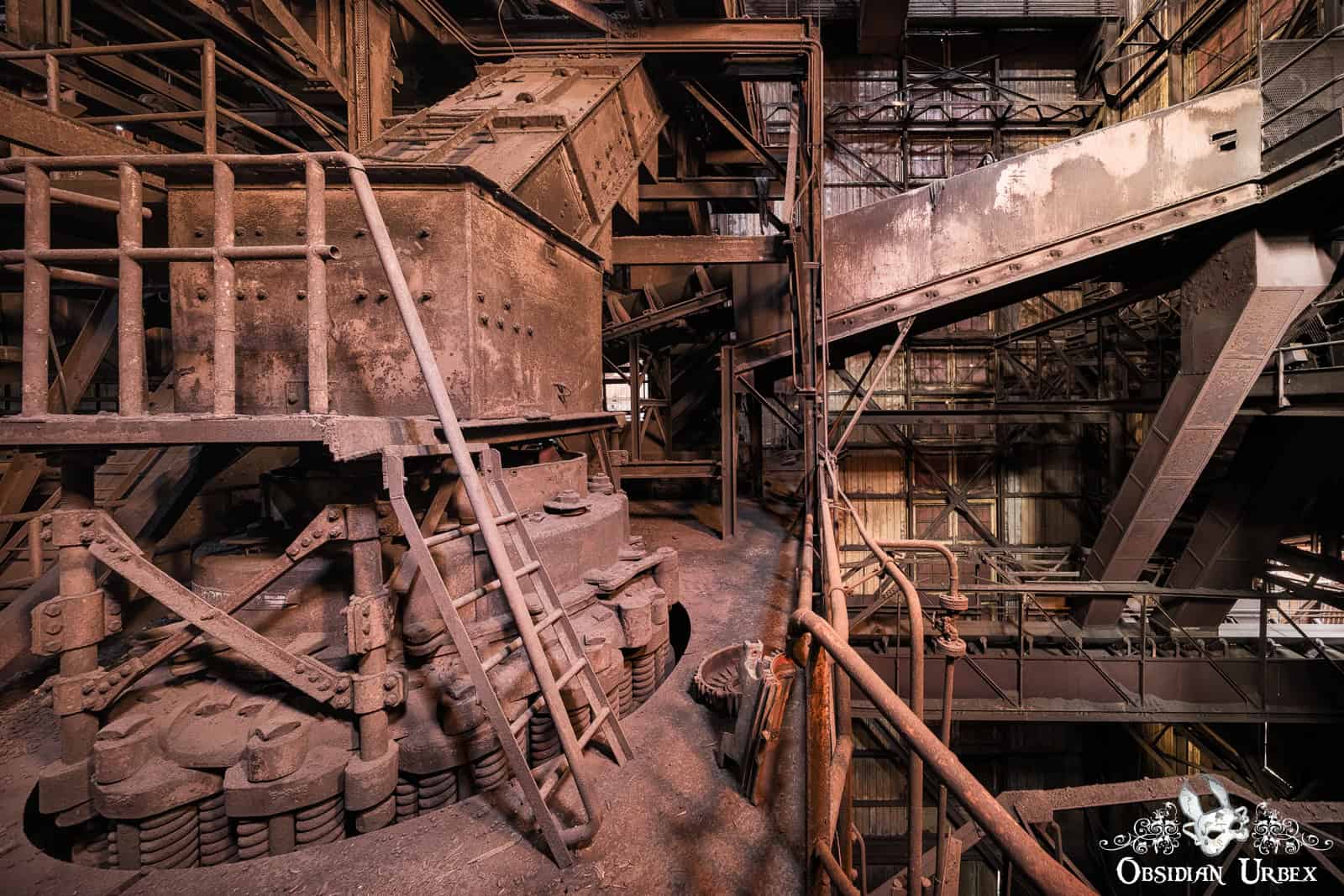
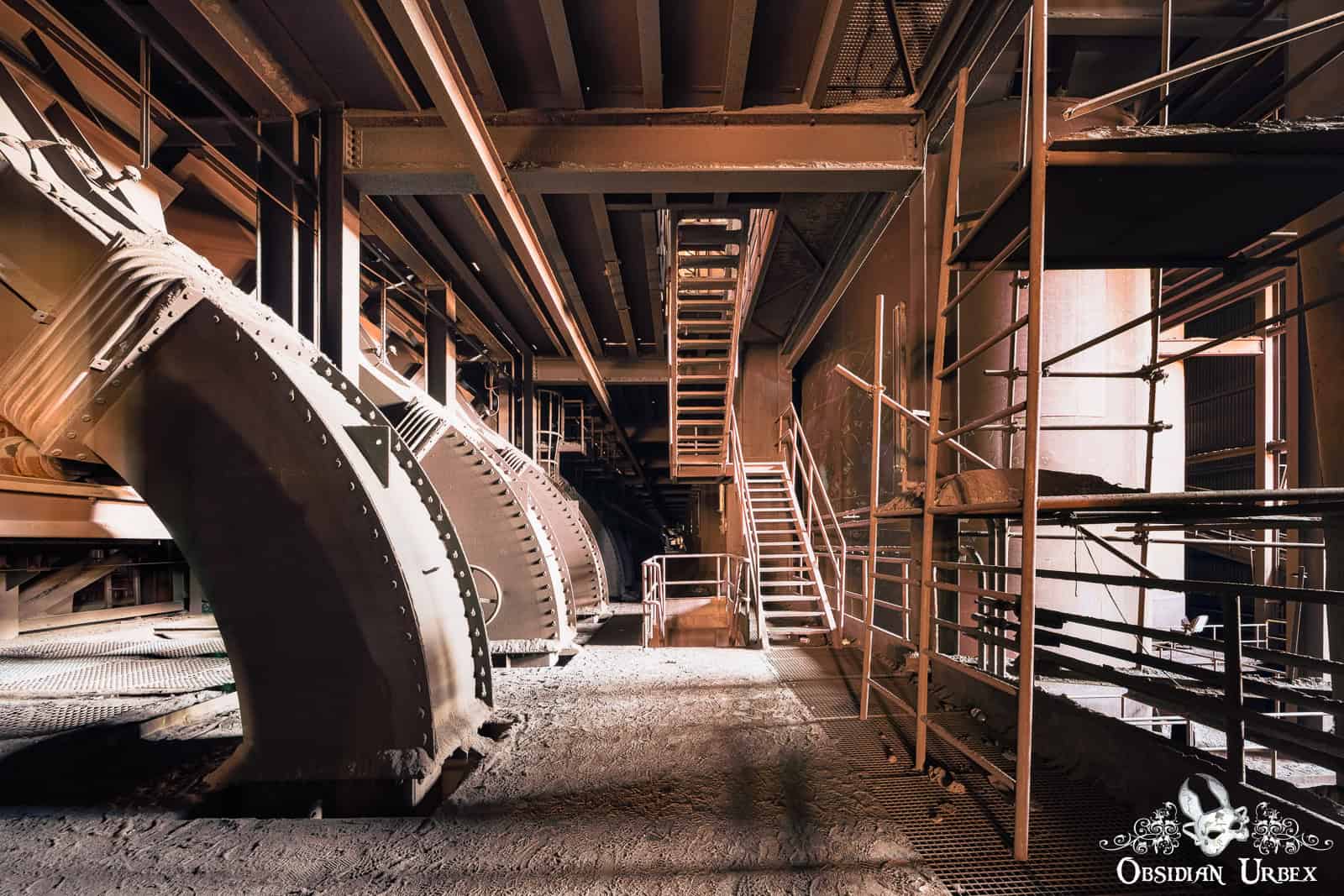
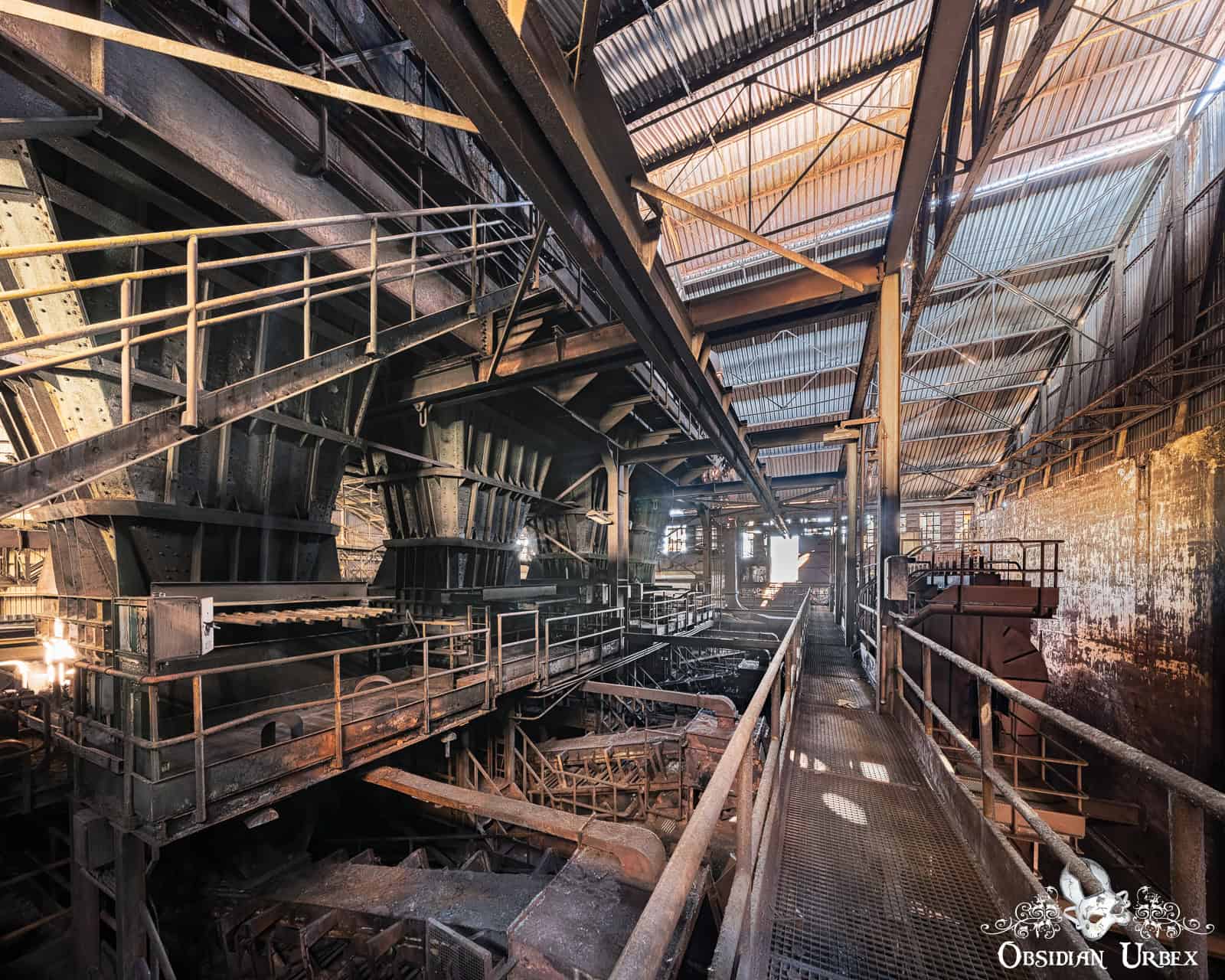
The site is an extensive industrial complex featuring storage tanks, band conveyors, pipe networks, and multi-storey metal frameworks.
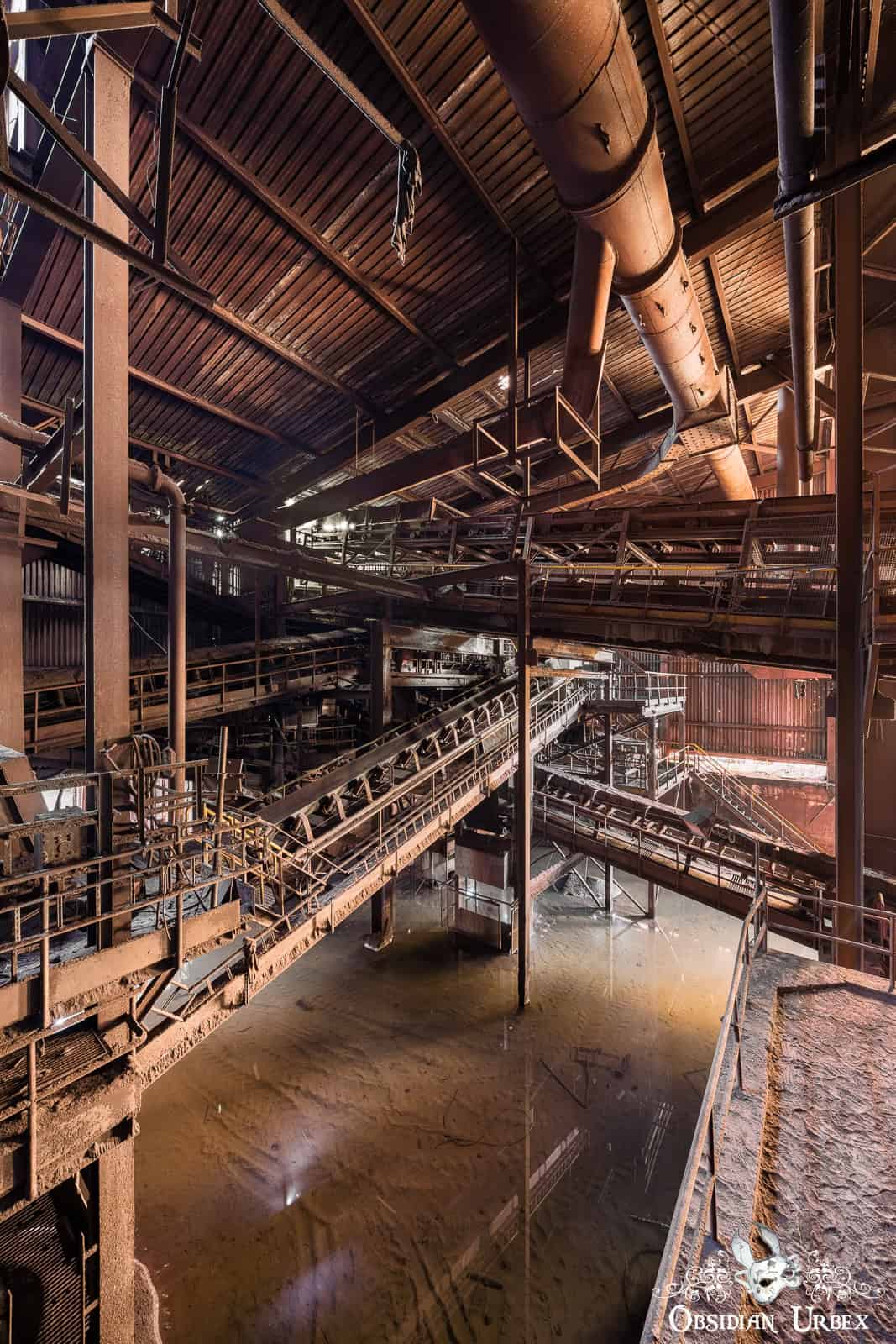
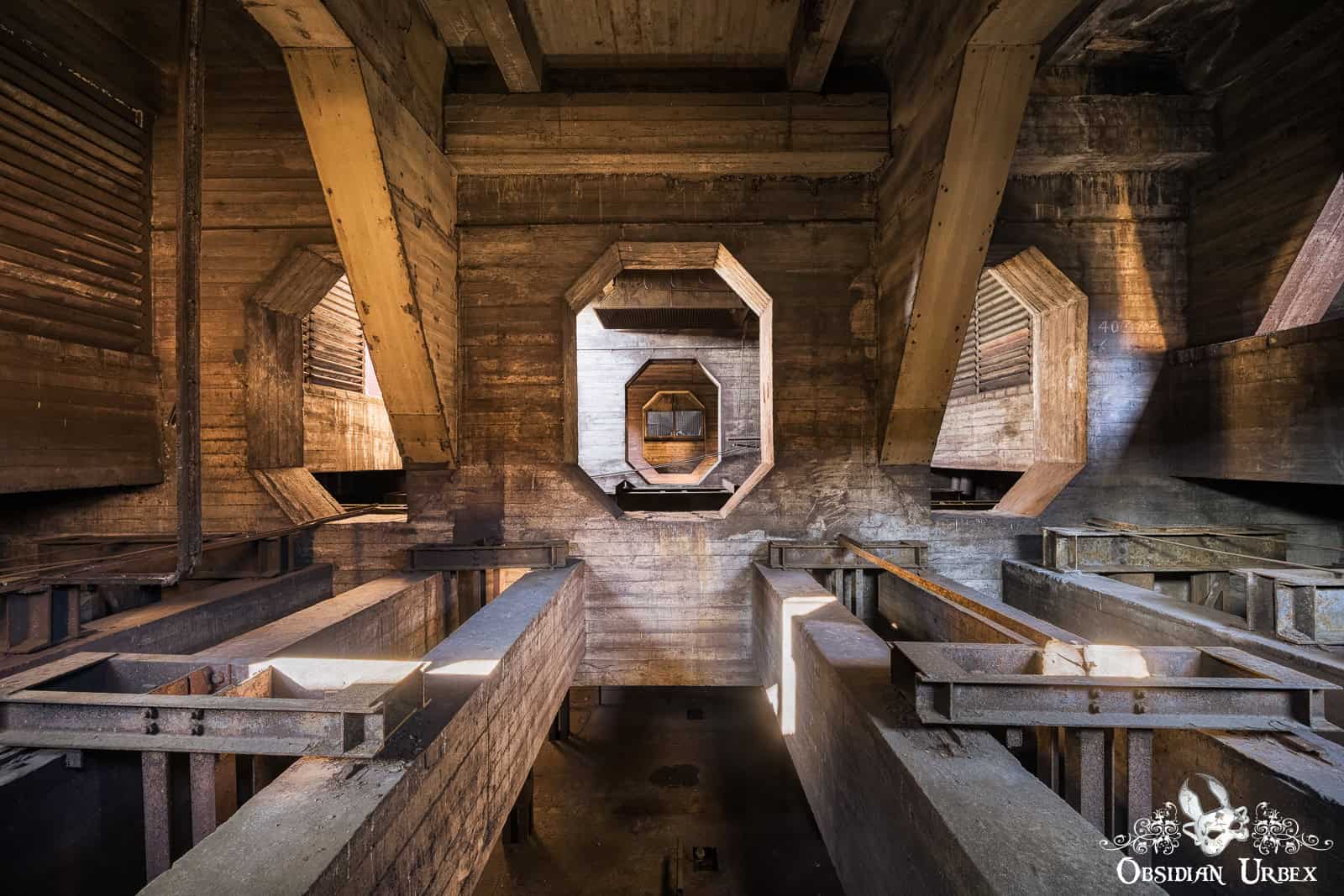
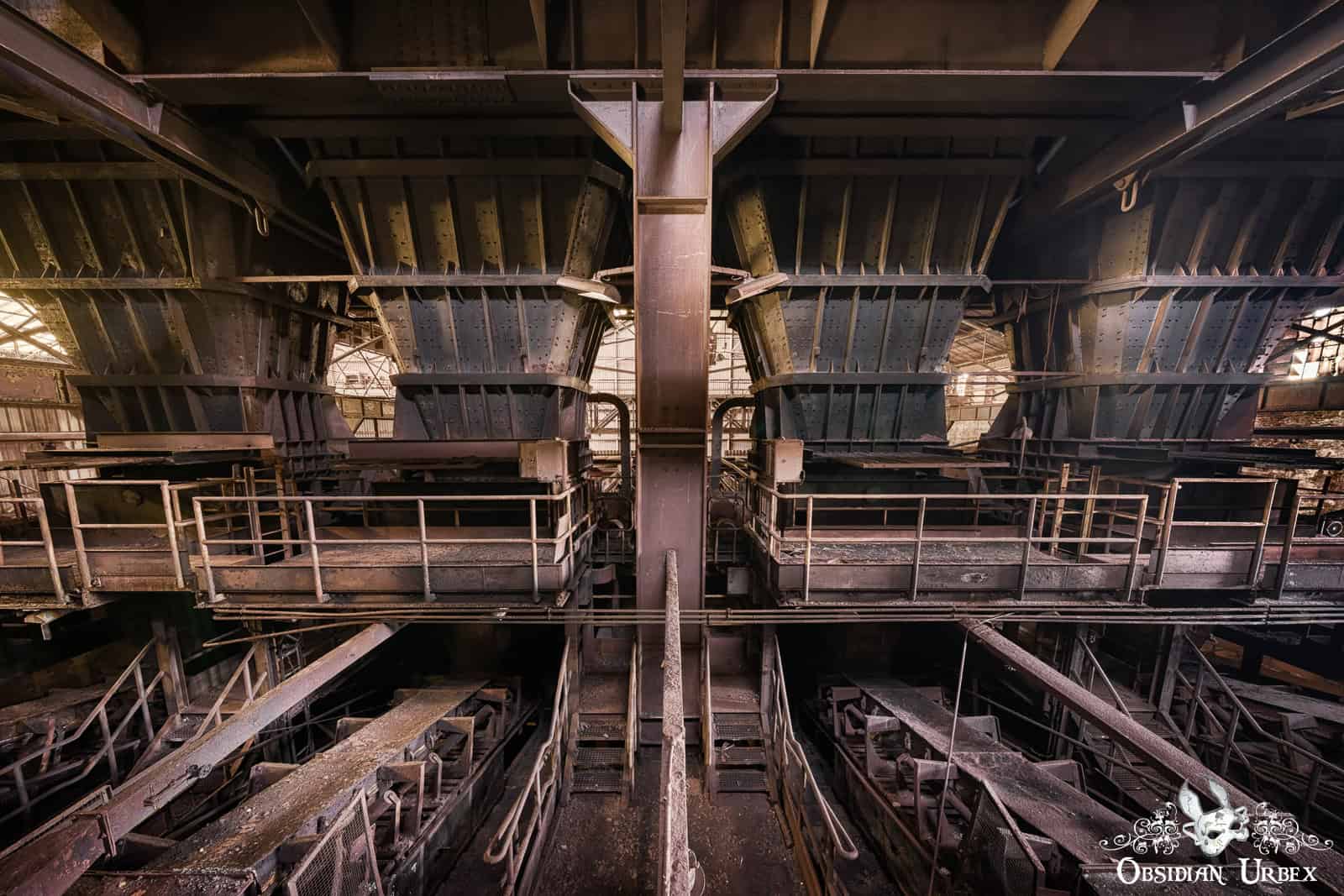
Firstly, raw materials arrived on site, delivered by trucks and trains that dumped them into hoppers. Large heavy-duty conveyors carried these into overhead storage bunkers. The organised materials could now be continuously fed into the production process.
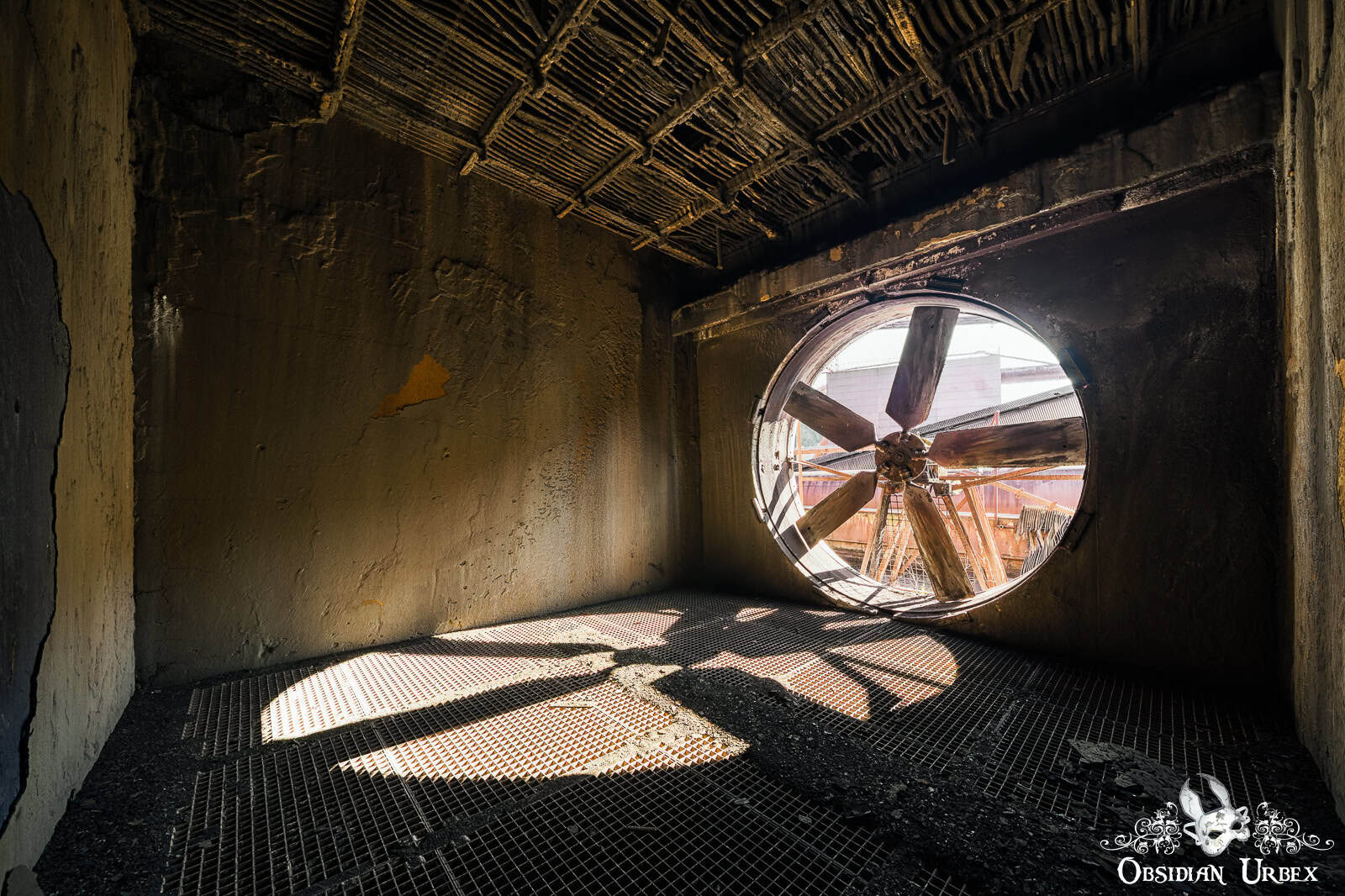
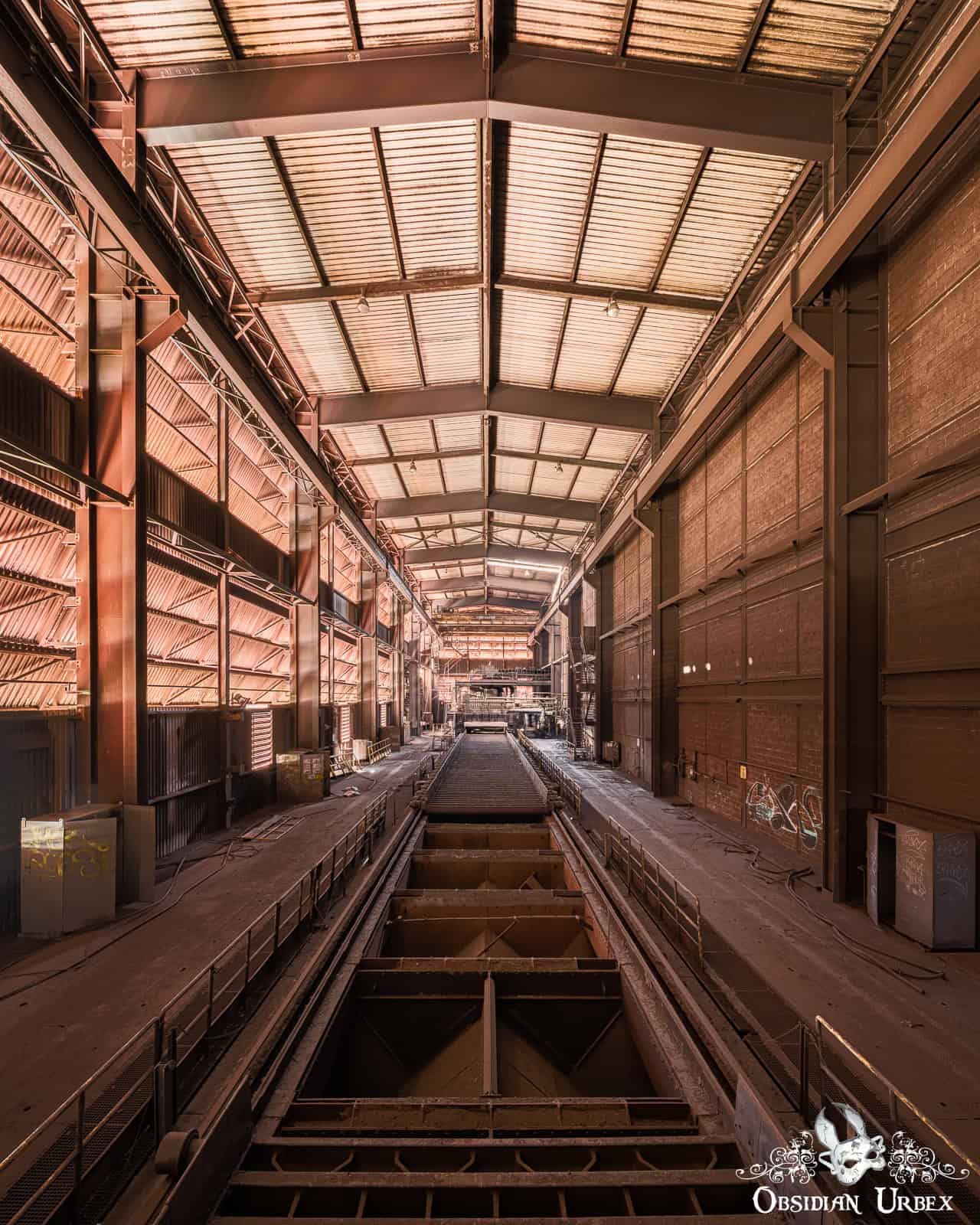
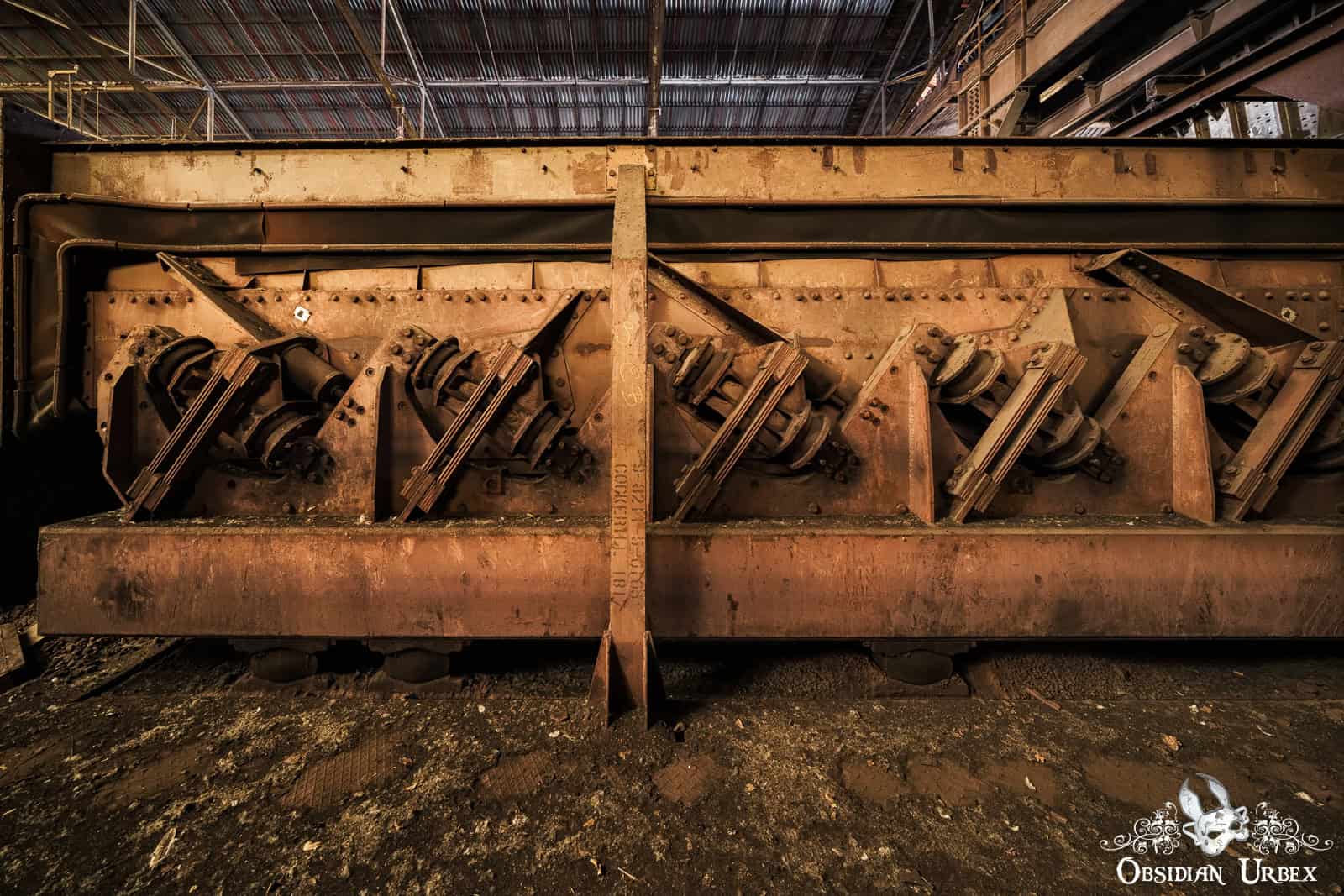
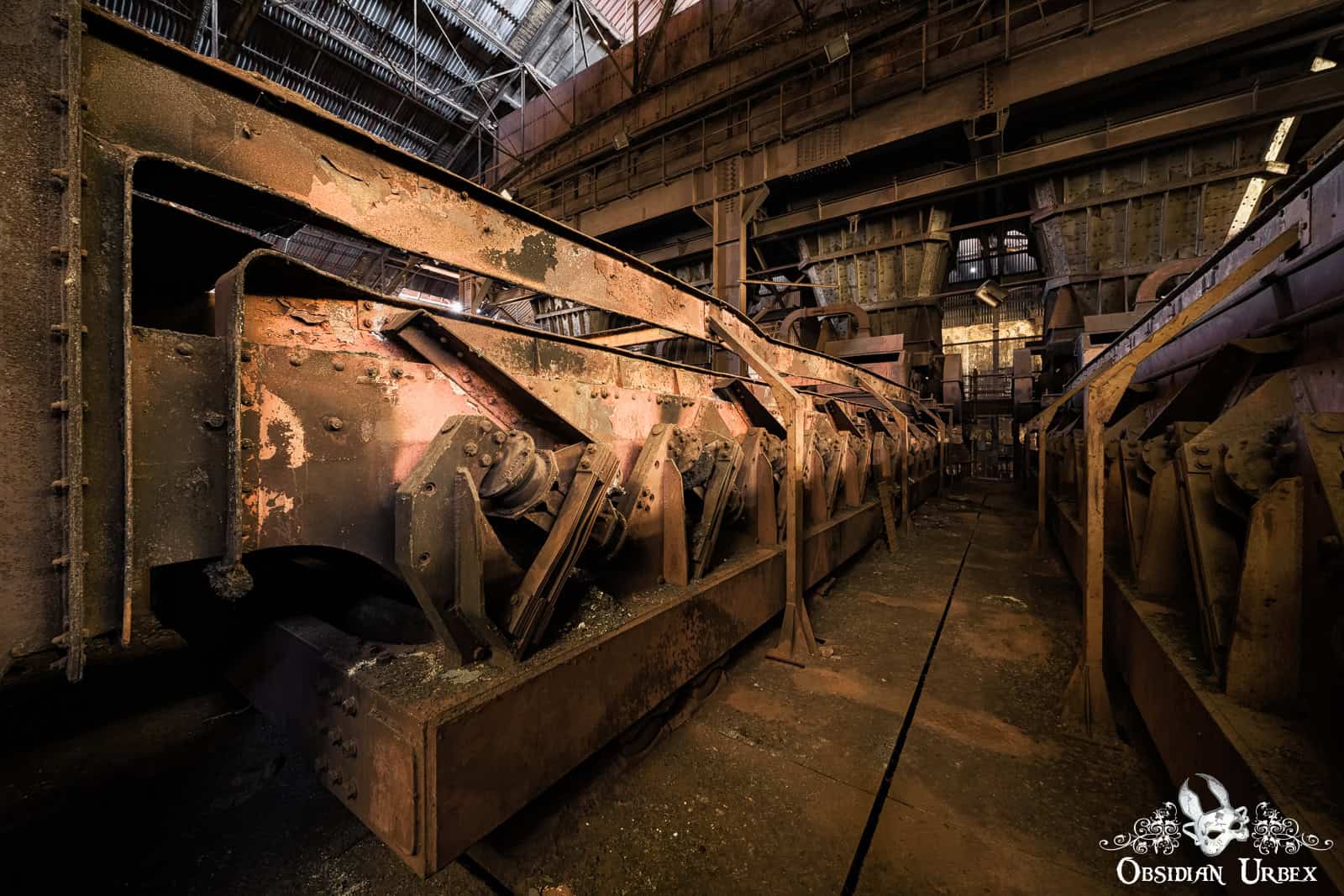
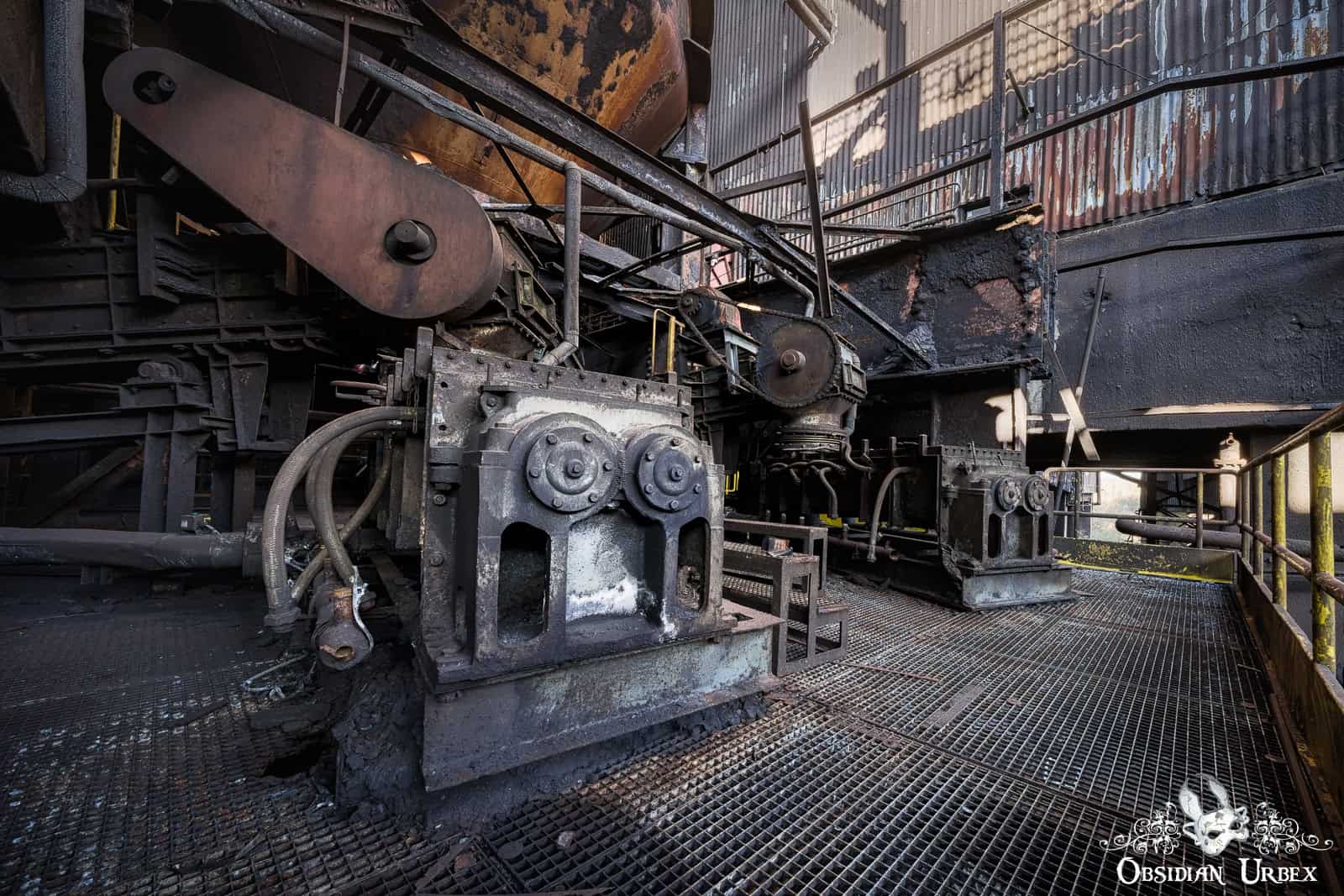
Secondly, raw materials move to the sinter plant. Here, the raw iron ore is blended with coke dust and flux, then ignited on a travelling grate to produce glowing-hot clinker. Giant fans below the grate suck air downward through the hot clinker, ensuring even baking. Mechanical crushers and shakers transform the clinker cake into optimised chunks.
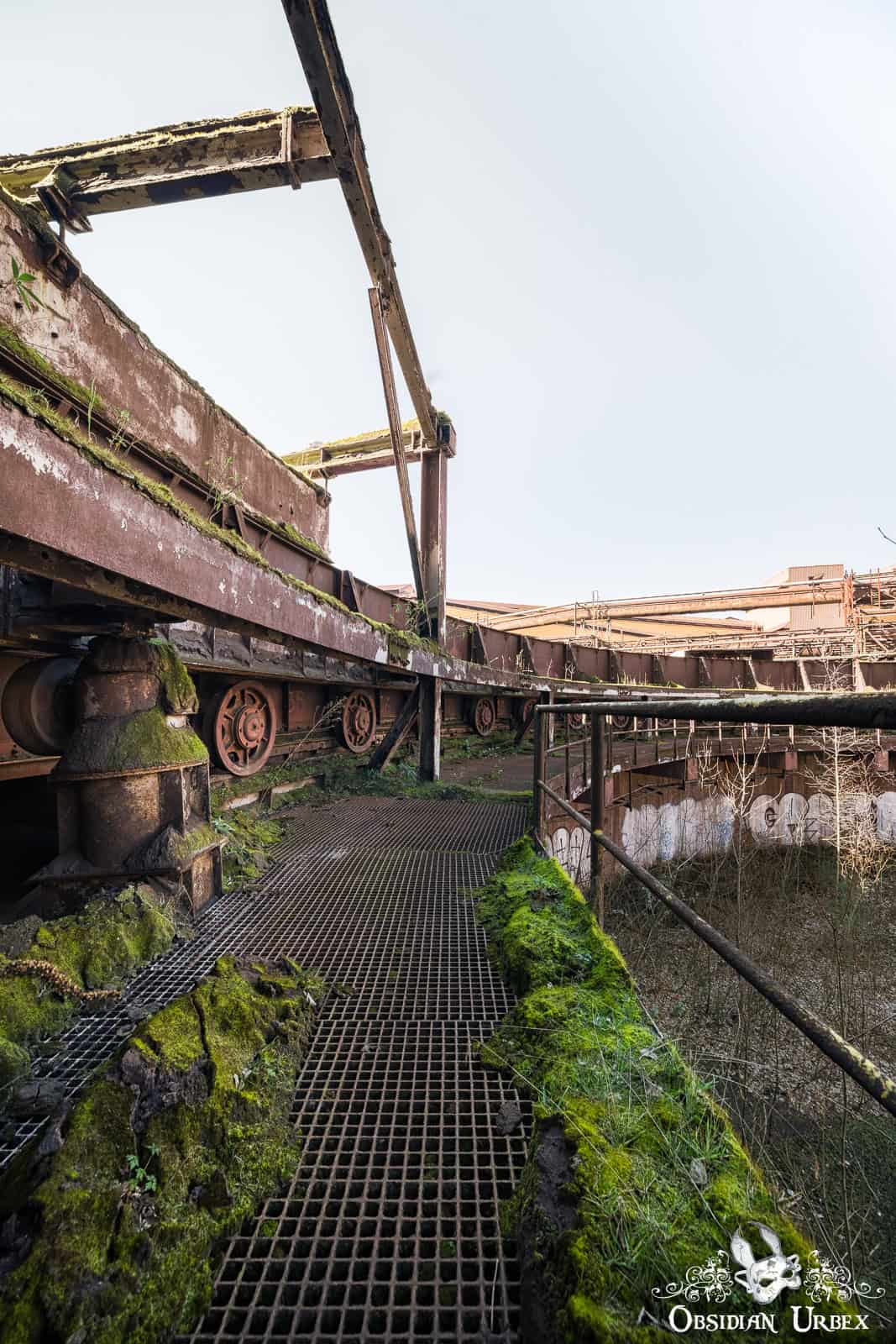
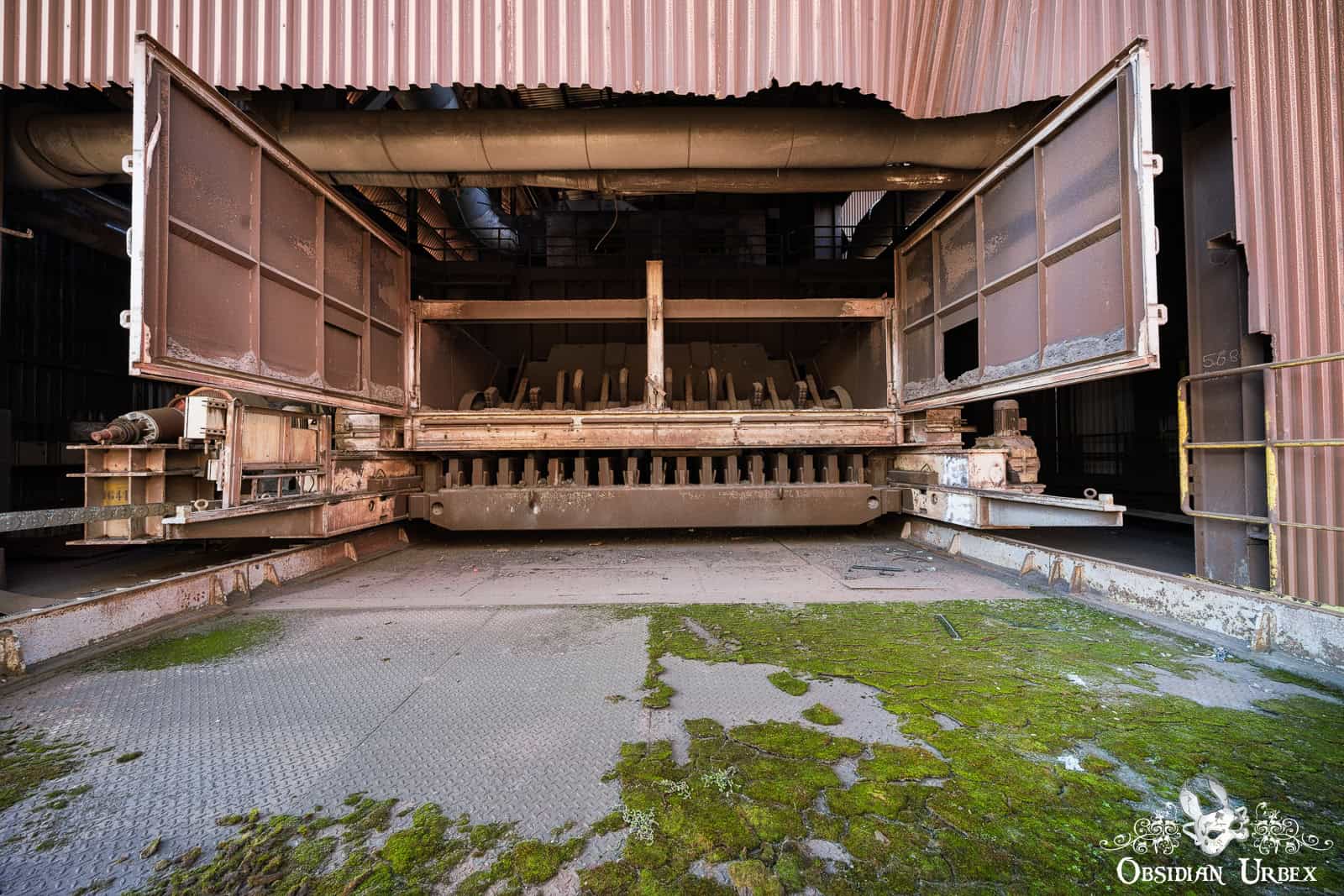
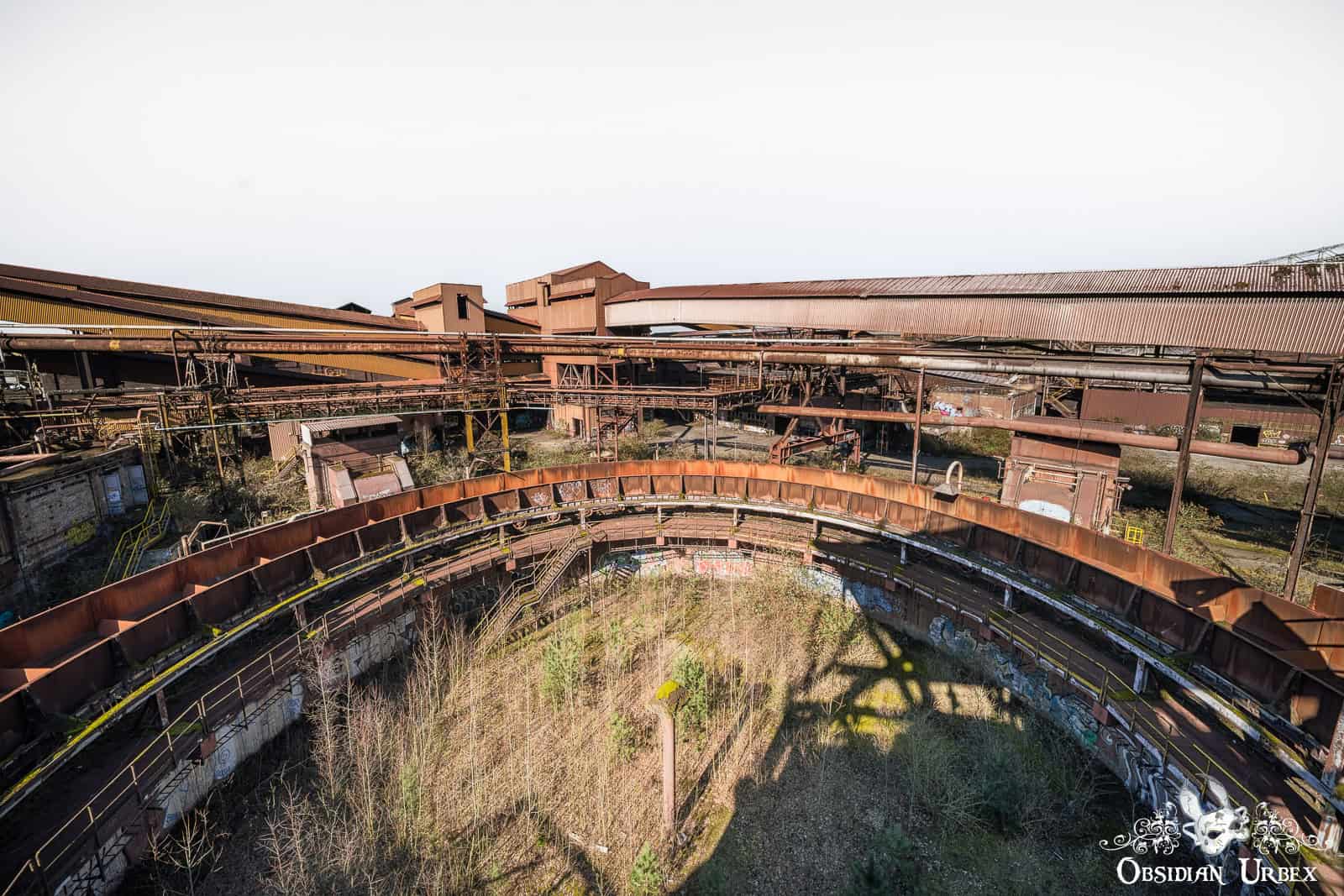
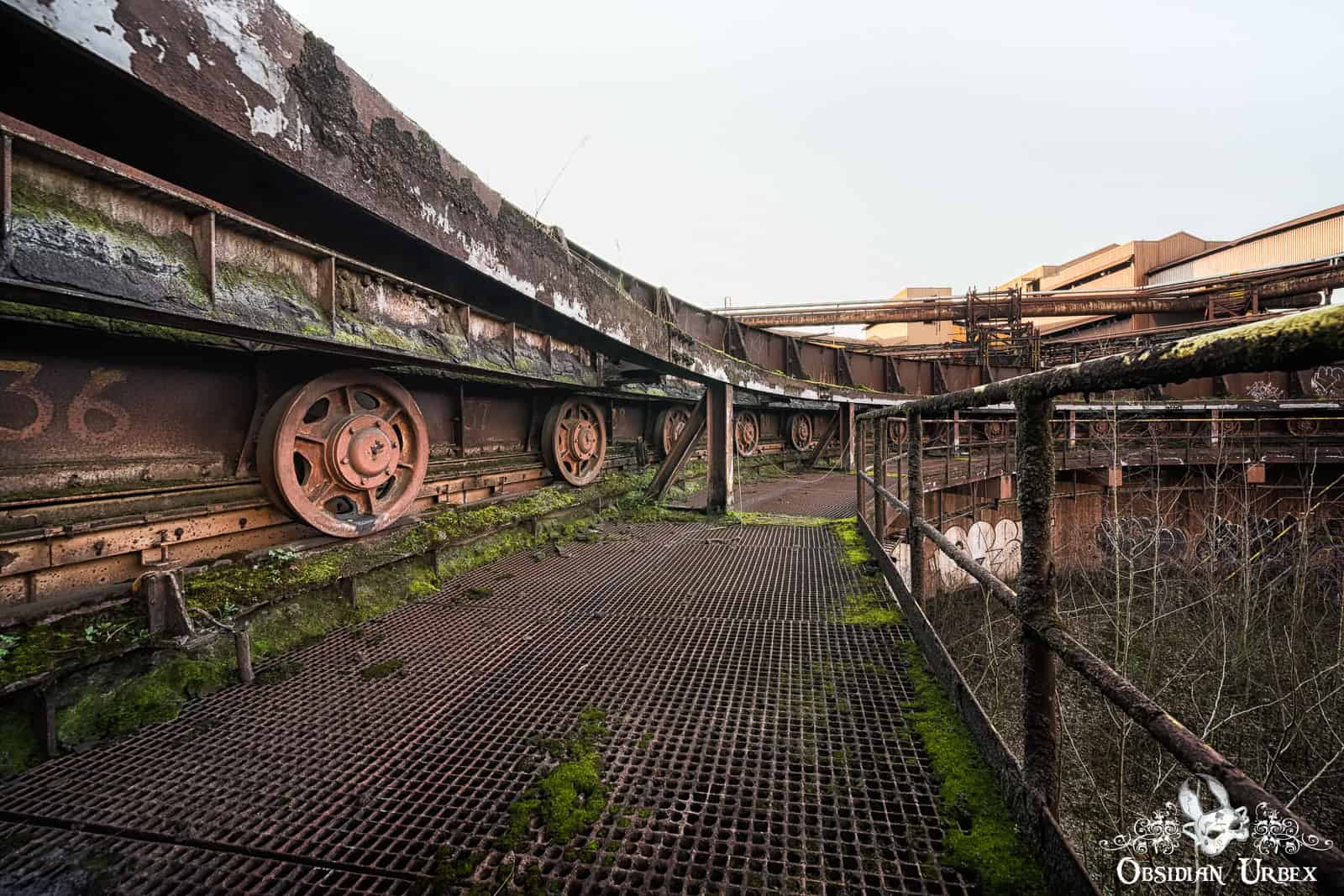
The chunks of sinter are loaded into open-air carts; these are all connected and run in a continuous circle. Large fans below the moving carts cool the red-hot sinter. This process stabilises and cools the material, allowing standard rubber conveyors to move it safely without melting. The next set of conveyors takes the sinter to the top of the blast furnace, ready for use.
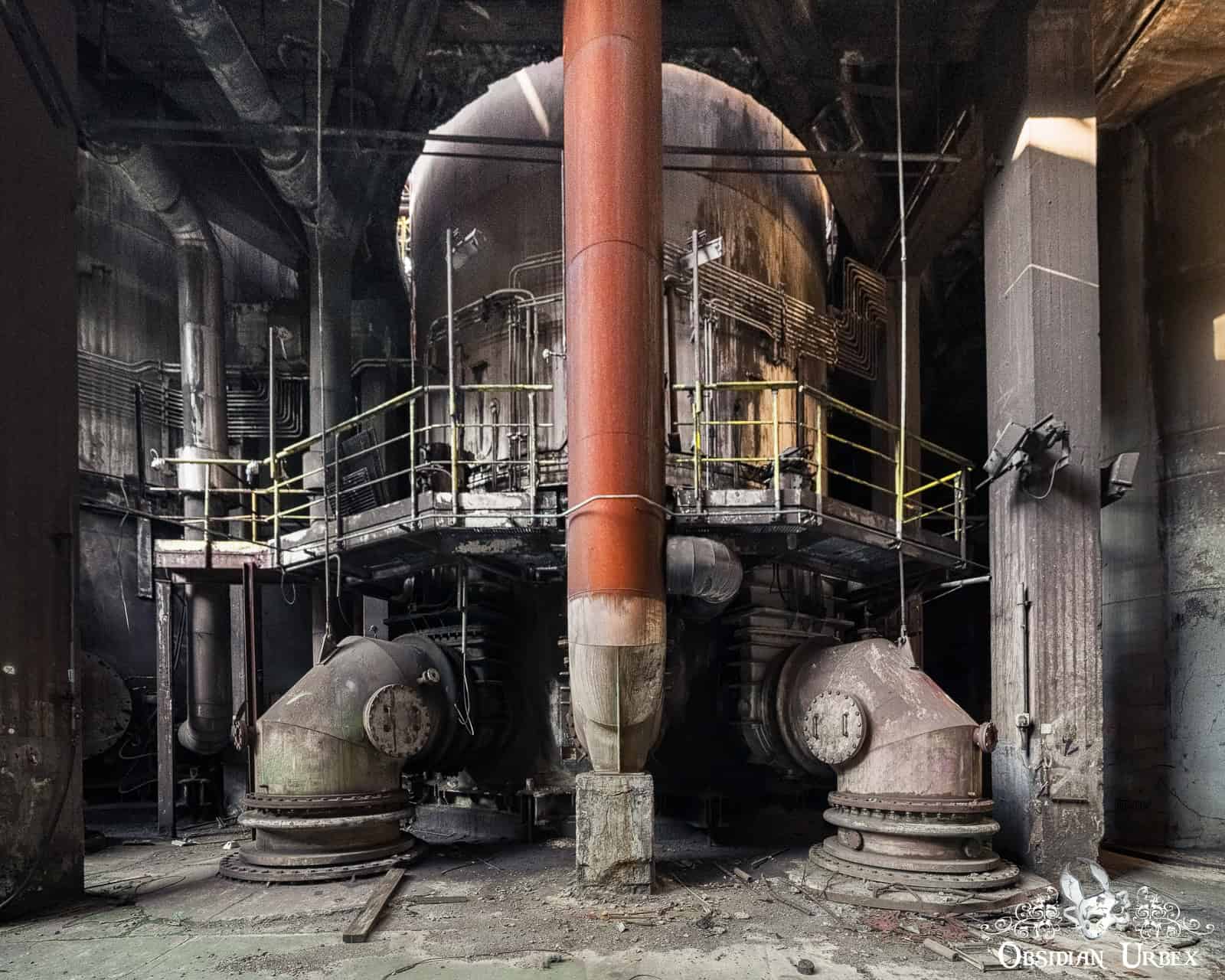
Around a third of the waste gases from the furnace were captured and burnt inside the cowper stoves. These are towering, brick-lined cylinders next to the furnace. Once the internal brickwork is white-hot, the gas is shut off. High-pressure pumps force ambient air through the glowing brickwork maze, superheating it to over 1,200 degrees for injection into the blast furnace.
At the centre stands the goliath Hauts-Fourneaux B (HFB) blast furnace, built to sustain internal temperatures exceeding 2000 degrees Celsius. I have a separate article dedicated to this area. Read more about the HFB Blast Furnace.
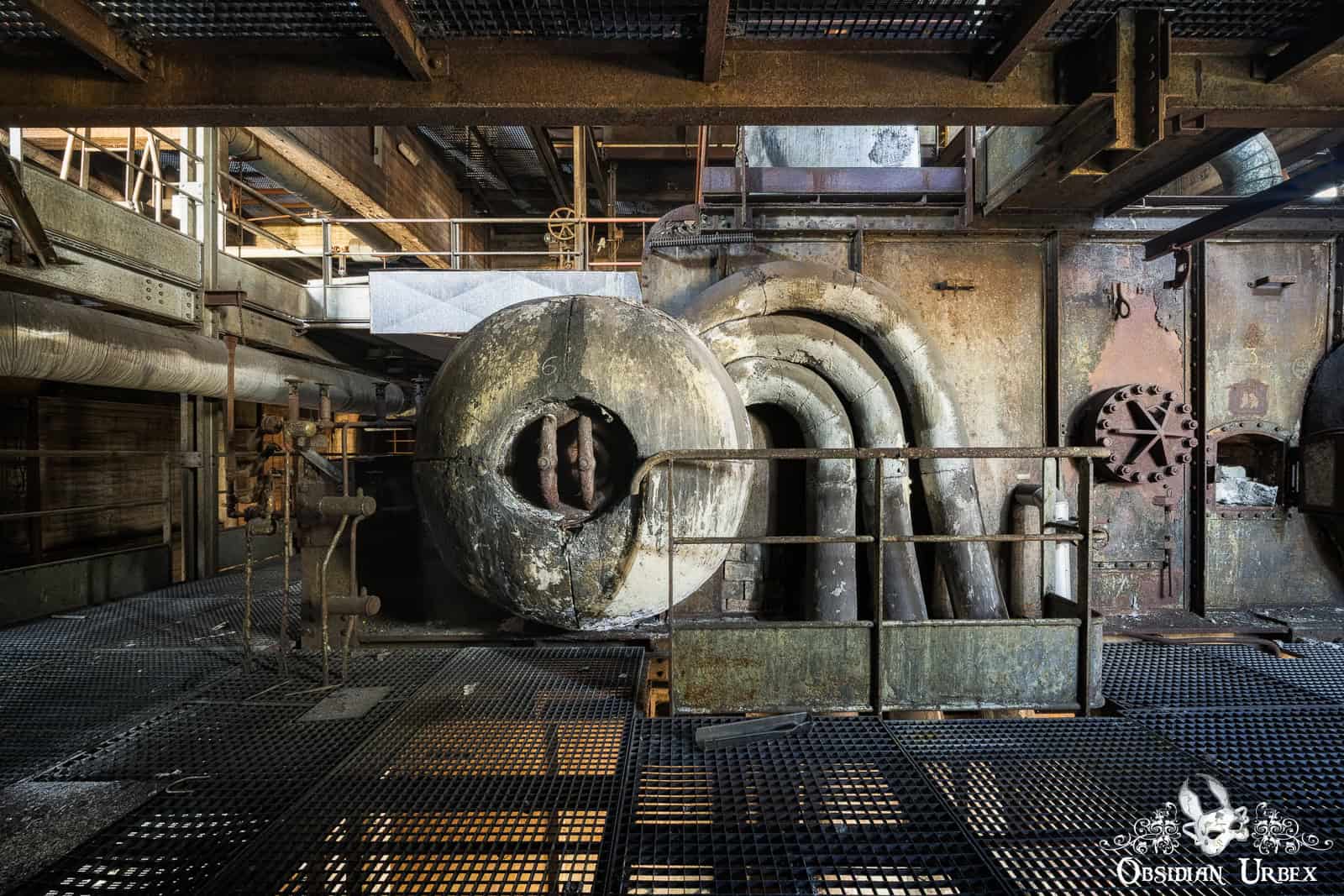
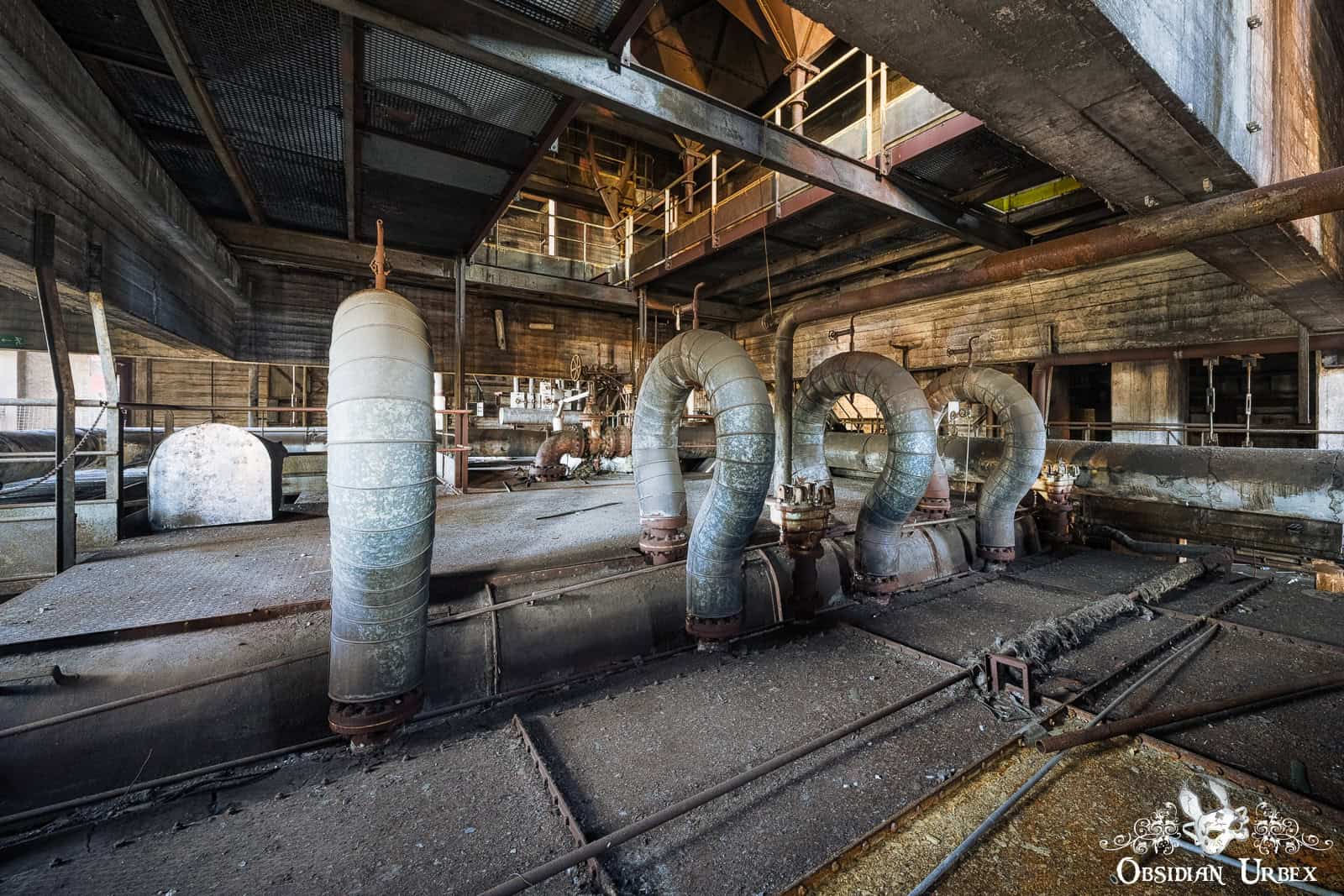
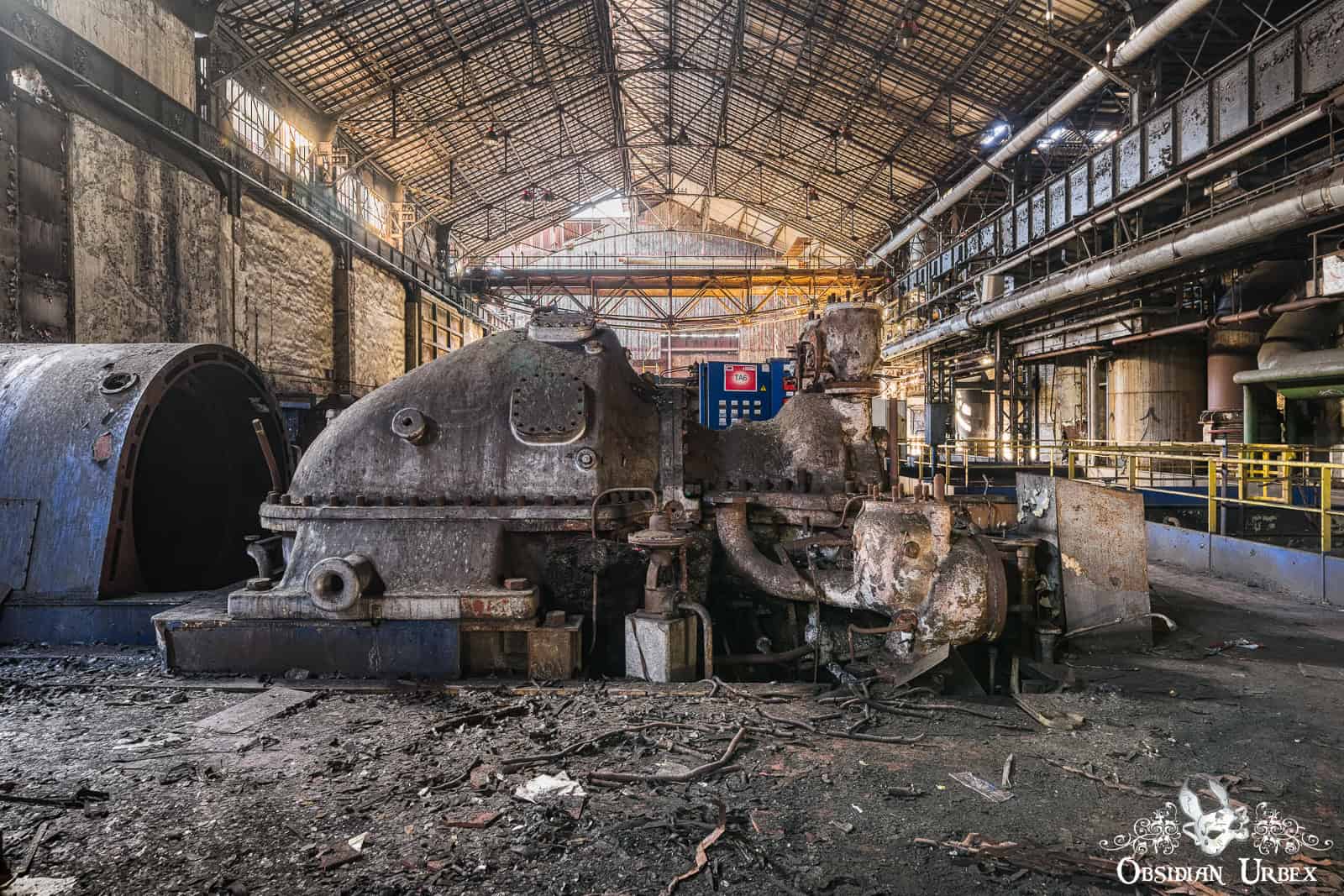
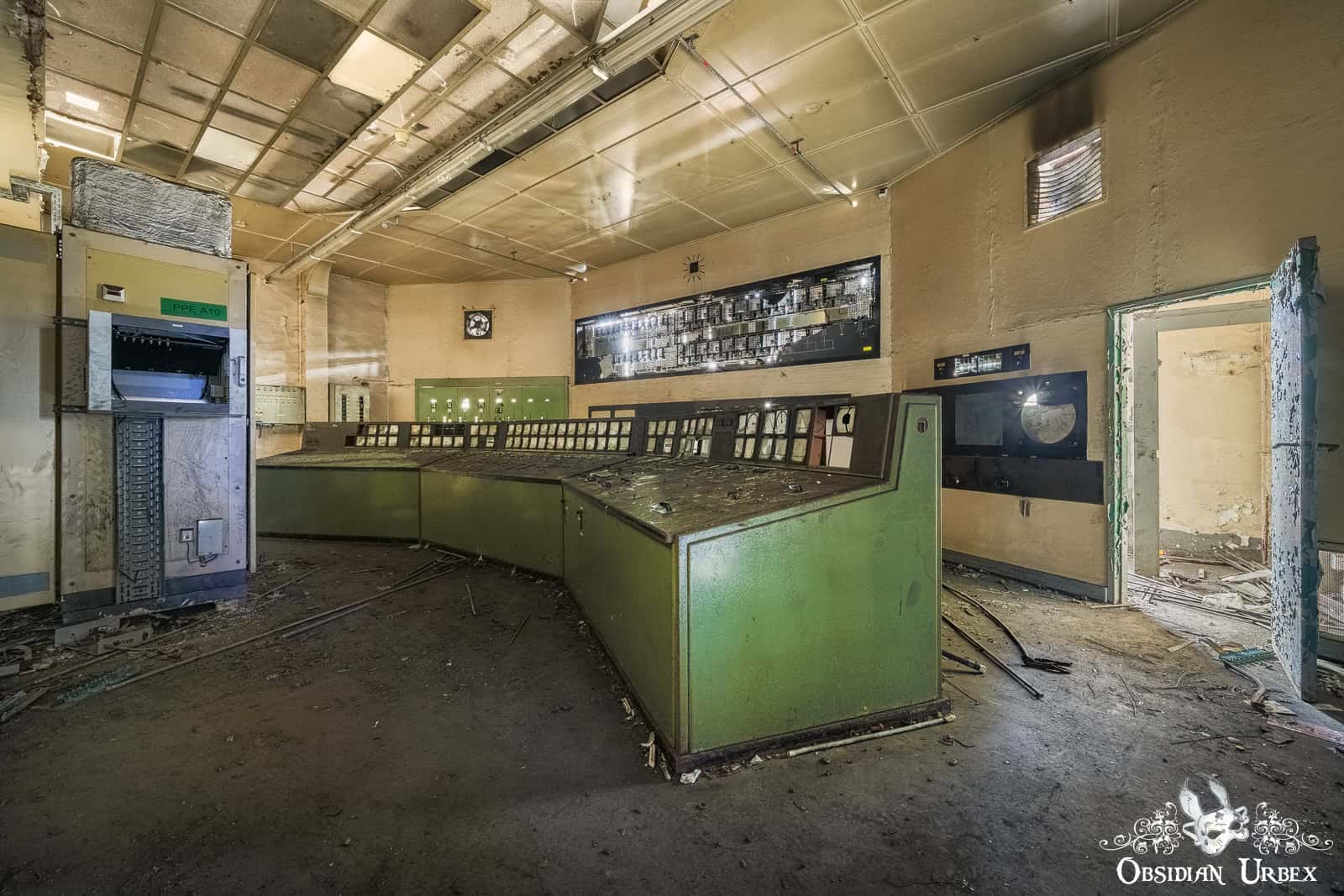
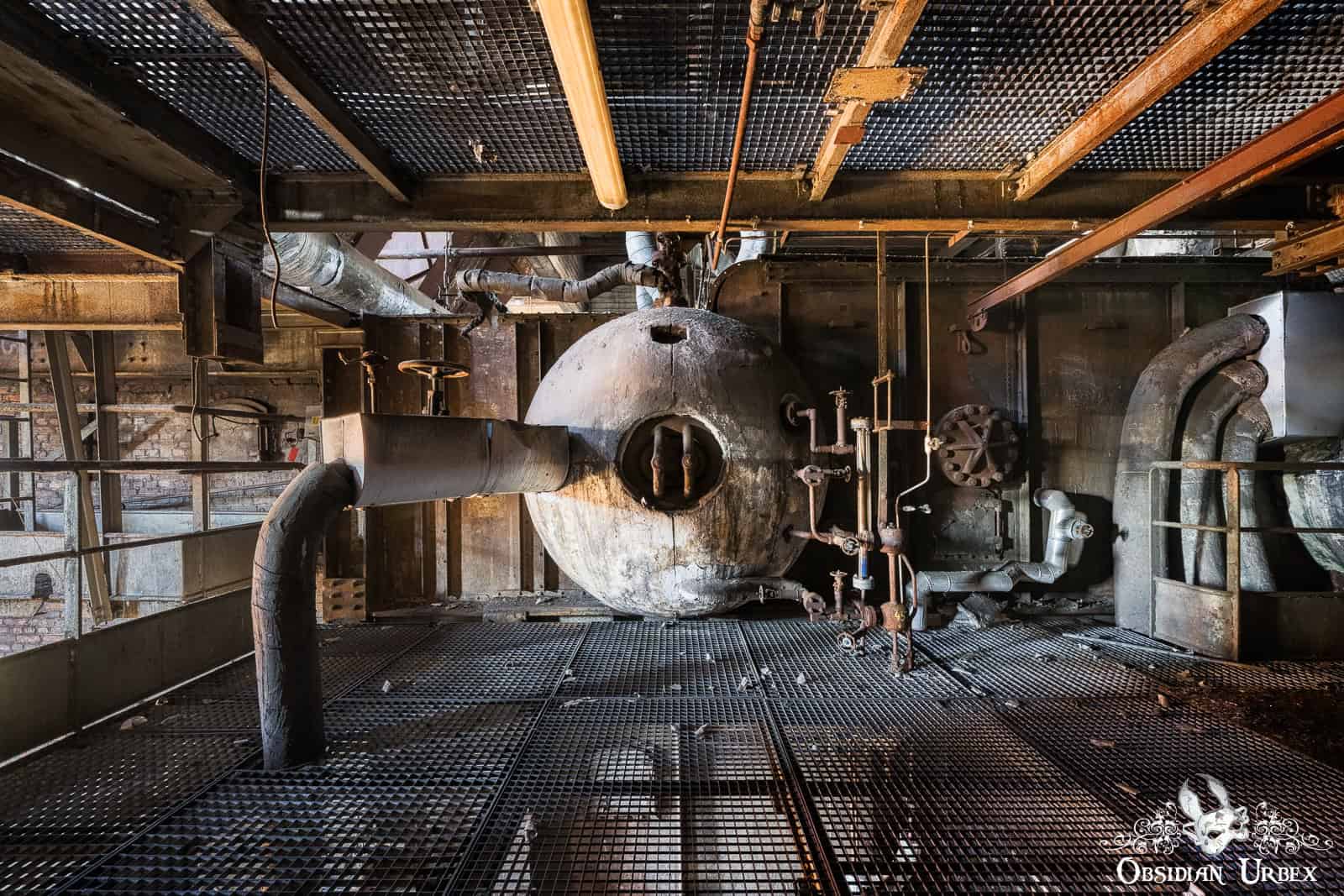
The Ougrée ironworks on-site power plant provided most of the energy needed to keep the site running. Pipes carried around half the captured waste gases from the blast furnace to the boiler house for burning. The resulting high-pressure steam spun up the turbines, generating electricity and powering the giant turbo blowers.
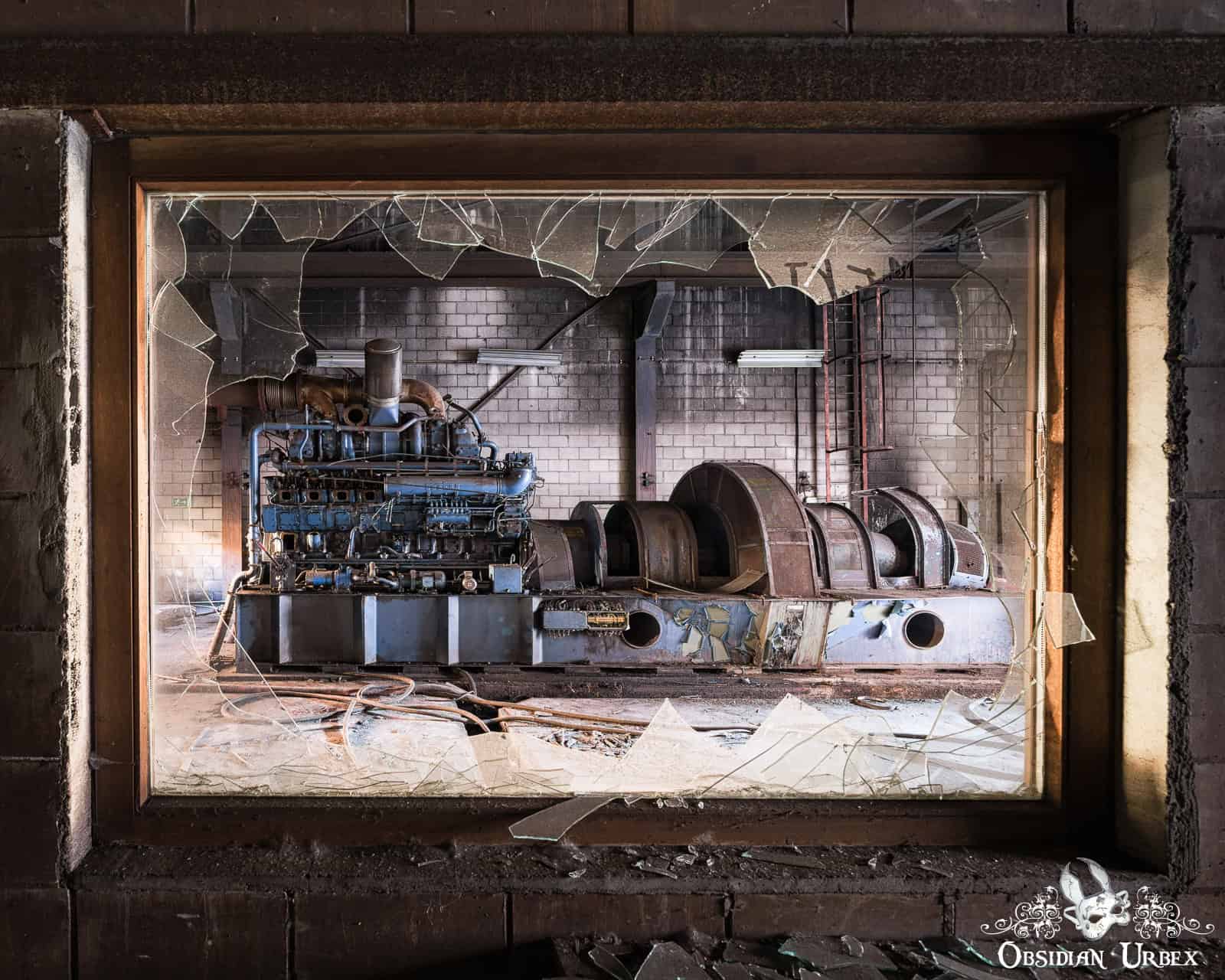
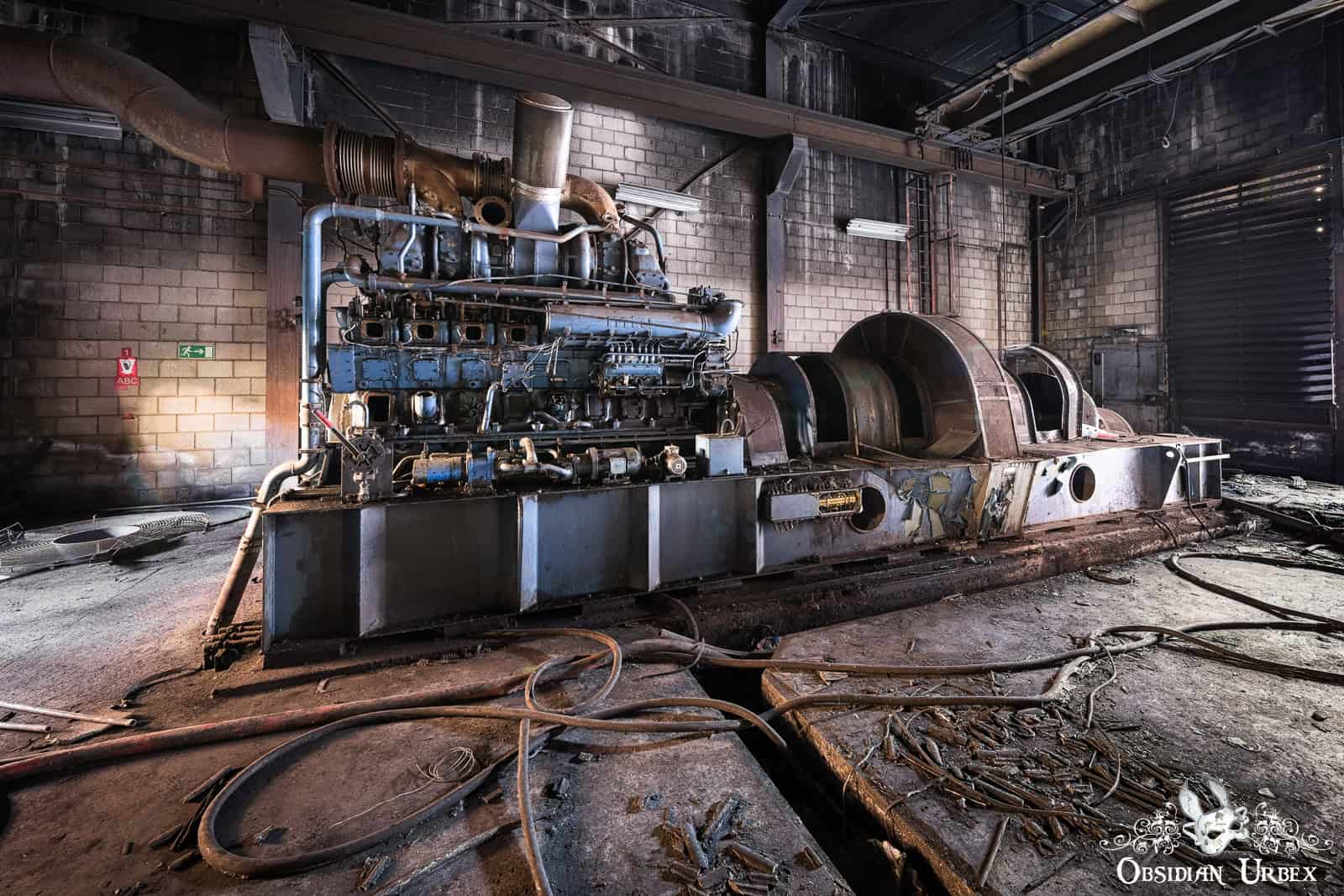
In case of emergency, there was also a back-up diesel generator. In the event of a total blackout, this generator would fire up instantly. This keeps critical water pumps working, ensuring the blast furnace shell does not overheat and catastrophically melt through.
In 2022 the Société de Démantèlement d’Ougrée, managed by the Wanty Group on behalf of ArcelorMittal, launched a four-year project. The plan covers the removal of approximately 300 industrial structures on-site and 20,000 tonnes of scrap metal.
Following this, the regional Walloon government will take over redeveloping the decontaminated land for mixed use covering possible industrial, logistical, and economic projects. Several structures will remain as heritage pieces. These include the main blast furnace tower, Cowper stoves, chimney, and cast house.
Seen a photo you love? All my images are available as prints, please do Contact Me and let me create your perfect bespoke artwork.
Which photograph caught your eye the most? How did this location make you feel? Do you have a question? Let me know by leaving a comment!


Join My Adventures!
I add new content every week, ranging from exciting new locations to blog articles about my road trips. My beautiful newsletter will bring my photographic adventures direct to your inbox!
Your email address will not be shared, or publically displayed. I will only use your data to send you the newsletter, as outlined in the Privacy Policy. You can unsubscribe at any time, via the opt-out link included in every email.