Support me on Patreon for early access previews, rewards and giveaways!
Contact Me
Or use the contact form below.
Support me on Patreon for early access previews, rewards and giveaways!
Or use the contact form below.
Sanatorium Metalurgi is one of the former Soviet resort buildings scattered across the spa town of Tskaltubo in western Georgia. It is one of the most iconic and best-preserved examples of Soviet-era architecture in Tskaltubo. It was part of the state system for health tourism, bringing thousands of holidaying workers to this valley each year. Now it sits mostly abandoned, the once grand theatre and communal spaces succumbing to the passing decades.
I visited Sanatorium Metalurgi during my 2022 Georgia & Armenia Tour. As well as exploring many of the abandoned spas and hotels across Tskaltubo, I visited many other Soviet relics across Georgia.
Tskaltubo developed into a major spa town during the Soviet era, all due to its natural radon carbonate springs. These medicinal waters were believed to assist with circulatory, nervous, and musculoskeletal conditions. From the 1930s on, the Soviet Union invested heavily in developing the town as a centre for balneological spa treatments.
Workers from across the USSR arrived at Tskaltubo to take advantage of subsidised health packages that included accommodations, meals, and prescribed treatments. Guests often stayed for several weeks, following preplanned daily routines that combined medical care with rest and organised leisure activities. By the post-war decades, Tskaltubo welcomed more than 100,000 visitors annually at its peak.
After the collapse of the Soviet Union in 1991, the system that supported spa tourism disappeared. State funding evaporated, and the constant stream of visitors became an infrequent trickle. Ultimately most sanatoria and hotels closed. Some buildings later housed people displaced by regional conflicts, such as the nearby Abkhazian conflict (termed IDP, or internally displaced people). Over time these temporary refuges became homes, and many families still live there today.
Sanatorium Metalurgi was constructed during the mid-Soviet period. It was completed in 1957, a collaborative project including Valerian Kedia and Ioseb Zaalishvili, who were key architects responsible for drawing the plans for the town of Tsktalubo in 1950-1951.
As the name suggests, this sanatorium was built for metallurgical sector workers (მეტალურგ, or met’alurgi, in Georgian). Steelworkers from all over the USSR automatically qualify for state-funded treatment due to the physical demands of their work. The sanatorium served as a hotel, accommodating the workers while they attended nearby bathhouses for treatments.
The sanatorium remained in use until the early 1990s. Following its closure, the building stood empty for a time before becoming home to internally displaced people fleeing the Abkhazian conflict.
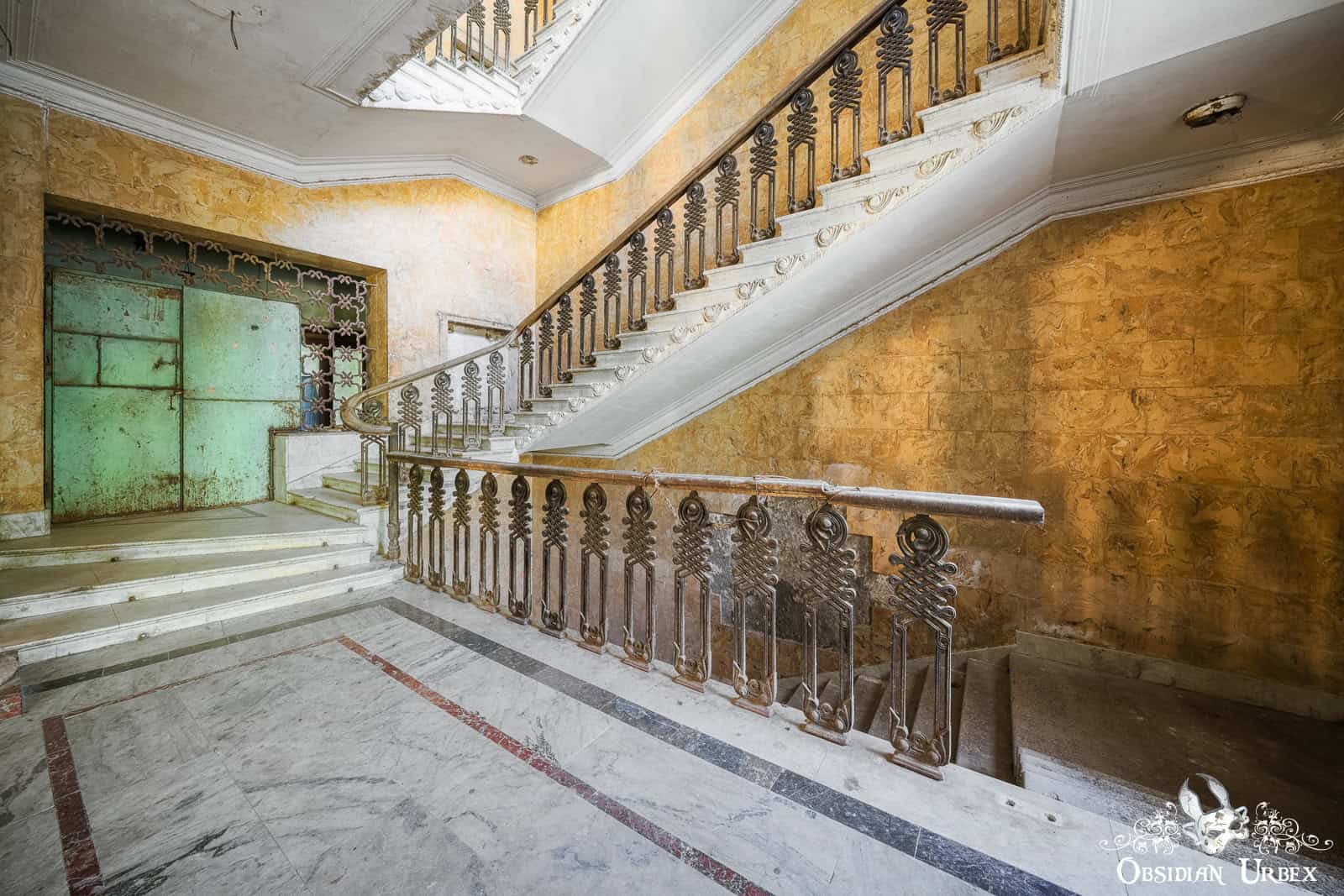
Sanatorium Metalurgi is a large multi-storey concrete building with a symmetrical layout. The main entrance leads into a central circulation space, from which long corridors extend into the accommodation and areas occupying the wings.
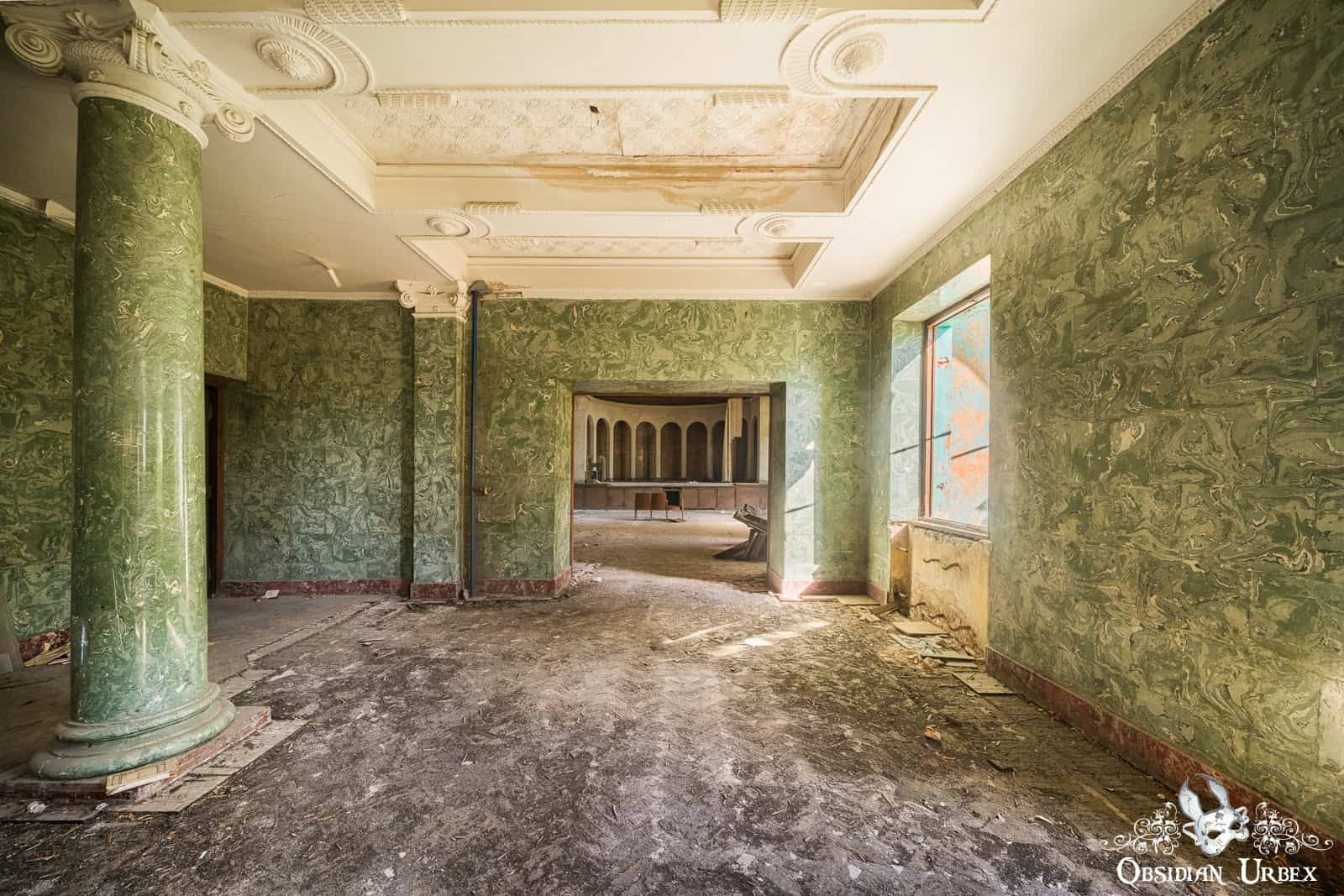
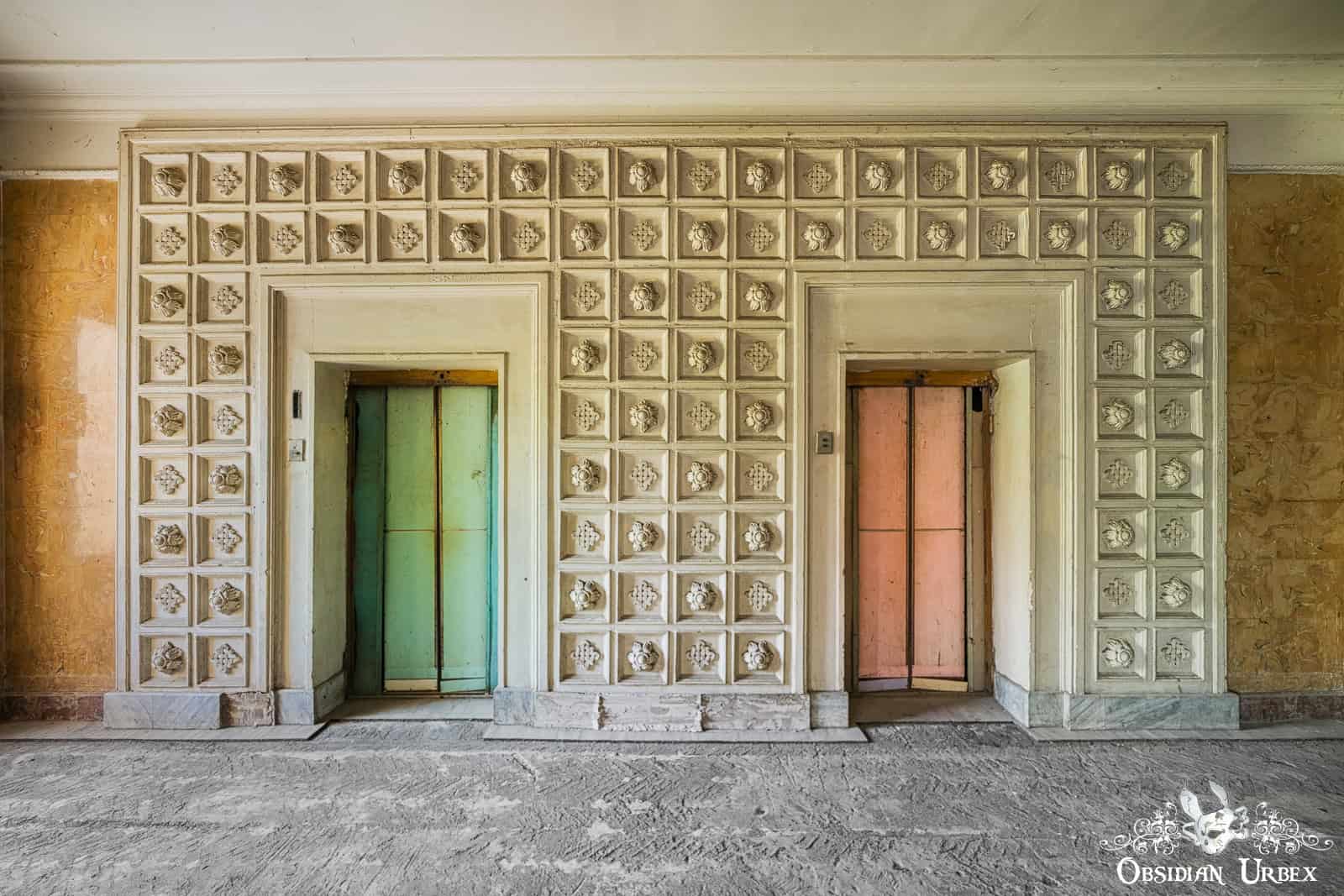
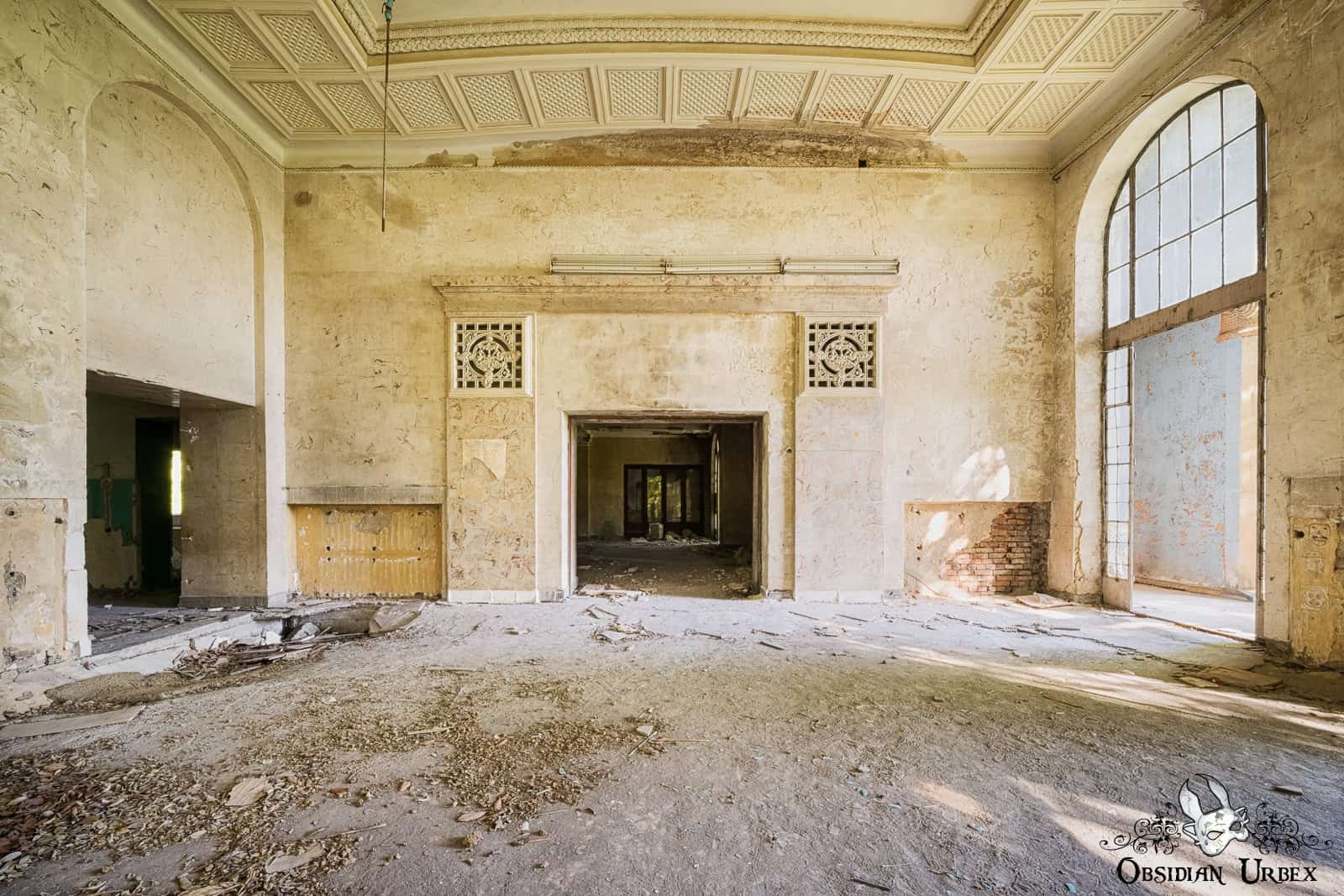
This sanatorium is a clear example of Stalinist Empire style, or Stalinist Neoclassicism. This style sought to blend the monumentality of Ancient Rome and Greece with Soviet symbols. This layout symbolised that the “palaces” of the past now belonged to the proletariat (the workers). There are also stone carvings and floral motifs, which are traditional Georgian ecclesiastical patterns that have been incorporated into the Soviet framework. These are notable; they occur around the elevator doors and line some of the hallway ceilings.
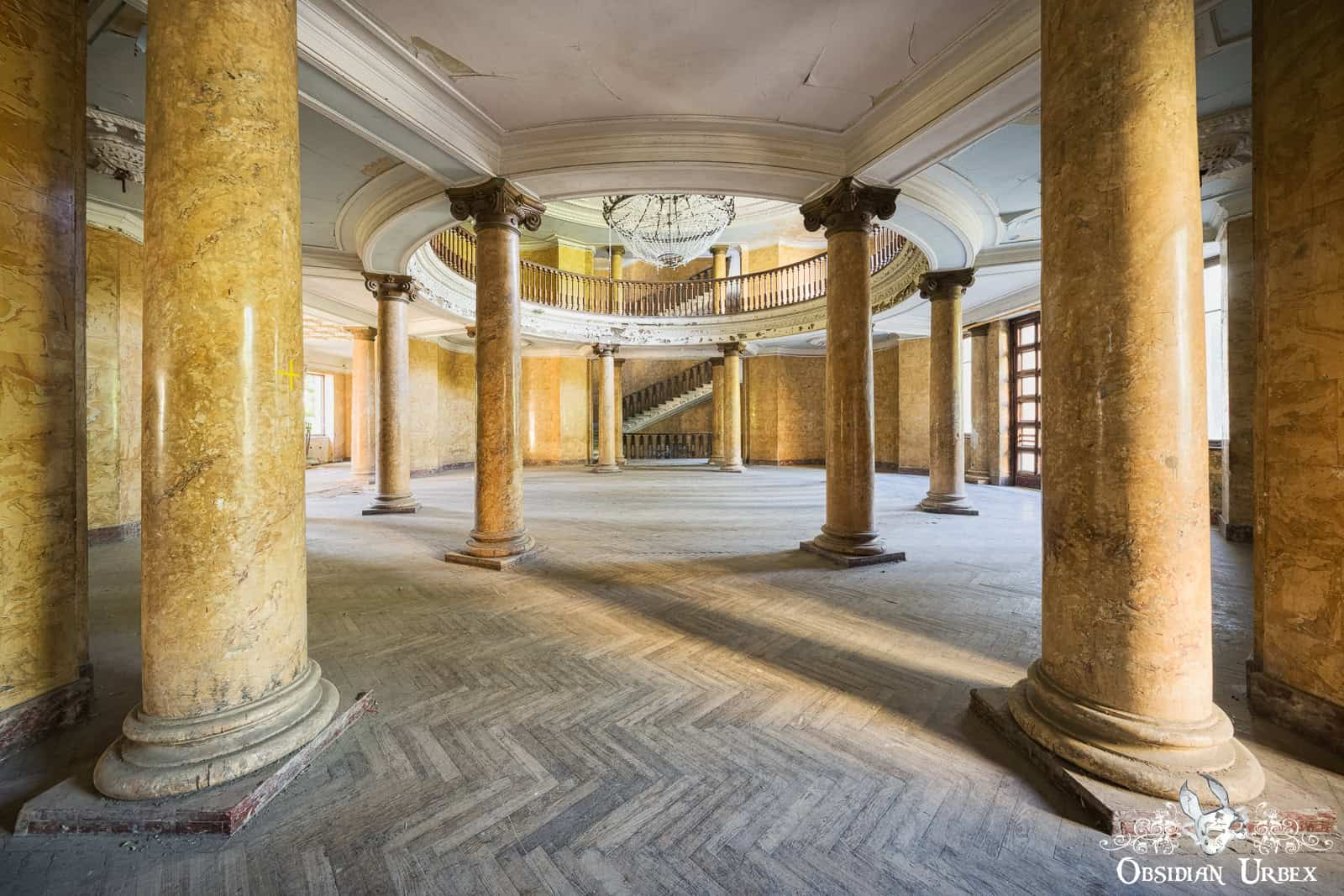
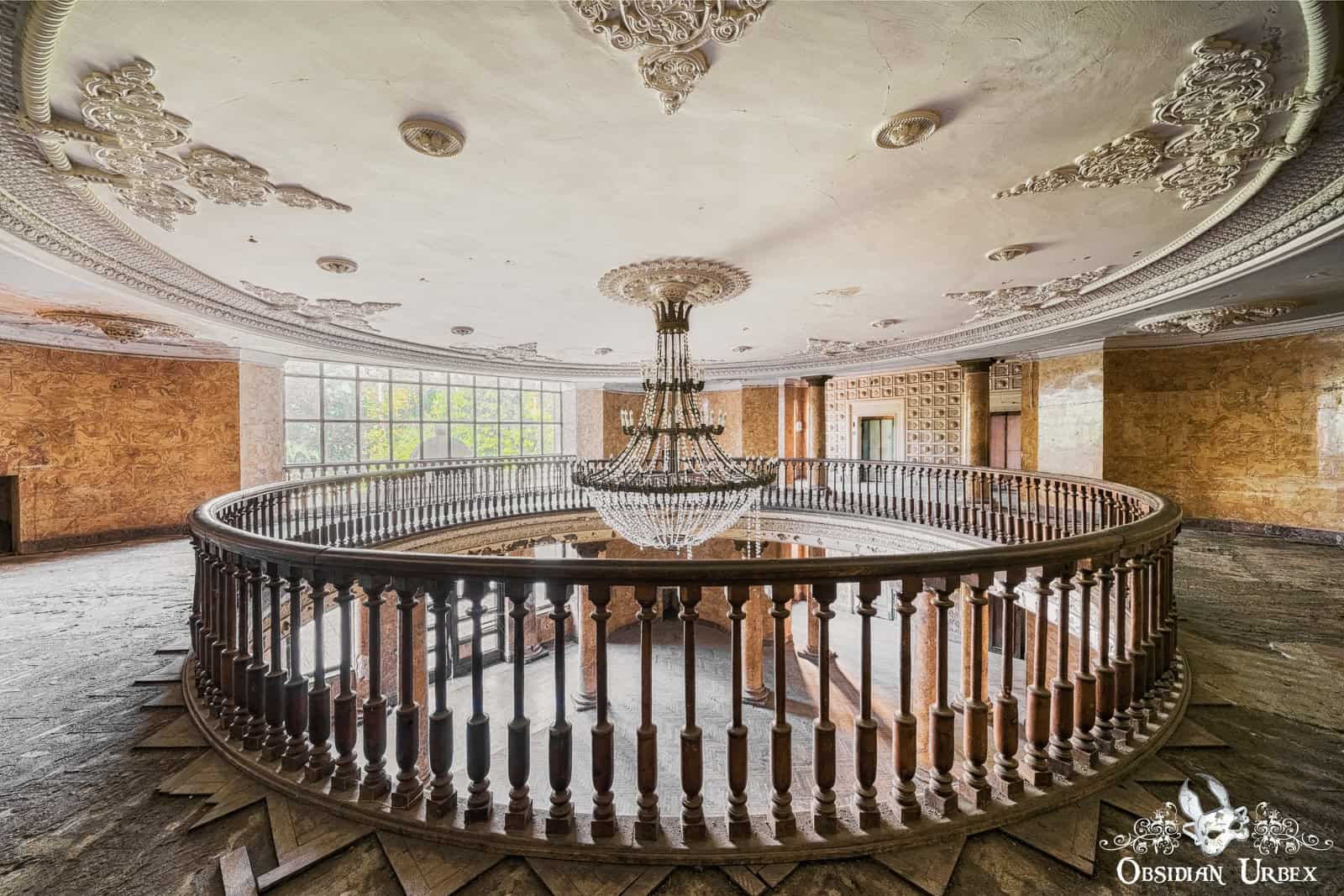
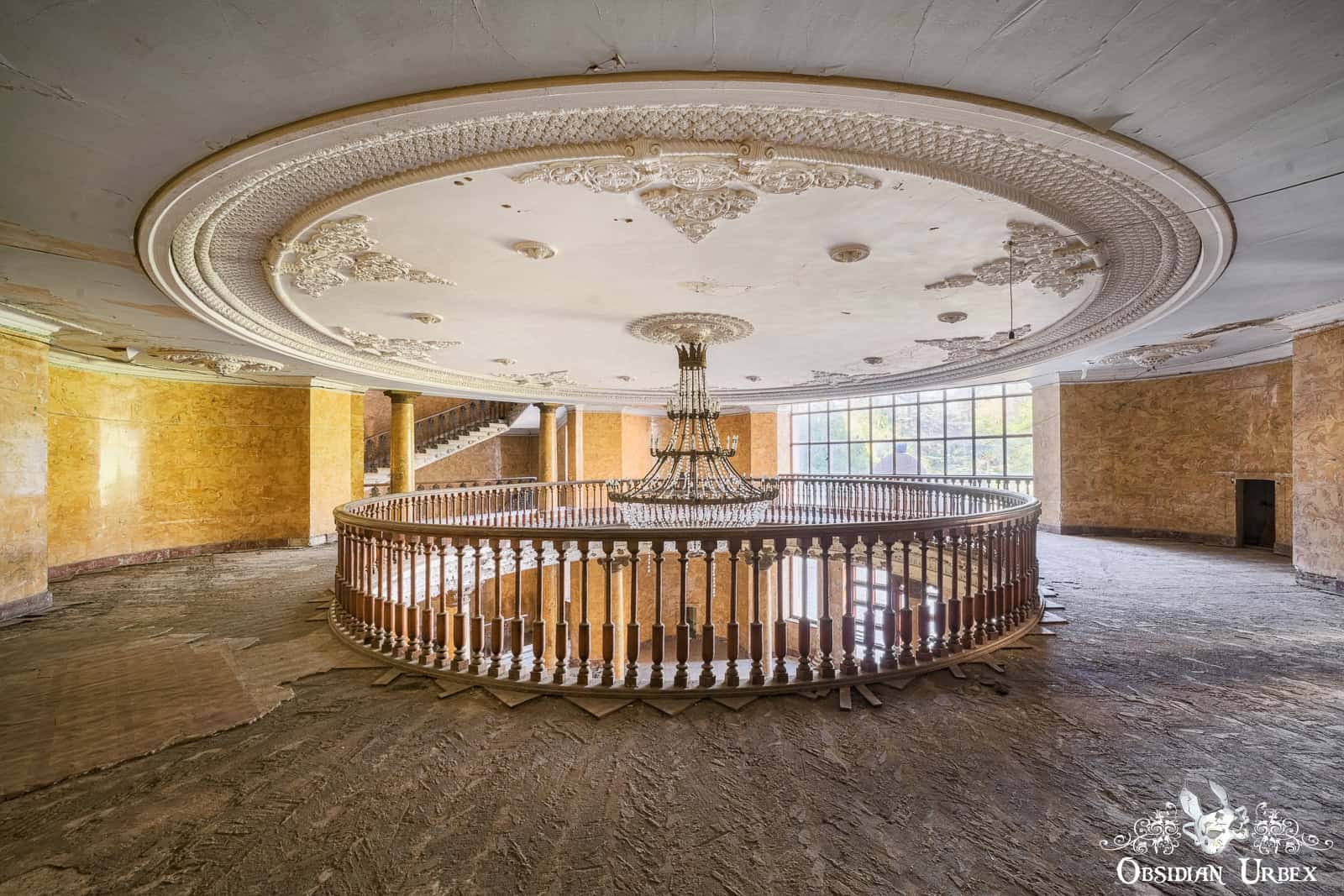
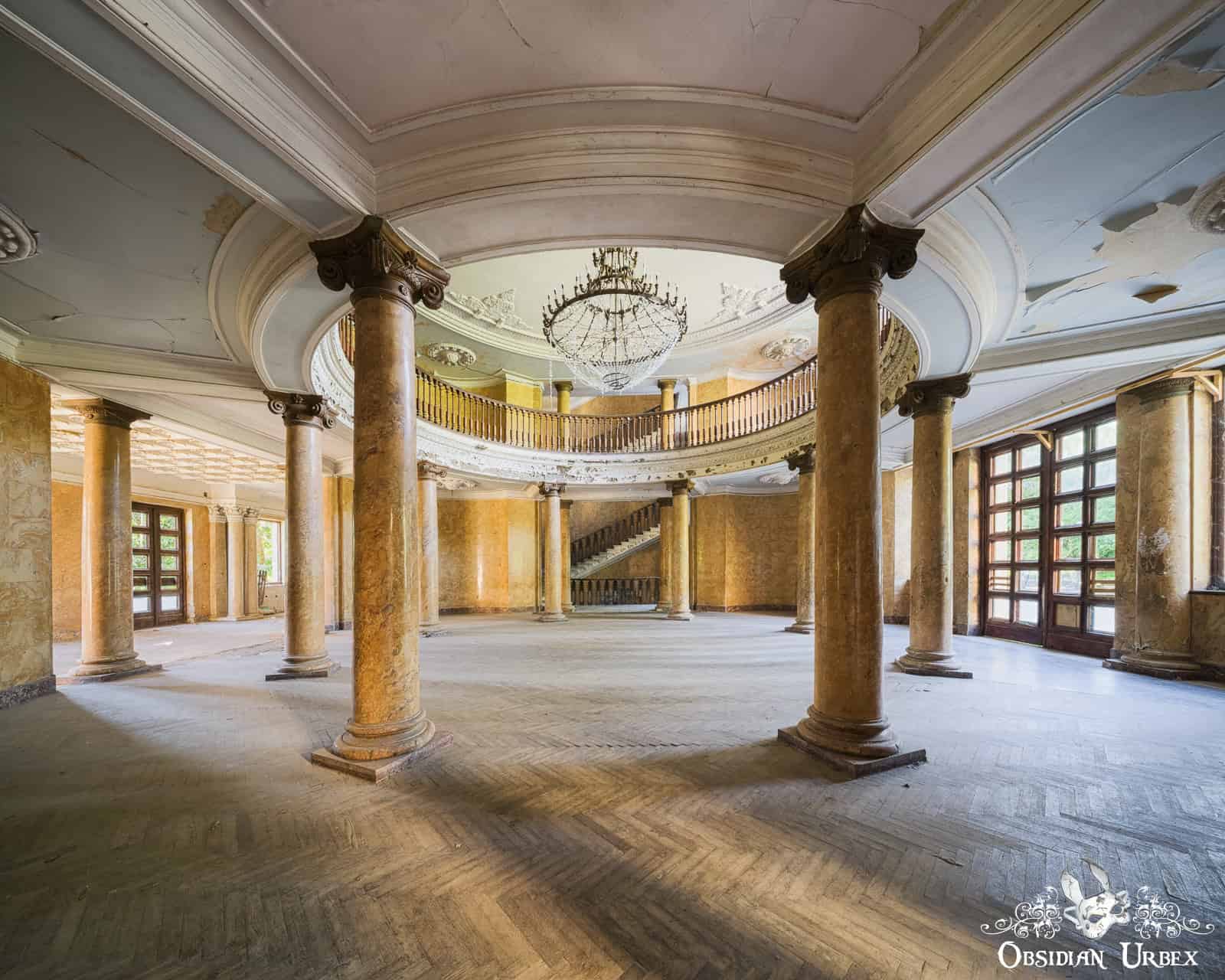
The first, and arguably most impressive, line area I explored was the entrance foyer. It was designed to make an immediate statement of “palatial” grandeur to the workers as they arrived for their vacation. The foyer spans two floors; the upper floor is a column-supported mezzanine overlooking the ground floor through a circular mezzanine opening. From the centre of the circular ceiling hangs a grand chandelier, one of the few original Soviet chandeliers that somehow escaped being looted after the fall of the USSR.
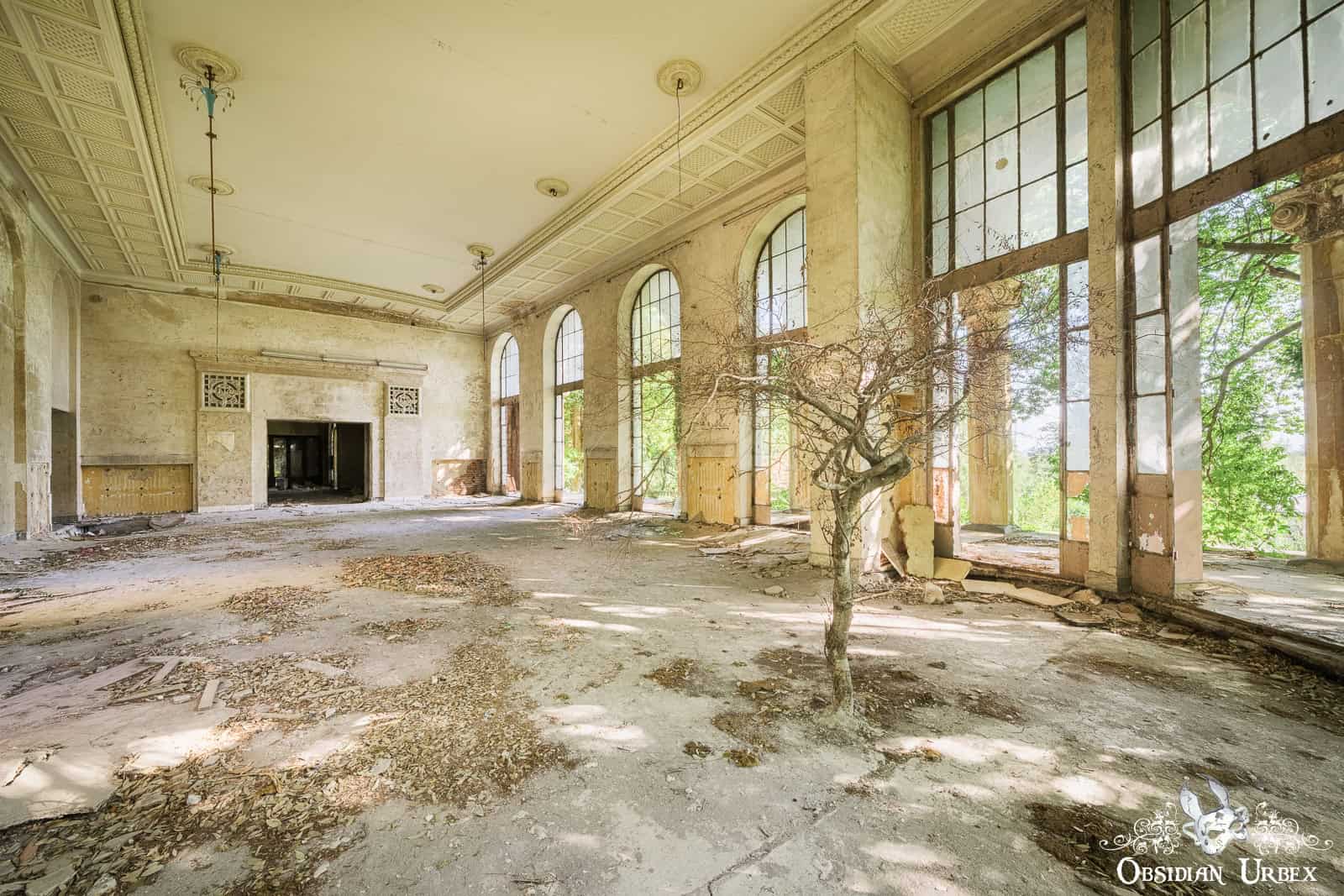
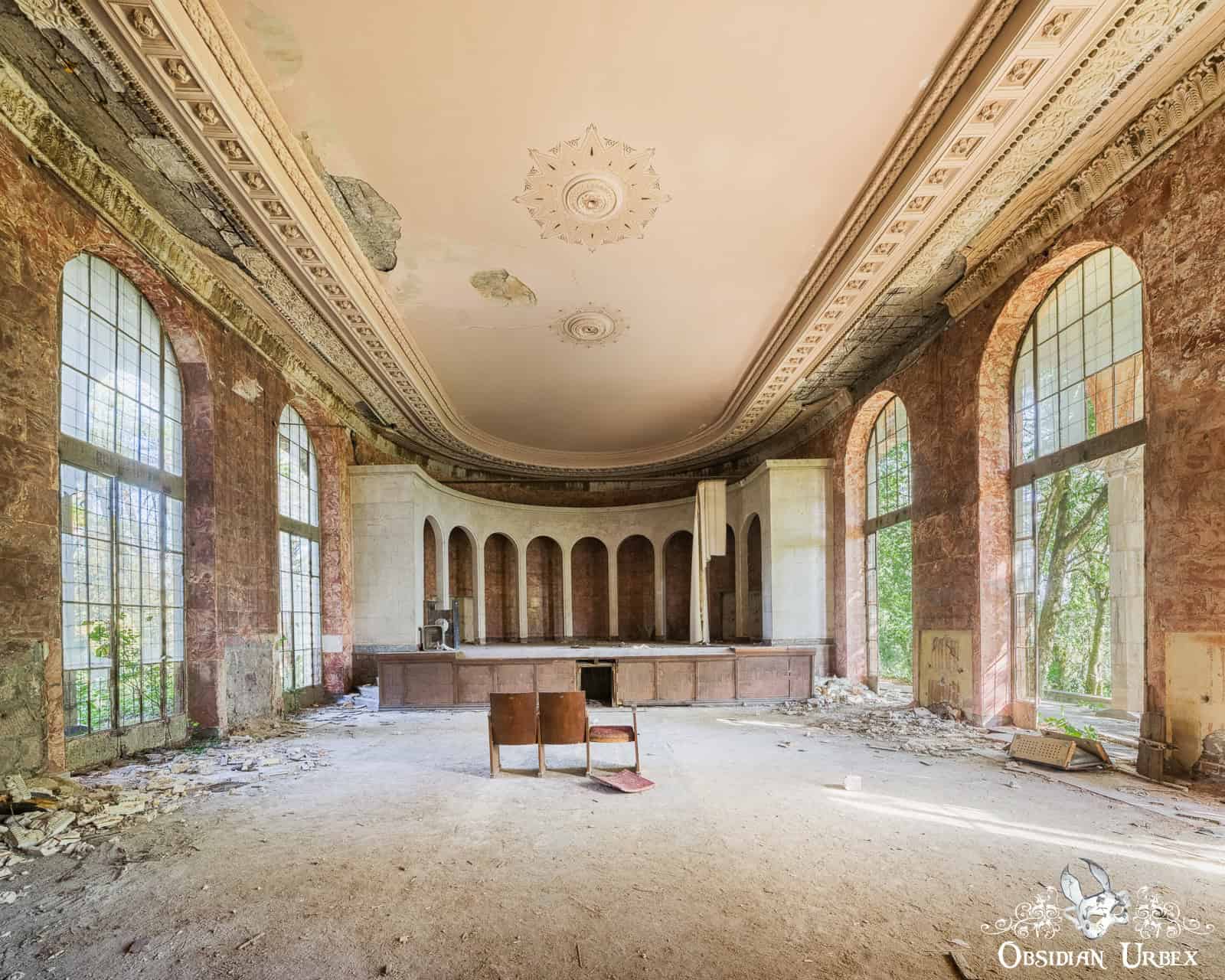
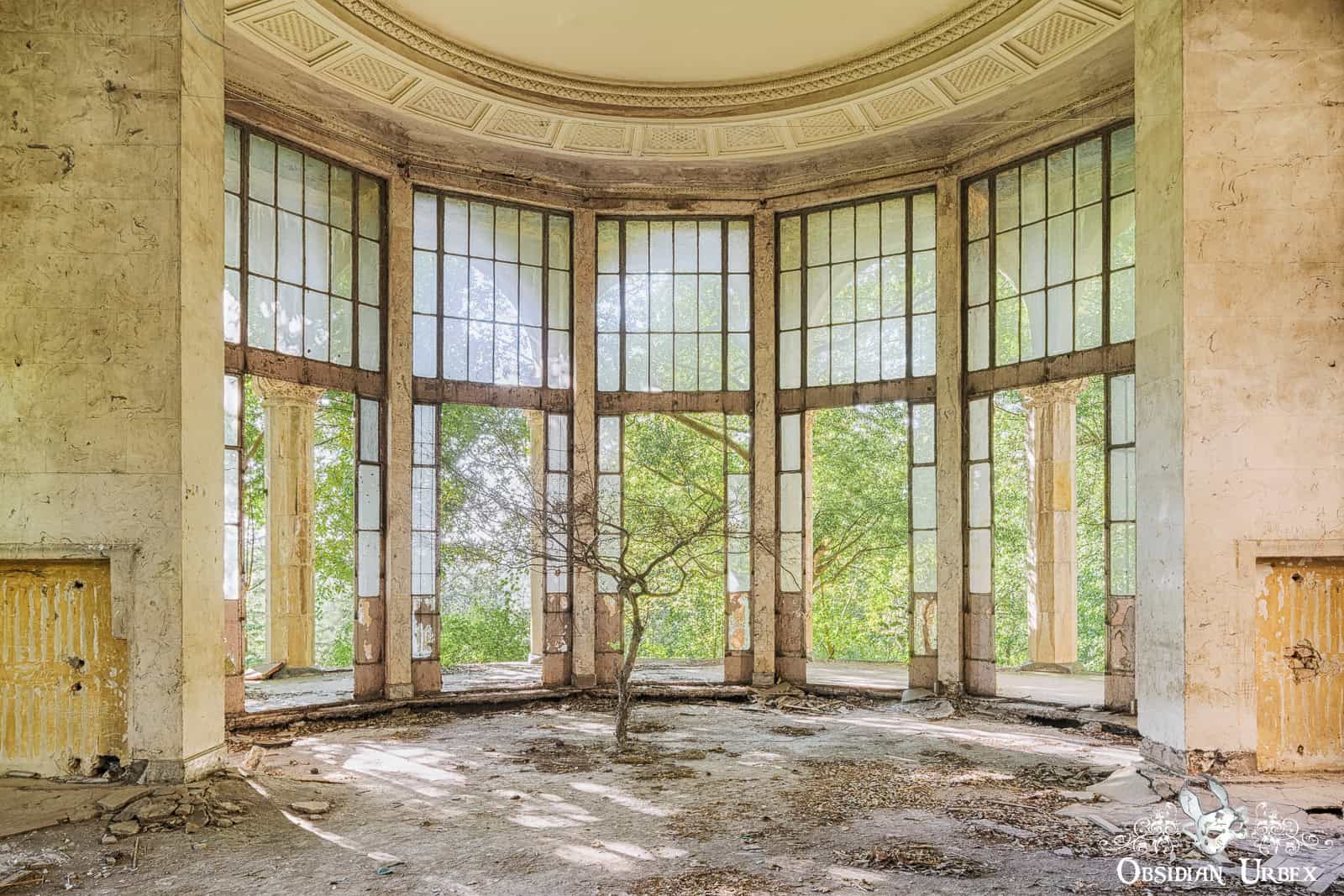
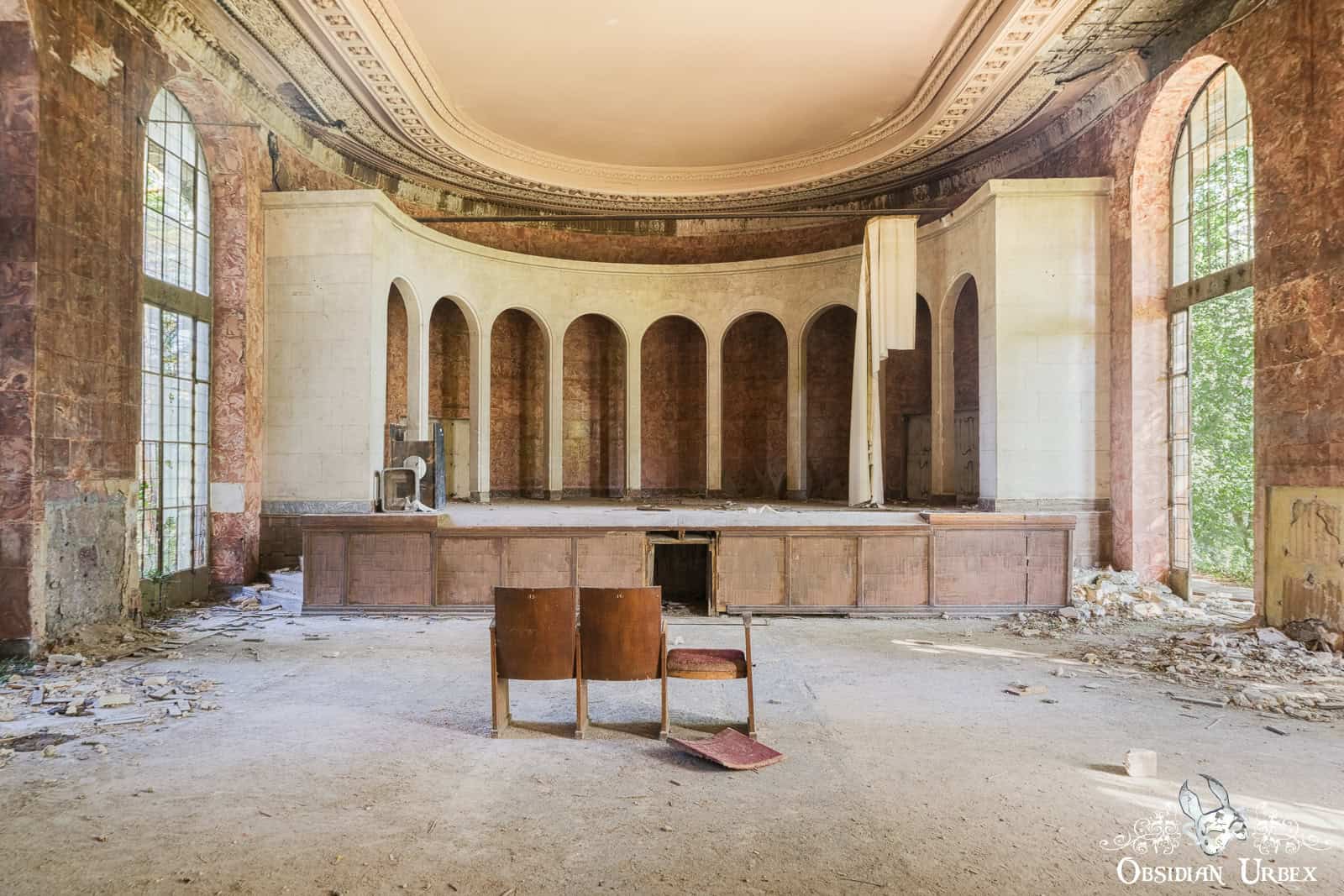
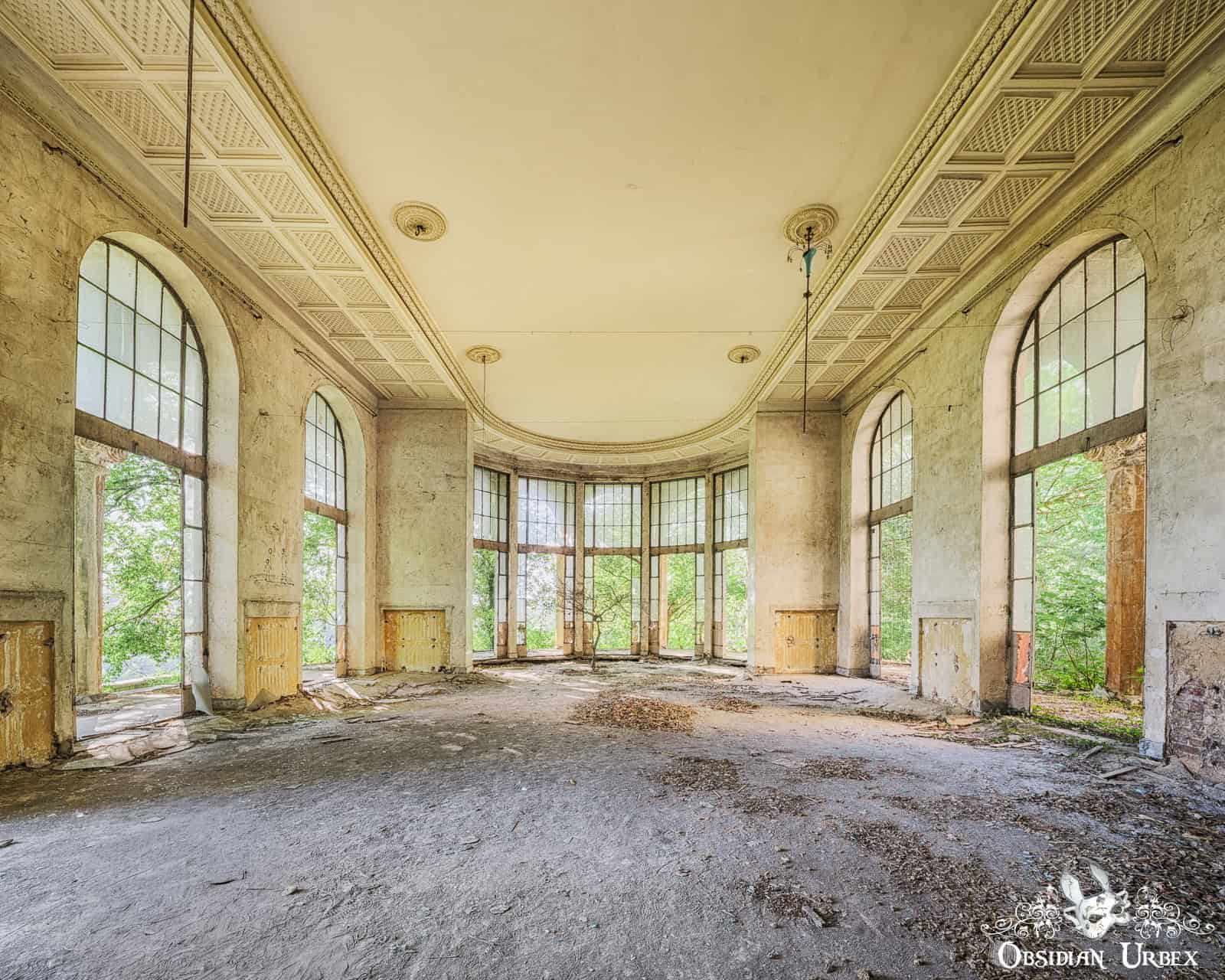
Branching off from the central foyer are two oval extensions. To the west is the theatre, or concert hall. Here workers would gather for nightly film screenings and theatre performances, all part of the “cultural health” programme filled with all the usual Soviet ideological messaging and propaganda. The east wing holds the grand dining hall, with floor-to-ceiling arched glass windows offering panoramic views of the (formerly) lush landscaped grounds. Nowadays, a lonely tree grows inside this space (just slightly off-centre!).
At the time of my visit, Sanatorium Metalurgi was partially occupied. A resident welcomed us upon arrival and graciously allowed me to explore (for a small fee). He disappeared quickly, leaving me to explore the communal spaces of the sanatorium.
Seen a photo you love? All my images are available as prints, please do Contact Me and let me create your perfect bespoke artwork.
Which photograph caught your eye the most? How did this location make you feel? Do you have a question? Let me know by leaving a comment!
I add new content every week, ranging from exciting new locations to blog articles about my road trips. My beautiful newsletter will bring my photographic adventures direct to your inbox!
Your email address will not be shared, or publically displayed. I will only use your data to send you the newsletter, as outlined in the Privacy Policy. You can unsubscribe at any time, via the opt-out link included in every email.
1 - Please do not ask for location addresses, see FAQ.
2 - Your email address will not be shared, or publically displayed. I will only use your data to reply to your message, as outlined in the Privacy Policy


How many Sanatoria did this location have? It seems an endless array of structures exist(ed) here. And I bet you have only scratched the surface.
Good question! I believe there were originally about 20. Some of which are still in use, others are very basic ruins which didn’t interest me, and some have been demolished. So I explored around half of them. Not bad for one day, right? 😀
Not bad at all. How many Sanatoria have you explored so far? Did you explore any others yet to be featured? Do you plan on ever going back to Georgia, or is it impossible due to rebuilding/refurbishing?
Thanks again and peace.
P.S. Where are you going next, or are you unsure at this point?
Aye this is a nice one, right! In Georgia I explored 9 in this town, and a few more scattered around the rest of the country. This one is the final one in my Georgia series, for now. I do plan on going back, I am working on something exciting so I may need a return visit soon 🙂
For the next country, I am unsure. Possibly Slovakia and some more of eastern Europe, also got my eye on some more countries in Asia. But first, some adventures closer to home 🙂
Just browsing following your recent post to the mailing list. Of the three outside UK in this post, Metalurgi is by far the best. That tree trying to make a go it inside is stunningly beautiful, and the chandelier and balustrade in the foyer… excellent photos. Thank you so much for sharing.
Thanks Justin! Glad to hear you enjoyed the newsletter; Metalurgi was so beautiful. I will be sharing some UK places for the next few weeks to showcase some lost places closer to home. Hope you enjoy these!